U.S. Soybean Farmers Race to Reclaim China Market Amid Lingering Trade Turbulence

U.S. Soybean Farmers Race to Reclaim China Market Amid Lingering Trade Turbulence
By
Rachel Steinberg
Last updated:
November 11, 2025
First Published:
November 30, 2025

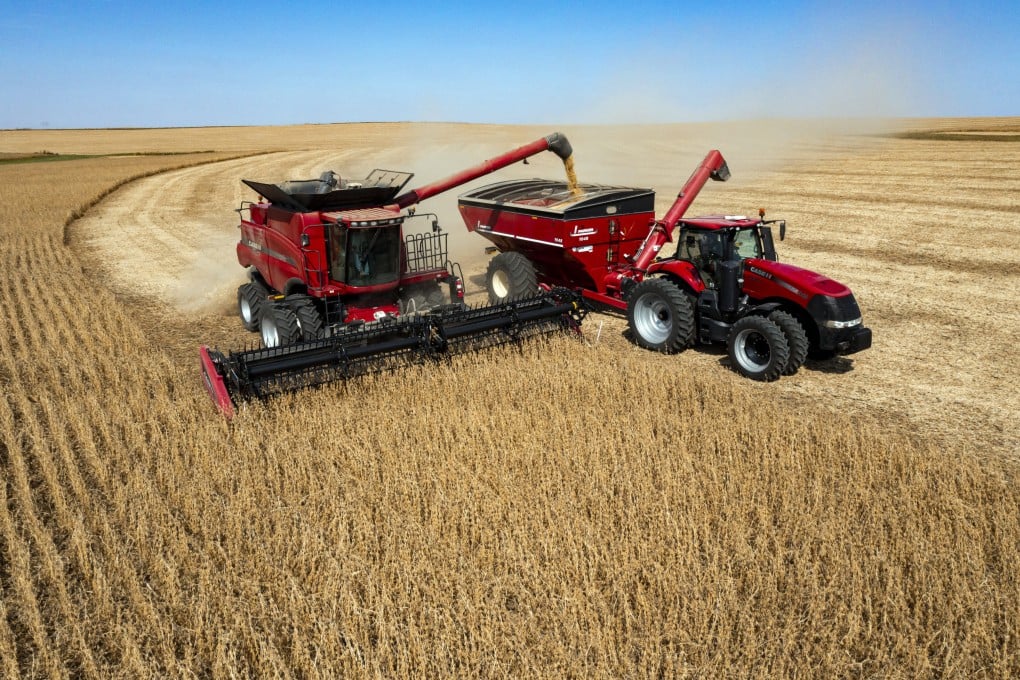
Photo: South China Morning Post
American soybean producers are cautiously optimistic after a recent meeting between President Donald Trump and China’s leader Xi Jinping, yet the road to full recovery remains steep. For many farmers in the U.S. heartland, especially in states like Illinois and Iowa, China has long been the most important buyer—and this year, that market nearly vanished.
The Stakes on the Ground
Illinois-based farmer Scott Gaffner attended the China International Import Expo in Shanghai with one goal: salvage his China business. His Gaffner Family Farm typically sends 40 % of its annual soybean exports to China, but this year that figure fell to zero, as Chinese buyers paused purchases amid trade tensions. Gaffner, a member of the U.S. Soybean Export Council (USSEC), said: “We just want to do business.”
Meanwhile, China has maintained a 13 % tariff on U.S. soybeans, even after lifting duties on some other agricultural products. While China told the U.S. it will buy 12 million metric tons this year and 25 million tons annually for the next three years, that still falls short of its nearly 27 million tons in 2024 purchases from the U.S.
Global Market Trends & China’s Shift
Between January and February of 2025, Chinese imports of U.S. soybeans jumped 84 % year-on-year to approximately 9.13 million metric tons, compared with 4.96 million in the same period in 2024.—but that surge was largely driven by stockpiling amid fears of renewed tariffs rather than regular business.
Broader year-to-date trends remain troubling for U.S. exporters: In April 2025, China’s soybean imports dropped 29 % year-on-year to 6.08 million metric tons. China is also actively diversifying its sources away from the U.S., notably buying more from Brazil as cost pressures weigh on American beans.
Analysts warn U.S. soybean exports could fall to 1.5 billion bushels from an earlier estimate of 1.865 billion if a robust deal with China fails to materialize soon.
Why U.S. Farmers Are Under Pressure
The absence of Chinese business has strained America’s farm economy: Export revenues to China for soybeans dropped from about $12.8 billion in 2024, while U.S. domestic processing plants are being asked to absorb beans once destined overseas. One study found that without China’s demand, U.S. exports risk a 20% decline and that futures prices could fall below $9 per bushel.
Farmers such as Gaffner described how, instead of shipping beans down the Mississippi River to ports in Louisiana for export, they were forced to store their crop in on-farm bins—waiting for buyers that weren’t there.
What Comes Next
China’s purchase commitment of 25 million metric tons annually is a signal—but it is only binding for three years and still less than past highs. For many in America’s soybean belt the key will be not just headlines but concrete offtake, tariff reductions (especially cutting the 13 % duty on U.S. soybeans), and strong delivery contracts.
At the same time, U.S. farmers are watching Brazil’s production closely: Brazilian soy output is expected to grow rapidly, and Chinese buyers are already booking Brazilian cargoes for shipments in December and 2026. If Brazil continues to undercut U.S. prices, regaining market share may prove tougher than hoped.
In the Midwest, new crushing plants are being built to process more beans domestically—yet analysts say that capacity cannot fully compensate for China’s absence. The next few months will be crucial: American growers need China to follow through, and they need this market restored if many farm businesses are to return to sustainable export-driven growth.
The soybean saga remains a high-stakes chapter in the ongoing U.S.–China trade story. For now, the talk of a thaw offers hope—but for U.S. farmers whose crops are in the bin and buyers on hold, it’s the actual soybean shipments and realized sales that will determine whether the revival is real.
.webp)
Popular articles



Subscribe to unlock premium content
Driven by Desire in London

Hyper-Niche Gold
The Rise of Private Robotics Tutors for Children

Driven by Desire in London
Hyper-Niche Gold
Driven by Desire in London