
U.S. Sets 2027 Timeline for New Tariffs on Chinese Semiconductors

U.S. Sets 2027 Timeline for New Tariffs on Chinese Semiconductors
By
Rachel Steinberg
Last updated:
December 24, 2025
First Published:
April 25, 2026

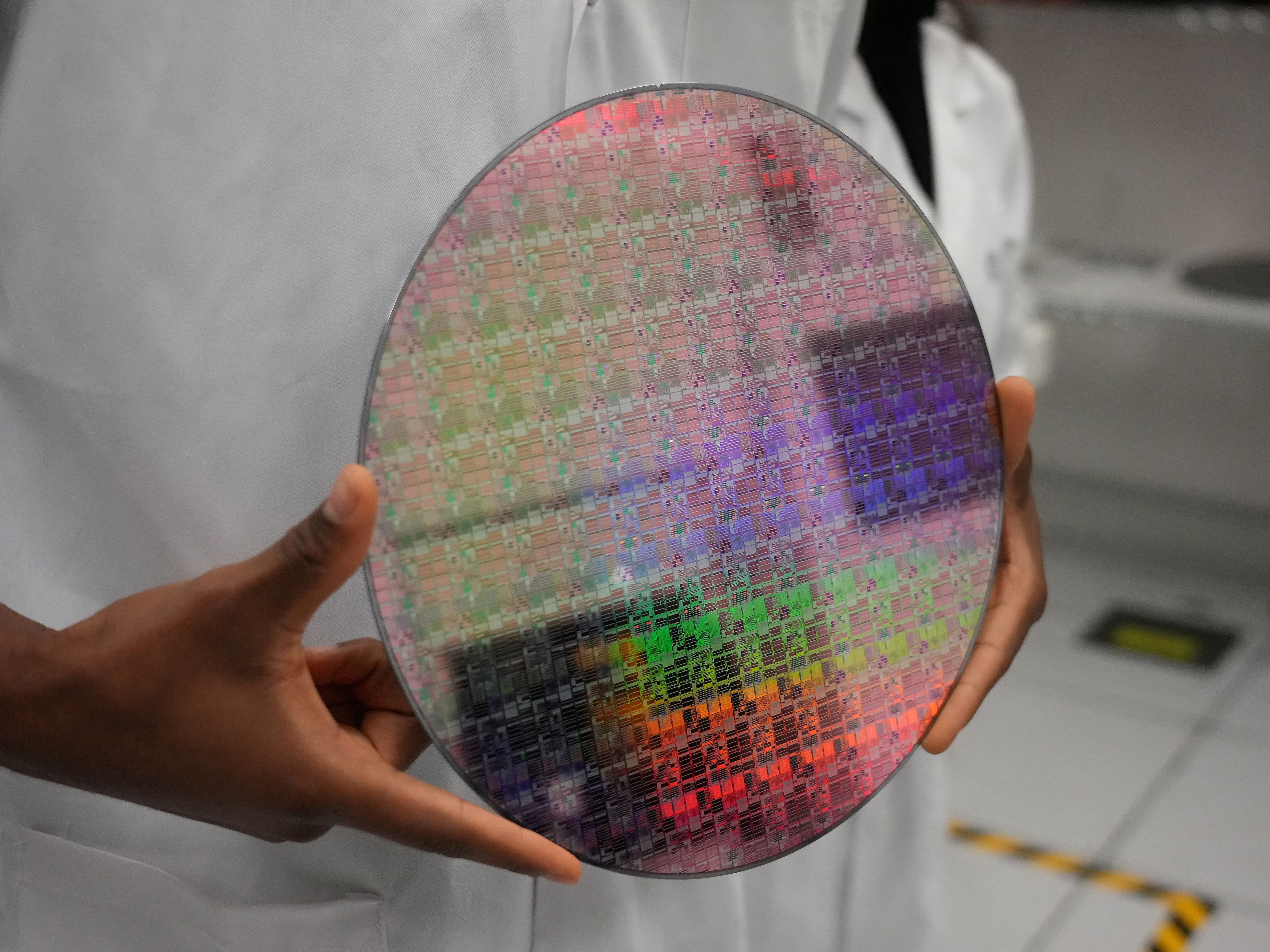
A silicon wafer with chips etched into is seen as U.S. Vice President Kamala Harris tours a site where Applied Materials plans to build a research facility, in Sunnyvale, California, U.S., May 22, 2023.
Pool | Reuters
Tariffs Delayed but Not Dropped
The United States has formally set June 2027 as the date to impose new tariffs on semiconductor imports from China, extending the timeline for trade action while keeping pressure on Beijing’s chip industry. According to a filing published Tuesday in the Federal Register, the tariff rate will be announced at least one month before it takes effect.
Until then, Chinese semiconductor imports will face a zero percent tariff for the next 18 months, providing temporary certainty for companies that rely on cross-border chip supply chains.
Findings Behind the Decision
The move follows a year-long investigation by the Office of the U.S. Trade Representative, which concluded that China engages in unfair trade practices in the semiconductor sector. U.S. officials cited long-standing concerns that Beijing has used state-backed subsidies, industrial policy, and non-market practices to gain dominance in chip production.
The filing stated that China has systematically targeted the semiconductor industry as a strategic priority, employing aggressive measures to strengthen its position across manufacturing, pricing, and global market access.
Roots in a Multi-Year Trade Process
The planned tariffs are the latest step in a process initiated under the Biden administration using Section 301 of the Trade Act. That framework allows the U.S. to impose trade penalties in response to unfair foreign practices and has previously been used to justify tariffs on a wide range of Chinese goods.
The current phase of the review focuses primarily on older, or legacy, chips rather than the most advanced semiconductors, which are already subject to separate export controls and national security restrictions.
Strategic Pause in U.S.-China Tensions
The decision to delay tariffs for at least 18 months signals a measured approach by the Trump administration as it seeks to avoid reigniting full-scale trade tensions with China. Officials appear to be balancing enforcement with diplomacy, keeping tariffs as leverage rather than deploying them immediately.
Trade analysts note that the delay leaves room for negotiations, particularly if broader U.S.-China economic talks resume or stall. Tariffs could be increased sooner or used as a bargaining tool if relations deteriorate.
Context of a Fragile Trade Truce
The announcement comes after the U.S. and China reached a limited trade truce in October, easing years of escalating tariffs. That agreement included partial tariff reductions by Washington and commitments from Beijing to allow exports of rare earth materials, which are critical to U.S. manufacturing and defense industries.
By postponing semiconductor tariffs, the U.S. is signaling that it intends to enforce trade rules while avoiding abrupt disruptions to fragile diplomatic progress.
Implications for U.S. Companies
Setting a clear date for potential tariffs provides greater visibility for American firms that have been monitoring policy risks tied to semiconductor sourcing. Companies now have a defined window to adjust supply chains, renegotiate contracts, or accelerate diversification away from Chinese chip suppliers if needed.
Industry groups have repeatedly warned that sudden tariff changes could raise costs for downstream sectors such as automotive, consumer electronics, and industrial manufacturing.
Separate From National Security Tariffs
The planned 2027 tariffs are distinct from other potential duties under Section 232, which allows the administration to impose tariffs on national security grounds. Those measures, also under consideration, could target Chinese chip imports through a different legal pathway and timeline.
For now, the June 2027 deadline marks a critical waypoint in the evolving U.S. semiconductor trade strategy, underscoring Washington’s intent to confront what it sees as unfair practices while keeping economic and diplomatic flexibility intact.
.webp)
Popular articles



Subscribe to unlock premium content
How Finland Uses Ice Swimming Festivals to Boost Winter Tourism and Local Economies

The Boom of Luxury Personal Libraries Renting Rare Books to the Ultra-Wealthy

Why Bhutan’s Hand-Woven Textiles Are Gaining Global Collector Value

How Finland Uses Ice Swimming Festivals to Boost Winter Tourism and Local Economies
The Boom of Luxury Personal Libraries Renting Rare Books to the Ultra-Wealthy
How Finland Uses Ice Swimming Festivals to Boost Winter Tourism and Local Economies


