U.S. Opens China Market to Nvidia’s H200 Chips Under New Revenue-Sharing Rule

U.S. Opens China Market to Nvidia’s H200 Chips Under New Revenue-Sharing Rule
By
Leah Rosenfeld
Last updated:
January 15, 2026
First Published:
April 25, 2026

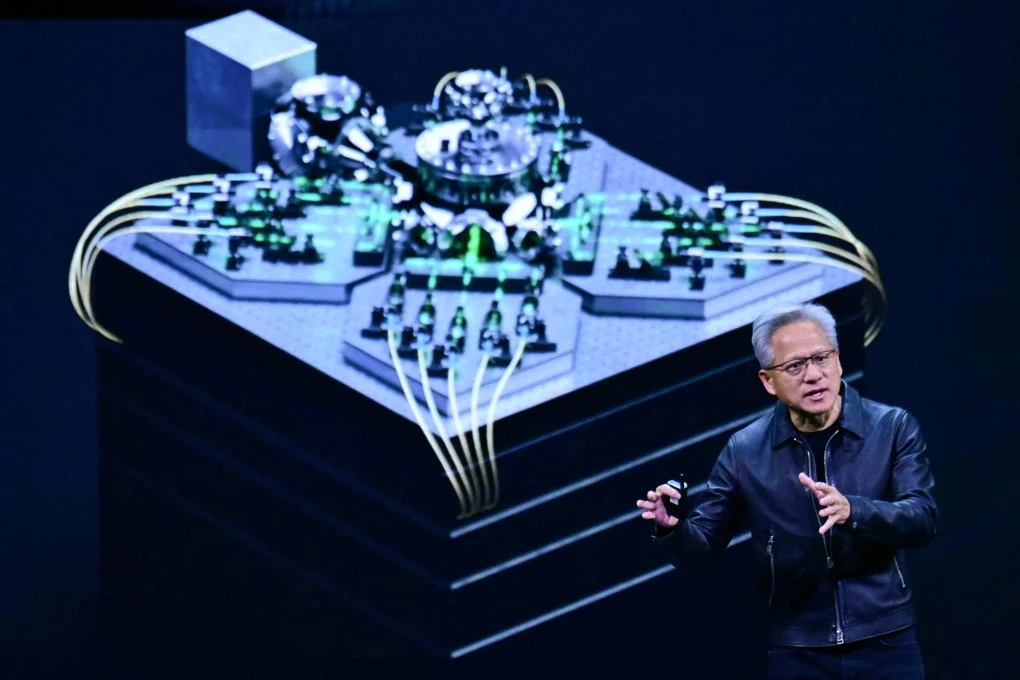
Photo: South China Morning Post
The Trump administration has formally cleared the sale of Nvidia’s H200 artificial intelligence chips to China, marking a significant shift in U.S. export policy toward advanced semiconductors while attaching a substantial financial and regulatory price tag. Under the new framework, the U.S. government will take 25% of the dollar value of approved sales, effectively turning strategic chip exports into a source of federal revenue.
President Donald Trump confirmed the decision shortly after the Department of Commerce published detailed regulations governing the exports. The move follows weeks of speculation after Trump first floated the idea last month, positioning the policy as both an economic and strategic win for the United States.
Unlike Nvidia’s earlier China-specific H20 chip, which was intentionally modified to comply with export restrictions, the H200 is a mainstream Hopper-generation processor already sold in the U.S. and other global markets. It has not been deliberately slowed or redesigned for export, making it far more capable than prior China-approved offerings.
Trump emphasized that the H200 no longer represents Nvidia’s most cutting-edge technology. He pointed out that the company has already moved two generations ahead, with its Blackwell architecture in production and Rubin chips on the roadmap.
“It’s not the highest level, but it’s a pretty good level,” Trump said, noting that demand for the chip remains strong globally. “China wants them, others want them, and we’re going to be making 25% on those sales.”
From a market perspective, the stakes are significant. Nvidia has previously estimated that China could represent up to $50 billion in annual demand for AI chips. Even with export caps and approval hurdles, analysts see the reopening of this channel as a meaningful revenue opportunity, particularly as global competition in AI hardware accelerates.
The Commerce Department’s rule introduces multiple guardrails designed to prevent the exports from undermining U.S. technological leadership. Exporters must certify that there is adequate domestic supply of H200 chips and that shipments to China will not consume manufacturing capacity needed for more advanced AI processors destined for U.S. customers.
Additional requirements include enhanced security standards for Chinese buyers and mandatory independent, third-party testing of the chips inside the United States before they can be shipped abroad. The testing requirement has also triggered a 25% import tariff on certain chips that must enter the U.S. temporarily for verification before export to China.
To further limit exposure, shipments of H200 chips to China will be capped at no more than 50% of the volume shipped to U.S. customers. The rule also references AMD’s MI325X accelerator, signaling that the framework could extend beyond Nvidia to other high-performance AI chipmakers.
Nvidia welcomed the decision, framing it as a balanced approach that supports American jobs while preserving national security interests. The company said offering the H200 to vetted commercial customers allows U.S. firms to compete globally rather than ceding ground to foreign rivals already operating outside U.S. restrictions.
Company leadership has been vocal about rising demand. Nvidia CEO Jensen Huang recently said interest from Chinese customers is “very high” and confirmed that the company has restarted H200 production to meet anticipated orders.
“We’ve fired up our supply chain, and H200s are flowing through the line,” Huang said during a press briefing at CES in Las Vegas.
Despite U.S. approval, uncertainty remains on the other side of the Pacific. It is still unclear whether Chinese regulators will greenlight large-scale imports of the chips, as Beijing continues to prioritize domestic semiconductor development and self-sufficiency, even though local alternatives remain less powerful.
Huang has downplayed expectations of any formal announcement from China, suggesting that approvals, if granted, are more likely to show up quietly in the form of purchase orders rather than public statements.
The potential upside for Nvidia is notable. Huang previously projected global AI chip sales of roughly $500 billion through the end of 2026, and any H200 sales to China would sit on top of that forecast rather than replace existing demand.
Taken together, the policy reflects a pragmatic recalibration of U.S. trade strategy. Instead of a blanket ban, Washington is opting for controlled access, strict oversight, and direct financial participation. For the Trump administration, the message is clear: the U.S. will protect its technological edge, but it will also monetize it when the opportunity aligns with national and economic interests.
.webp)
Popular articles



Subscribe to unlock premium content
The Market for Renting Private Libraries Where Only Rare, Unpublished Manuscripts Exist

Living Underwater in the Heart of the City

Frozen Luxury in Europe

The Market for Renting Private Libraries Where Only Rare, Unpublished Manuscripts Exist
Living Underwater in the Heart of the City
The Market for Renting Private Libraries Where Only Rare, Unpublished Manuscripts Exist