U.S. and Taiwan Seal Chipmaking Pact Anchored by $250 Billion Investment Pledge

U.S. and Taiwan Seal Chipmaking Pact Anchored by $250 Billion Investment Pledge
By
Leah Rosenfeld
Last updated:
January 16, 2026
First Published:
April 25, 2026

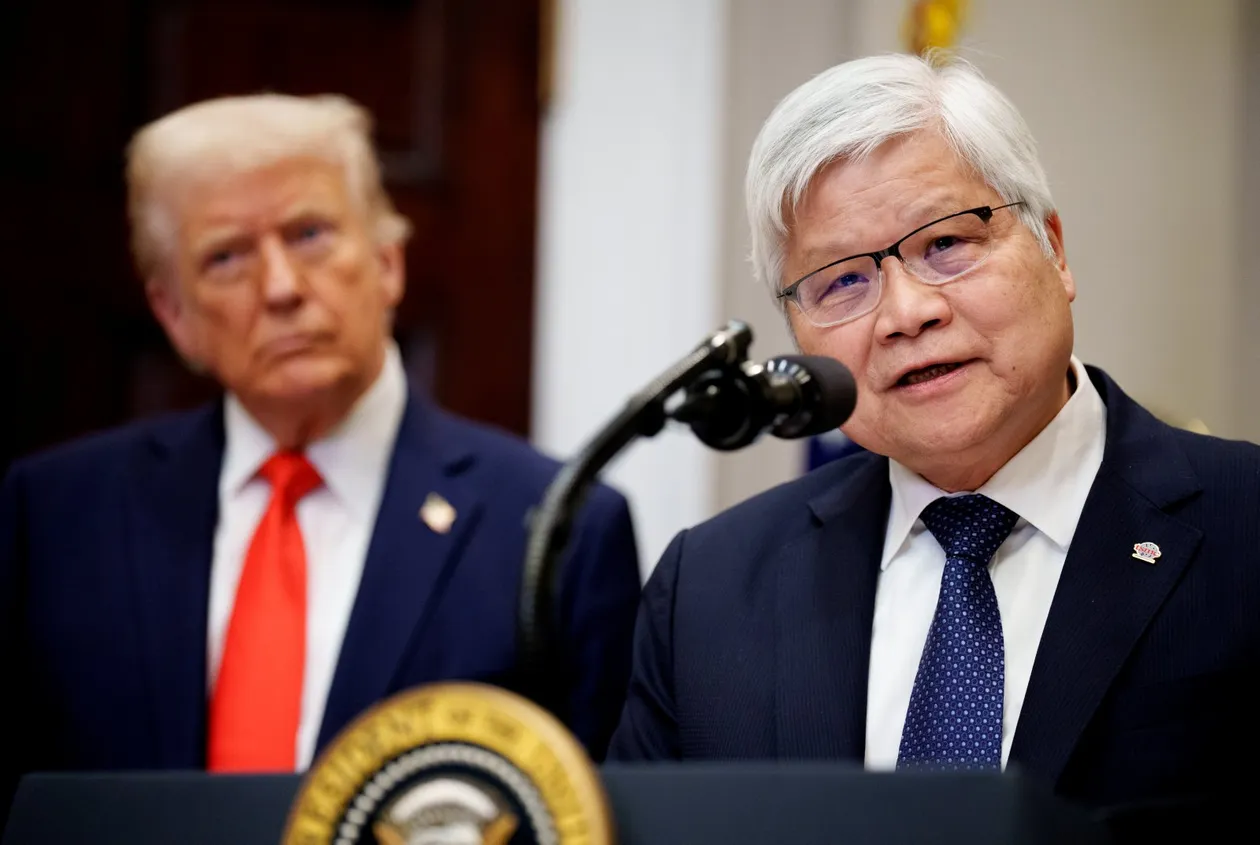
The United States and Taiwan have finalized a sweeping trade agreement designed to reshape the global semiconductor supply chain, committing hundreds of billions of dollars to expand chip manufacturing on American soil. The deal combines major investment pledges from Taiwanese technology firms with reduced tariffs and long-term policy clarity for one of the world’s most strategically important industries.
At the center of the agreement is a commitment by Taiwanese chip and technology companies to invest at least $250 billion in U.S. semiconductor production capacity. In parallel, the Taiwanese government will back those investments with an additional $250 billion in credit guarantees, significantly lowering financing risk for companies building factories in the United States.
What the Trade Deal Includes
Under the agreement, the U.S. will reduce so-called reciprocal tariffs on Taiwanese goods to 15%, down from 20%. Washington also agreed to impose no reciprocal tariffs on several critical categories, including generic pharmaceuticals, pharmaceutical ingredients, aircraft components, and selected natural resources.
U.S. officials framed the deal as a strategic effort to strengthen domestic manufacturing while preserving stable trade ties with one of America’s most important technology partners.
The Commerce Department said the agreement provides long-term certainty for chipmakers that have faced shifting tariff policies and regulatory ambiguity over the past year.
TSMC and Arizona Expansion Plans
Taiwan Semiconductor Manufacturing Co., the world’s largest contract chipmaker, is expected to play a central role in the next phase of U.S. expansion. Commerce Secretary Howard Lutnick confirmed that TSMC has already acquired hundreds of additional acres of land adjacent to its existing Arizona facilities, opening the door for further large-scale development.
TSMC said its investment decisions continue to be driven by customer demand and market conditions, emphasizing that it will keep expanding both in Taiwan and overseas. The company has already committed up to $40 billion in Arizona, where it is building advanced fabrication plants to supply major U.S. customers such as Apple and Nvidia.
Tariff Relief Tied to U.S. Manufacturing
A key feature of the agreement is how it links tariff relief to domestic construction. Taiwanese companies building new chip fabs in the U.S. will be allowed to import up to 2.5 times the production capacity they are constructing while facilities are still under development, without paying tariffs under the Section 232 framework.
Once those factories are completed, companies will still be permitted to import up to 1.5 times their U.S. production capacity without facing penalties. Taiwanese auto parts, lumber, and related products will also avoid tariffs above 15% under the same framework.
Commerce officials said these provisions are designed to keep supply chains running smoothly during construction while encouraging long-term manufacturing commitments inside the U.S.
Pressure on Firms That Stay Abroad
The agreement also sends a clear signal to companies that choose not to invest in American manufacturing. Lutnick said Taiwan-based chipmakers that do not build in the U.S. could ultimately face tariffs as high as 100%, underscoring the administration’s aggressive stance on reshoring semiconductor production.
According to Lutnick, the broader objective is to relocate roughly 40% of Taiwan’s semiconductor supply chain to the United States over time, reducing geopolitical and economic exposure tied to concentrated production in East Asia.
Strategic and Geopolitical Stakes
U.S. officials have repeatedly warned that heavy reliance on overseas chip manufacturing poses a major economic and national security risk, particularly given rising tensions in the Taiwan Strait. Advanced semiconductors are critical for artificial intelligence, defense systems, automobiles, and consumer electronics.
The deal reinforces Washington’s push for self-sufficiency in leading-edge chips, building on earlier incentives under the CHIPS Act while using trade policy to accelerate private-sector investment.
As Lutnick put it, the goal is clear: to ensure the United States has the capacity to design, manufacture, and scale the world’s most advanced semiconductors at home, regardless of global disruptions.
.webp)
Popular articles



Subscribe to unlock premium content
Remote Himalayan Villages Transforming Ancient Traditions into Lucrative Wellness Ventures

Gilded Holidays in Fashion

Frozen Frontiers of Luxury

Remote Himalayan Villages Transforming Ancient Traditions into Lucrative Wellness Ventures
Gilded Holidays in Fashion
Remote Himalayan Villages Transforming Ancient Traditions into Lucrative Wellness Ventures