U.S.-Taiwan Chip Pact Reshapes Supply Chains but Leaves the ‘Silicon Shield’ Largely Intact

U.S.-Taiwan Chip Pact Reshapes Supply Chains but Leaves the ‘Silicon Shield’ Largely Intact
By
David Goldfarb
Last updated:
January 19, 2026
First Published:
April 25, 2026

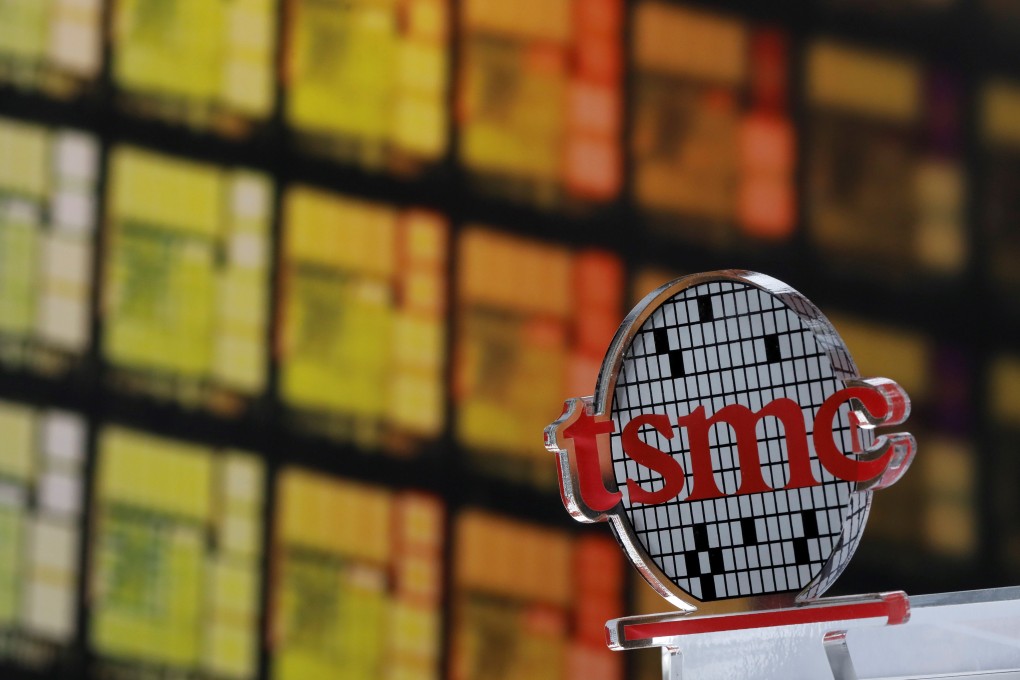
Photo: South China Morning Post
A deal that shifts capacity, not control
A new U.S.-Taiwan trade agreement designed to expand semiconductor manufacturing on American soil is unlikely to significantly reduce Washington’s reliance on Taiwan’s most advanced chips in the near to medium term, according to industry analysts and policy experts. While the deal deepens economic ties and accelerates onshoring efforts, it stops short of dismantling Taiwan’s long-standing technological edge known as the “silicon shield.”
Under the agreement, Taiwan has committed to guaranteeing up to $250 billion in credit for its semiconductor and technology firms to expand production capacity in the United States. In exchange, Washington will lower tariffs on most Taiwanese goods to 15% from 20% and eliminate levies on select products, including generic pharmaceuticals, aircraft components, and certain natural resources that the U.S. cannot produce domestically. Taiwanese chipmakers will also benefit from higher quotas for tariff-free semiconductor exports to the U.S.
Why Taiwan still dominates advanced chips
Taiwan remains the world’s most critical semiconductor hub. Taiwan Semiconductor Manufacturing Company alone produces the majority of the globe’s most advanced logic chips, with roughly one-third of global demand for new computing power fabricated on the island. These chips underpin artificial intelligence, advanced smartphones, high-performance computing, and military systems.
This concentration of cutting-edge capacity has given rise to the concept of the “silicon shield,” the idea that Taiwan’s central role in the global chip supply chain strengthens deterrence by making any disruption economically catastrophic for the world. Preserving this status quo has been a strategic priority for the U.S. and its allies, particularly as Beijing continues to assert territorial claims over the democratically governed island.
The 40% goal and why it is hard to reach
U.S. Commerce Secretary Howard Lutnick has said the long-term objective is to relocate about 40% of Taiwan’s semiconductor supply chain to the United States. Analysts, however, see that target as highly ambitious.
Taipei maintains strict controls over the export of its most advanced manufacturing technologies. Under the so-called N-2 rule, overseas fabrication plants operated by Taiwanese firms are restricted to technologies at least two generations behind those used domestically. As a result, the most sophisticated processes remain concentrated in Taiwan.
TSMC currently manufactures 2-nanometer chips at home, while its Arizona facility has only recently begun producing 4-nanometer chips. Although there are plans to introduce 2-nanometer and even more advanced A16 nodes in the U.S. by around 2030, this still represents a four- to five-year technology gap. In semiconductor terms, that lag preserves a decisive competitive advantage.
Technology gaps and economic stakes
Smaller nanometer nodes allow for denser transistors, faster processing speeds, and lower energy consumption. These advances are essential for next-generation AI models and high-end computing infrastructure. Analysts warn that a sudden disruption to Taiwan’s chip output would trigger a severe global shock, potentially causing what some describe as a depression-level economic event.
Executives at TSMC have reinforced this view. The company has stated that its most advanced research and development must remain in Taiwan due to the need for close, continuous collaboration between R&D teams and manufacturing operations. Hundreds of engineers regularly move between facilities on the island during the ramp-up of new technologies, a process that is difficult to replicate abroad.
Massive U.S. investment, structural constraints remain
TSMC has already pledged $165 billion to build and expand fabrication plants, advanced packaging facilities, and a research center in the United States, supplying major customers such as Apple and Nvidia. However, progress has been slower than initially planned.
Analysts point to persistent challenges, including higher construction and operating costs, shortages of skilled labor, and a thinner supplier ecosystem compared with Taiwan. These factors have delayed plant openings and increased uncertainty around timelines and output targets. While the trade deal provides financial incentives, it does little to resolve these structural constraints.
Taiwan’s semiconductor ecosystem, built over decades, integrates specialized equipment makers, materials suppliers, logistics providers, and a deep engineering talent pool. Experts widely agree that this level of coordination cannot be recreated quickly or at scale elsewhere.
Political reactions and regional implications
China has strongly criticized the agreement, reiterating its opposition to any economic or political arrangements between Taiwan and countries that maintain diplomatic relations with Beijing. Chinese officials have urged Washington to adhere to the one-China principle, reflecting broader geopolitical tensions surrounding the deal.
From Taipei’s perspective, the agreement balances economic cooperation with strategic caution. Taiwanese officials have repeatedly emphasized the importance of preventing industrial “hollowing out” by keeping cutting-edge R&D and core manufacturing capabilities at home, even as firms expand overseas production.
How durable is the silicon shield?
Most analysts expect Taiwan’s silicon shield to remain robust through the end of the decade, even if some capacity gradually shifts abroad. The relocation of mature and mid-range production may reduce concentration risks over time, but the most advanced nodes are likely to stay in Taiwan for the foreseeable future.
The longer-term outlook is more uncertain. Much depends on future U.S. administrations and whether pressure to relocate advanced manufacturing intensifies. If onshoring demands escalate beyond current agreements, Taiwan’s exclusive technological edge could erode over time.
For now, however, the new U.S.-Taiwan deal represents an evolution rather than a rupture. It strengthens bilateral trade ties, accelerates U.S. chip manufacturing ambitions, and modestly diversifies supply chains, while leaving the core of Taiwan’s semiconductor dominance and its strategic silicon shield firmly in place.
.webp)
Popular articles



Subscribe to unlock premium content
The Market for Renting Private Libraries Where Only Rare, Unpublished Manuscripts Exist

Living Underwater in the Heart of the City

Frozen Luxury in Europe

The Market for Renting Private Libraries Where Only Rare, Unpublished Manuscripts Exist
Living Underwater in the Heart of the City
The Market for Renting Private Libraries Where Only Rare, Unpublished Manuscripts Exist