
Trump’s Greenland Tariff Threat Pulls Europe Into a High-Stakes Trade Standoff

Trump’s Greenland Tariff Threat Pulls Europe Into a High-Stakes Trade Standoff
By
David Goldfarb
Last updated:
January 19, 2026
First Published:
April 25, 2026

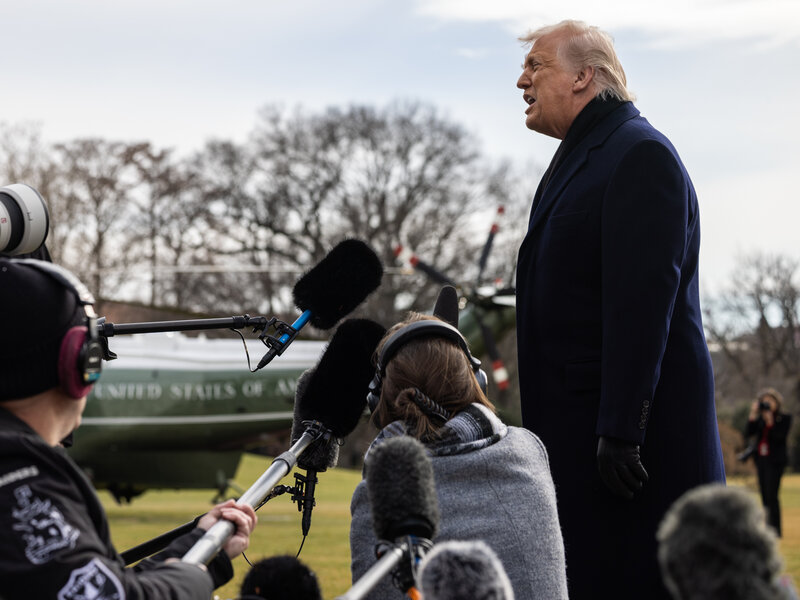
Photo: The New York Times
Tariffs aimed at allies, not adversaries
U.S. President Donald Trump has escalated trade tensions by targeting some of America’s closest military allies, threatening tariffs linked to Greenland that could reshape transatlantic economic relations. The move marks a sharp shift in tone, with economic pressure now being applied not to rivals, but to NATO partners.
Over the weekend, Trump announced that the United States will impose a 10% tariff on imports from eight NATO countries starting February 1. The affected nations are Denmark, Norway, Sweden, France, Germany, the United Kingdom, the Netherlands, and Finland. Together, these economies account for trillions of dollars in annual trade and form the backbone of U.S.-European commercial ties.
Trump warned that the duties would rise sharply to 25% on June 1 unless a deal is reached for what he described as the “complete and total purchase of Greenland,” a territory governed by Denmark but central to Arctic security and resource access.
Greenland at the center of a trade flashpoint
In a post on Truth Social, Trump claimed the tariffs were a response to allied military activity in Greenland, referencing a recent joint exercise involving European troops. He suggested the deployments were unjustified and framed the tariffs as leverage in negotiations over Greenland’s future.
European leaders swiftly pushed back, rejecting any link between military cooperation and trade penalties. Officials across the continent warned that using tariffs against allies undermines NATO unity and risks destabilizing long-standing economic agreements.
The announcement places the EU-U.S. trade deal reached in August under immediate strain. That agreement had eased years of friction and was seen as a foundation for closer coordination on China, technology supply chains, and climate policy.
Europe signals potential retaliation
Analysts say Europe is unlikely to accept the measures without a response. Any retaliatory tariffs from Brussels could quickly escalate into a broader trade conflict, particularly if duties are expanded beyond the initial 10% level.
Market strategists warn that tit-for-tat actions could hit sensitive sectors such as automobiles, industrial machinery, aerospace components, and luxury goods. These industries represent hundreds of billions of dollars in annual cross-border trade and support millions of jobs on both sides of the Atlantic.
Even before the Greenland-related tariffs were announced, investors had begun to show signs of caution. Major U.S. equity indexes were already on track for weekly losses, while Europe’s Stoxx 600 hovered near flat levels, reflecting growing uncertainty around trade and geopolitics.
Markets reassess geopolitical risk
For much of the past year, global markets have largely shrugged off geopolitical tensions involving regions such as the Middle East and Latin America. Investors viewed those disputes as contained and unlikely to disrupt major economic blocs.
That assumption is now being challenged. By directly involving Europe, the tariffs raise the risk of wider market volatility. Asset managers note that once advanced economies with deep financial ties are drawn into a dispute, the potential spillover effects increase significantly.
Currency markets and bond yields have so far remained relatively stable, but analysts caution that prolonged uncertainty could weigh on business confidence, investment decisions, and earnings outlooks, particularly for multinational firms exposed to Europe-U.S. trade flows.
Legal, political, and corporate crosscurrents
Adding to the uncertainty, Treasury Secretary Scott Bessent said it was “very unlikely” that the U.S. Supreme Court would overturn the administration’s tariff authority, signaling that legal challenges may offer little relief to affected countries or companies.
Trump also reignited tensions with the financial sector, threatening legal action against JPMorgan over what he described as being “debanked,” a move that further unsettled markets already grappling with policy unpredictability.
In the corporate sphere, analysts at Bernstein highlighted that Chinese automaker BYD remains underappreciated beyond its electric vehicle business, a reminder that global investors are simultaneously weighing opportunities and risks as trade and industrial policies shift.
Davos looms as tensions peak
The tariff announcement comes just as world leaders and business executives gather in Davos for the World Economic Forum. Trade, security, and geopolitical risk are expected to dominate discussions, with Trump set to attend and potentially confront leaders from several of the countries now facing U.S. duties.
Diplomats say back-channel negotiations are likely in the coming days, as European governments seek to prevent escalation before the June deadline. Whether compromise or confrontation emerges from Davos could shape the direction of transatlantic relations for years.
A fragile start to the year
Barely weeks into the year, global fault lines are already widening. The Greenland tariff threat has transformed a niche geopolitical issue into a potential flashpoint between allies, with implications far beyond trade balances.
What unfolds next will determine whether this episode becomes a brief negotiating tactic or the opening chapter of a deeper economic rift between the United States and Europe.
.webp)
Popular articles



Subscribe to unlock premium content
How Finland Uses Ice Swimming Festivals to Boost Winter Tourism and Local Economies

The Boom of Luxury Personal Libraries Renting Rare Books to the Ultra-Wealthy

Why Bhutan’s Hand-Woven Textiles Are Gaining Global Collector Value

How Finland Uses Ice Swimming Festivals to Boost Winter Tourism and Local Economies
The Boom of Luxury Personal Libraries Renting Rare Books to the Ultra-Wealthy
How Finland Uses Ice Swimming Festivals to Boost Winter Tourism and Local Economies


