Supreme Court Questions Legality of Trump’s Global Tariffs

Supreme Court Questions Legality of Trump’s Global Tariffs
By
David Goldfarb
Last updated:
November 6, 2025
First Published:
November 30, 2025

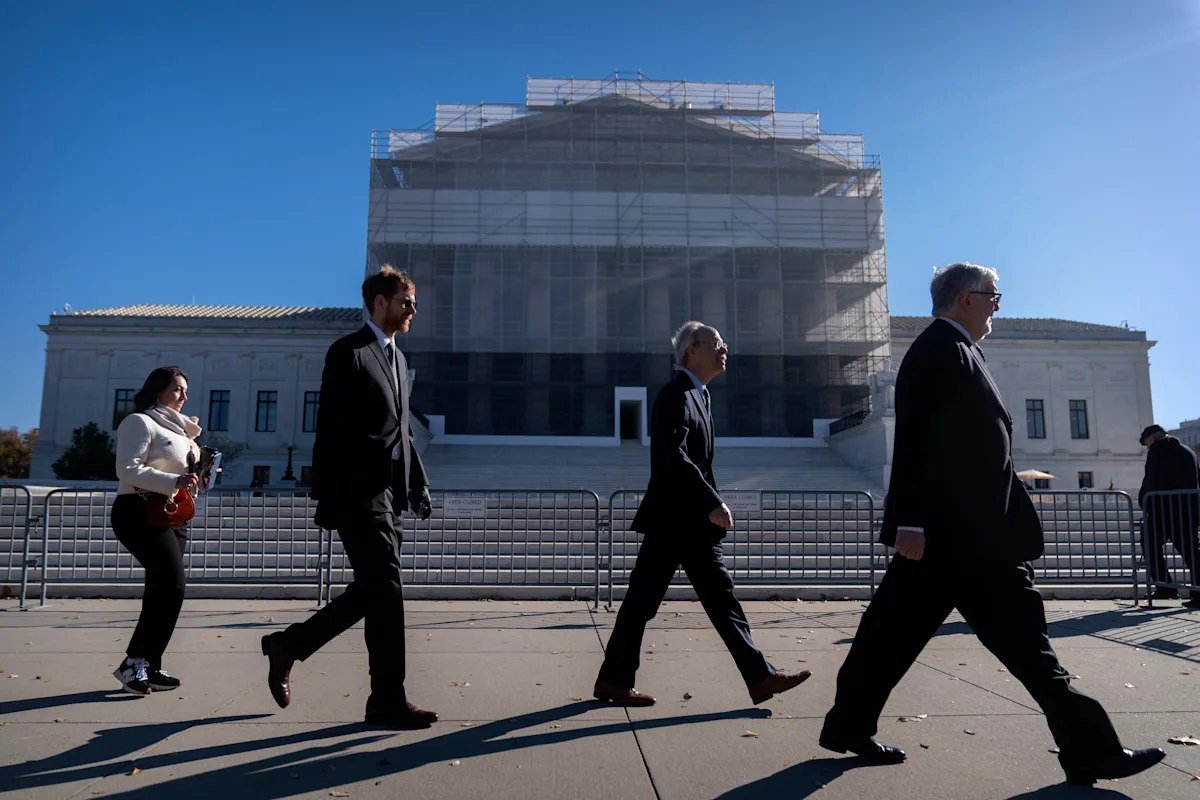
Photo: Yahoo
The U.S. Supreme Court appeared deeply divided yet broadly skeptical on Wednesday over whether former President Donald Trump had the legal authority to impose tariffs on imports from dozens of countries, a move that reshaped global trade and sparked heated economic debate.
The case challenges the foundation of Trump’s “reciprocal” and “fentanyl” tariffs, imposed under the International Emergency Economic Powers Act (IEEPA) — a 1977 law designed to let presidents act swiftly in true national emergencies. Critics argue the law was stretched far beyond its intent, undermining Congress’s constitutional control over taxation.
Justices Challenge the Basis of Trump’s Tariff Power
During more than two hours of oral arguments, justices across the ideological spectrum pressed Solicitor General D. John Sauer, who defended the tariffs on behalf of the Trump administration. Sauer argued that the tariffs were “regulatory tools,” not taxes, and aimed to counter trade imbalances and illegal drug flows, particularly fentanyl imports.
“The fact that they raise revenue was only incidental,” Sauer maintained.
Justice Sonia Sotomayor disagreed sharply, stating, “You say tariffs are not taxes, but that’s exactly what they are — they generate money from American citizens.”
Justice Neil Gorsuch questioned the long-term implications of giving presidents unchecked tariff powers. “What happens when the president simply vetoes legislation to take these powers back?” he asked. “It’s a one-way ratchet toward the continual expansion of executive power.”
Even conservative justices John Roberts, Amy Coney Barrett, Brett Kavanaugh, and Samuel Alito expressed doubts, probing whether Trump’s unilateral trade actions violated the constitutional balance between Congress and the presidency.
Billions in Tariff Revenue at Stake
Trump’s tariffs ranged from 10% to as high as 50% on goods from countries including China, India, Mexico, and Brazil. The Committee for a Responsible Federal Budget estimated that these measures could generate $3 trillion in revenue by 2035 if left intact.
In the second half of fiscal year 2025, the federal government reportedly collected $151 billion in customs duties, nearly triple the amount from the same period a year earlier.
However, the economic burden of those tariffs, critics say, falls squarely on U.S. businesses and consumers, who face higher prices as importers pass on the added costs.
Legal and Political Repercussions
If the court rules against the administration, the government could be forced to refund more than $750 billion in collected duties, according to Treasury Secretary Scott Bessent, who attended Wednesday’s hearing. In a court filing, Bessent warned that delaying the decision until next summer could exacerbate fiscal uncertainty and harm trade relations.
Bessent later posted on X, defending the administration’s position: “Solicitor General Sauer presented strong, persuasive arguments on the necessity of using IEEPA authority to confront the emergencies President Trump declared.”
Attorneys Neal Katyal and Benjamin Gutman, representing American importers, argued that Trump’s tariffs amounted to an unconstitutional seizure of congressional taxing power. “Our founders gave that taxing power to Congress alone,” Katyal said. “IEEPA does not allow a president to rewrite global trade architecture at will.”
Katyal also pointed out inconsistencies in Trump’s policy, noting that tariffs were imposed on Swiss imports at 39%, despite the U.S. maintaining a trade surplus with Switzerland — a move he called “arbitrary and unprecedented.”
The Broader Economic and Political Context
The Supreme Court’s decision will have far-reaching implications for U.S. trade policy, executive authority, and the balance of power between branches of government.
A ruling against Trump could curb future presidents’ ability to unilaterally impose trade restrictions under the guise of emergency powers — a tool that has been used sparingly since IEEPA’s passage in 1977.
Trump, who has defended his tariffs as vital to protecting American manufacturing and national security, called the case “LIFE OR DEATH for our Country” in a post on Truth Social. He argued that the tariffs were key to economic resilience and “the reason our stock market is consistently hitting record highs.”
However, business leaders like Victor Owen Schwartz, a plaintiff in the case, see things differently. “These tariffs aren’t paid by foreign governments,” said Schwartz, whose company imports wines and spirits. “They’re paid by American businesses and consumers — unpredictable, arbitrary, and devastating for small enterprises like mine.”
What Comes Next
The Supreme Court is expected to issue its ruling in the coming months, though no specific timeline has been announced. The outcome could either solidify presidential control over trade policy or restore congressional oversight, redefining how future administrations engage in global commerce.
As the hearing concluded, the courtroom tension underscored what’s truly at stake — not just tariff policy, but the constitutional guardrails that determine how far a president’s power can reach in shaping the U.S. economy and its global relationships.
.webp)
Popular articles



Subscribe to unlock premium content
Driven by Desire in London

Hyper-Niche Gold

The Rise of Private Robotics Tutors for Children

Driven by Desire in London
Hyper-Niche Gold
Driven by Desire in London