Microsoft Continues Offering Anthropic AI Tools Despite Pentagon Risk Designation

Microsoft Continues Offering Anthropic AI Tools Despite Pentagon Risk Designation
By
Junia Wells
Last updated:
March 6, 2026
First Published:
March 6, 2026

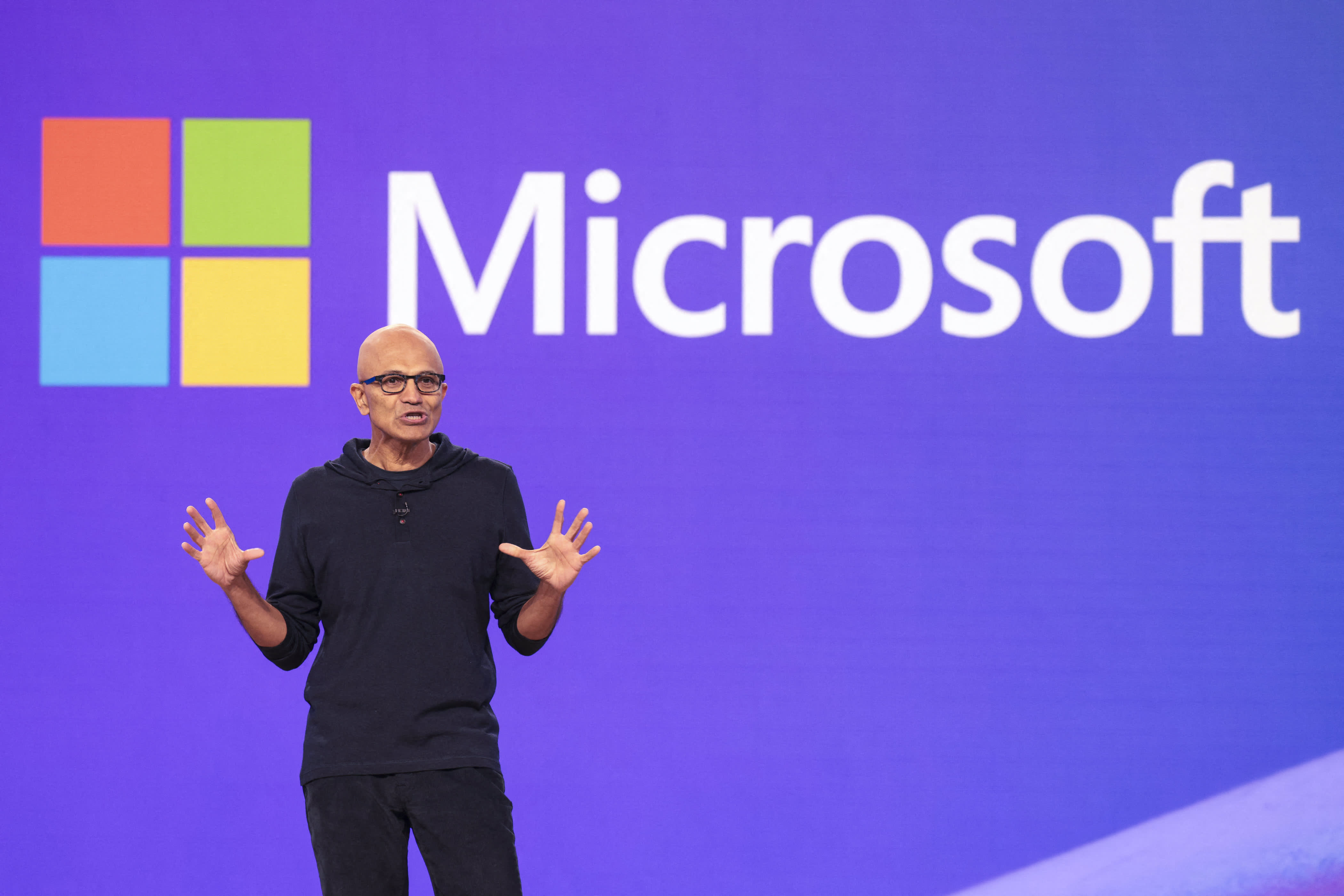
Microsoft CEO Satya Nadella speaks during the Microsoft Build conference at Microsoft headquarters in Redmond, Washington, on May 21, 2024.
Jason Redmond | AFP | Getty Images
Microsoft Confirms Anthropic Models Will Remain Available to Customers
Microsoft has confirmed that it will continue providing access to Anthropic’s artificial intelligence models through its software platforms, even after the U.S. Department of Defense announced plans to label the AI startup a potential supply chain risk.
The decision makes Microsoft the first major technology company to publicly state it will maintain its partnership with Anthropic following the Pentagon’s announcement.
According to Microsoft, its legal team reviewed the government’s proposed designation and determined that Anthropic’s products can remain integrated into Microsoft’s commercial offerings for enterprise and consumer clients. The only exception applies to the U.S. Department of Defense and related military operations.
This means Anthropic’s AI systems, including its widely used Claude language models, will continue to operate within several Microsoft services, including Microsoft 365, GitHub Copilot, and Microsoft’s AI development ecosystem.
Microsoft emphasized that the collaboration with Anthropic will remain focused on commercial and non-defense applications.
Pentagon Moves to Label Anthropic a Supply Chain Risk
The controversy emerged after the Pentagon informed Anthropic that it intends to classify the company as a potential supply chain risk within the U.S. defense technology ecosystem.
Such a designation could limit or eventually prohibit government agencies from relying on the company’s artificial intelligence tools in sensitive military environments.
The move follows growing scrutiny within Washington over how advanced AI systems are developed, deployed, and integrated into national security operations.
Anthropic has strongly opposed the designation and plans to challenge the decision through legal channels. Company officials believe the move could set a precedent affecting how private AI developers interact with federal defense agencies.
Despite the classification, the Pentagon has indicated that Anthropic’s systems may continue operating within defense infrastructure for a limited transition period of up to six months before any full removal takes place.
AI Models Used in Military Operations Raise Questions
The Pentagon’s concerns intensified after confirmation that Anthropic’s AI models had been used to support operational analysis connected to recent U.S. military actions.
Defense officials acknowledged that the technology contributed to analytical workflows linked to U.S. airstrikes targeting Iranian positions in the Middle East. The AI models were reportedly used to process intelligence inputs and assist analysts with data interpretation.
While the systems did not make operational decisions independently, the involvement of commercial AI tools in military operations has fueled debate about the role of private technology companies in national defense.
The issue gained further attention after discussions between Anthropic and defense officials broke down over the scope of AI deployment in sensitive programs.
Negotiations reportedly stalled over government requests involving large-scale domestic surveillance capabilities and the development of fully autonomous weapons systems.
Rival AI Firms Move Quickly to Fill the Gap
Following the collapse of negotiations with Anthropic, other artificial intelligence providers quickly moved to expand their presence in defense contracts.
Shortly afterward, OpenAI announced that the Pentagon had agreed to deploy its AI models for certain classified workloads.
The shift underscores the rapidly intensifying competition among major AI developers to secure government partnerships, particularly in the national security sector where funding and long-term contracts can reach billions of dollars.
Some defense technology firms have already instructed employees to discontinue the use of Anthropic’s Claude models and transition to alternative platforms as a precautionary measure.
Industry analysts note that government procurement decisions can significantly reshape the competitive landscape in artificial intelligence.
Microsoft Maintains Multi-Model AI Strategy
Microsoft’s decision to maintain access to Anthropic’s models reflects the company’s broader strategy of offering customers multiple AI systems rather than relying on a single provider.
The company has invested heavily in building a flexible AI ecosystem that integrates models from several developers.
Anthropic’s Claude models are currently available within Microsoft’s enterprise software suite, including the Microsoft 365 Copilot productivity assistant used across Word, Excel, Outlook, and other workplace tools.
The models are also integrated into GitHub Copilot, Microsoft’s AI-powered coding assistant that helps developers write, review, and debug software.
Millions of programmers rely on GitHub Copilot for code generation and automation, and Anthropic’s models have gained popularity among developers for their ability to produce detailed and structured programming output.
Microsoft CEO Satya Nadella has repeatedly emphasized the importance of giving customers flexibility when selecting AI tools.
Rather than forcing enterprises to rely on a single model, Microsoft allows users to switch between different AI engines depending on their specific needs.
Billions of Dollars in Cloud and AI Partnerships
The partnership between Microsoft and Anthropic also involves massive financial commitments tied to cloud infrastructure.
Anthropic has agreed to spend approximately $30 billion on Microsoft’s Azure cloud platform over the coming years as it trains and deploys large-scale AI models.
In return, Microsoft has committed to investing up to $5 billion directly into Anthropic, strengthening the strategic relationship between the two companies.
The scale of the collaboration highlights the growing importance of cloud computing in the artificial intelligence industry. Training advanced AI systems requires enormous computing power, often involving tens of thousands of specialized processors operating simultaneously.
However, Microsoft’s largest AI partnership remains with OpenAI.
The company currently holds an estimated $135 billion stake in OpenAI’s public benefit corporation, making it one of the largest investments in the history of the technology sector.
As part of that relationship, OpenAI has committed to spending around $250 billion on Microsoft’s Azure cloud infrastructure, further reinforcing Azure’s position as a key platform powering next-generation artificial intelligence systems.
AI Competition Intensifies Across the Technology Industry
The situation involving Anthropic, Microsoft, and the Pentagon illustrates how rapidly artificial intelligence has become intertwined with national security, corporate strategy, and global technology competition.
Major tech companies are racing to build increasingly powerful AI models capable of performing complex reasoning, coding, research analysis, and operational support.
At the same time, governments are becoming more cautious about relying on private-sector technologies for critical infrastructure and defense applications.
For Microsoft, maintaining partnerships with multiple AI developers provides both flexibility and strategic leverage in a market expected to generate trillions of dollars in economic activity over the next decade.
Despite the Pentagon’s concerns about Anthropic, Microsoft’s decision signals that the company sees continued value in offering the startup’s technology to businesses, developers, and enterprise customers worldwide.
The outcome of Anthropic’s legal challenge and the Pentagon’s final determination could ultimately shape how artificial intelligence companies collaborate with governments in the years ahead.
.webp)
Popular articles



Subscribe to unlock premium content
Driven by Desire in London

Hyper-Niche Gold

The Rise of Private Robotics Tutors for Children
Driven by Desire in London
Hyper-Niche Gold
Driven by Desire in London