China’s Startup Funding Boom Faces a Reality Check as Beijing Tightens Control

China’s Startup Funding Boom Faces a Reality Check as Beijing Tightens Control
By
Augusta Parker
Last updated:
June 12, 2026
First Published:
June 12, 2026

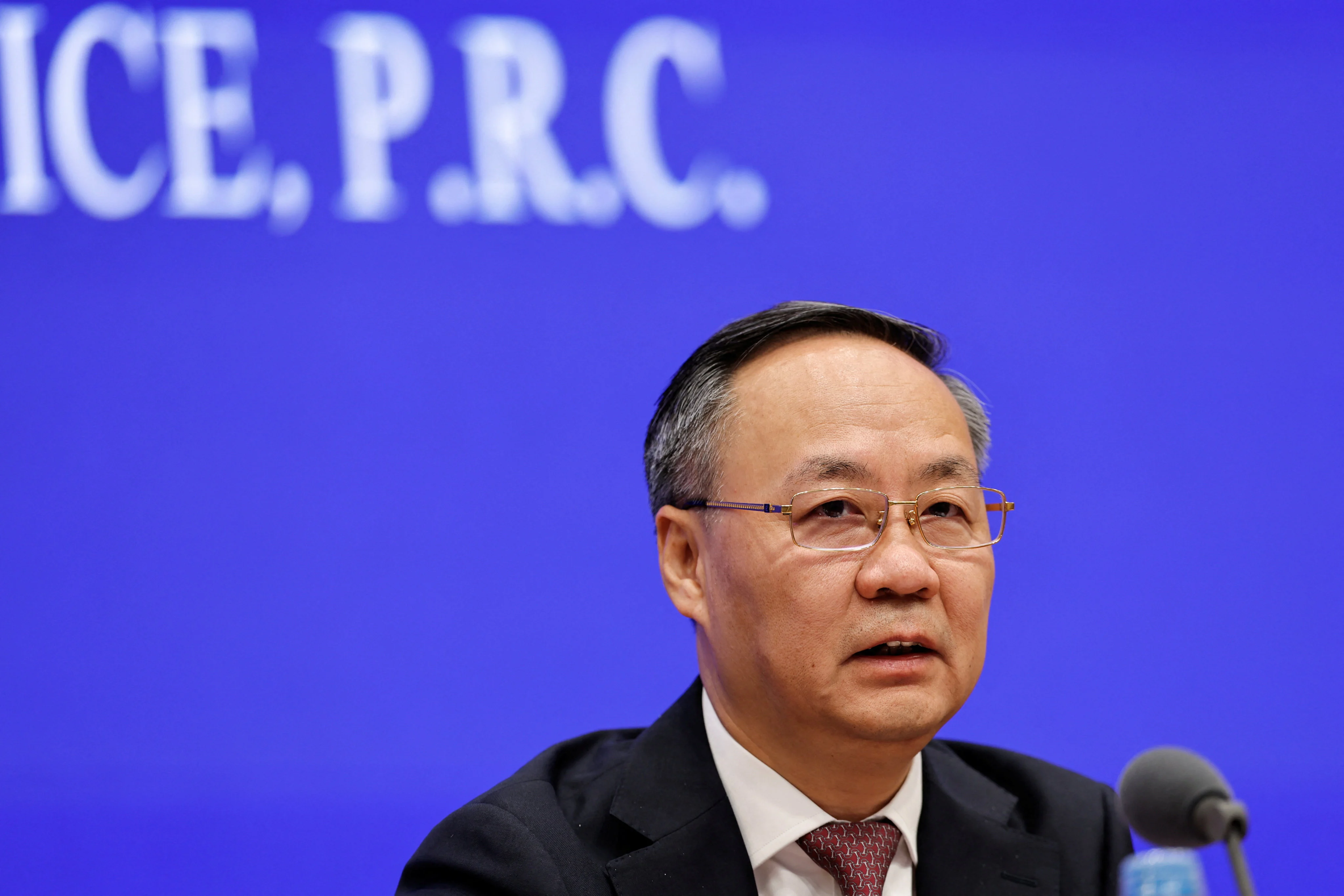
Photo: South China Morning Post
For years, China has relied on an aggressive state-backed investment strategy to accelerate technological innovation and challenge the dominance of the United States in critical industries. Billions of dollars have flowed into startups through government guidance funds, local investment vehicles, and state-supported venture capital programs.
However, recent developments surrounding robotics giant Dreame Technology and a sweeping regulatory overhaul of China's private investment industry have exposed growing concerns about how efficiently that money is being deployed.
The events have reignited debate over whether China's government-led funding model is creating genuine innovation or encouraging excessive risk-taking, duplicated investments, and costly misallocation of public capital.
Beijing Reassesses Its Technology Investment Strategy
China's central government has spent the past decade promoting technological self-sufficiency across sectors ranging from artificial intelligence and semiconductors to robotics, electric vehicles, and advanced manufacturing.
As part of this strategy, local governments across the country established thousands of investment funds designed to attract startups and build regional technology hubs. These funds became a critical source of financing, especially as foreign venture capital firms and Wall Street-backed investors reduced their exposure to China amid rising geopolitical tensions and regulatory uncertainty.
But Beijing is now signaling that the era of unchecked expansion may be coming to an end.
In a significant policy shift, China's State Council recently introduced new regulations aimed at strengthening oversight of the country's private fund industry, which now manages approximately 23 trillion yuan ($3.2 trillion) in assets.
The move coincided with growing scrutiny of Dreame Technology, one of China's fastest-growing consumer robotics companies, highlighting broader concerns about transparency, governance, and the effectiveness of government-backed investment programs.
Dreame Technology's Rise From Startup to Global Robotics Leader
Founded in 2017, Dreame Technology has emerged as one of China's most successful robotics companies.
The company became the world's largest robotic vacuum cleaner manufacturer by sales volume during the first quarter of the year, surpassing many global competitors and establishing a strong presence across Europe, North America, and Asia.
Its products have benefited from increasing consumer demand for smart home technology, a market expected to surpass $250 billion globally within the next several years.
However, Dreame's ambitions extend far beyond robotic cleaning devices.
Under founder Yu Hao, the company has pursued an extraordinarily aggressive diversification strategy. Since its establishment, Dreame has reportedly become connected to nearly 1,000 affiliated businesses operating across a wide range of industries, including electric vehicles, smartphones, artificial intelligence, humanoid robotics, satellite communications, advanced manufacturing, and even consumer beverage ventures.
The scale of this expansion attracted attention throughout China's investment community, particularly after Yu publicly stated his goal of building what he described as the first $100 trillion company in human history.
While such ambitions generated excitement among investors and local governments, they have also raised questions about whether rapid expansion has outpaced sustainable business fundamentals.
Government Scrutiny Intensifies
Concerns surrounding Dreame escalated when officials in Jiangsu Province requested that companies review and disclose their financial exposure to businesses connected to the robotics firm.
Authorities reportedly sought information regarding investment amounts, government support received, operational relationships, and potential financial risks linked to Dreame-affiliated entities.
At roughly the same time, founder Yu Hao's social media accounts faced restrictions, limiting his public communications and fueling speculation about increasing regulatory attention.
Although neither Dreame nor government officials publicly explained the developments, the timing reinforced broader concerns about excessive expansion fueled by government-backed capital.
The Massive Role of State Funding
Dreame's growth story reflects a larger trend across China's technology sector: heavy reliance on government-supported financing.
Reports indicate that the company's venture investment platform oversees approximately 41.6 billion yuan ($5.8 billion) in assets.
An estimated 80% of that capital originates from government-backed industrial funds established by local authorities across multiple provinces and municipalities.
Many of the investment vehicles associated with Dreame reportedly involve state-owned capital, illustrating the extent to which public funding has become intertwined with private-sector innovation efforts.
This model differs significantly from the approach commonly used in the United States.
While Washington supports strategic industries through tax incentives, grants, research partnerships, procurement contracts, and legislation such as the CHIPS Act, Chinese authorities frequently become direct investors by taking ownership stakes in companies.
This means governments share both the potential rewards and the financial risks associated with startup investments.
Why Local Governments Embraced Venture Investing
The rise of government venture funds is closely linked to China's changing economic landscape.
For decades, local governments relied heavily on land sales and property development as major sources of revenue. However, the country's prolonged real estate downturn significantly weakened that model.
As housing activity slowed and land revenues declined, many regional governments began searching for alternative sources of economic growth and fiscal income.
Technology investments appeared to offer a solution.
By investing directly in startups and emerging industries, local authorities hoped to generate future capital gains, attract high-value businesses, create jobs, and establish new economic growth engines.
As a result, thousands of government guidance funds were launched nationwide.
Official data suggests that by the end of 2025, China had established more than 2,100 government guidance funds with combined target capital exceeding 11 trillion yuan ($1.5 trillion).
The scale of this effort is unmatched globally.
The Risks of Political Investing
While the strategy has produced notable success stories, experts warn that government officials often lack the specialized expertise required to evaluate highly complex technology investments.
Unlike experienced venture capital firms, local authorities may prioritize political objectives, regional development targets, or industrial policy goals over commercial viability.
This creates incentives for startups to align themselves with fashionable government priorities regardless of whether their business models are sustainable.
As competition intensified among provinces and cities, local governments frequently raced to attract the same types of companies, resulting in duplicated projects, overlapping investments, and inefficient capital allocation.
Several high-profile failures have highlighted these risks.
One widely cited example involved a semiconductor project in Wuhan that reportedly consumed approximately 15 billion yuan before collapsing, leaving taxpayers to absorb substantial losses.
Analysts argue that similar cases reveal structural weaknesses in China's state-led investment framework.
The "Spray and Pray" Model of Innovation
Many economists describe China's technology funding strategy as a "spray and pray" approach.
Under this model, enormous amounts of capital are distributed across thousands of startups with the expectation that a small number of successful companies will ultimately justify the losses generated elsewhere.
The strategy has undeniably produced global champions.
Companies in sectors such as electric vehicles, batteries, renewable energy, e-commerce, robotics, and artificial intelligence have emerged as international competitors, often benefiting from years of state support.
Cities such as Hefei became famous for successful government investments in major companies, helping transform local economies and creating powerful examples for other regions to follow.
However, the same model has also generated significant waste.
Research examining China's government-backed investment ecosystem has identified widespread duplication, overlapping industrial projects, underperforming ventures, and inefficient deployment of public resources.
The challenge for policymakers is determining how to preserve innovation while reducing financial excess.
Beijing's New Rules Signal a Major Shift
The latest State Council regulations suggest that China's leadership is increasingly concerned about these risks.
The new framework places stricter controls on the creation of government investment funds and introduces stronger reporting requirements throughout the industry.
Lower-level governments will face tighter restrictions when establishing new funds, while oversight responsibilities are expected to shift toward city and provincial authorities.
The reforms are designed to improve accountability, reduce redundant investments, and limit fiscal risks that could ultimately burden the central government.
For local officials accustomed to using investment funds as economic development tools, the changes represent a significant adjustment.
What Comes Next for China's Innovation Machine?
China remains committed to becoming a global technology powerhouse, and government support for strategic industries is unlikely to disappear.
However, the Dreame case illustrates the growing tensions between rapid expansion and financial discipline.
Beijing wants innovation, but it also wants greater efficiency, transparency, and accountability. Achieving all three simultaneously may prove challenging.
As regulators tighten oversight and local governments face new restrictions, China's technology sector could enter a more disciplined phase of growth.
The outcome will help determine whether the country's vast startup ecosystem can continue producing world-class innovators while reducing the financial risks that have accumulated during years of aggressive investment.
For investors, entrepreneurs, and policymakers alike, the developments mark an important turning point in the evolution of China's technology funding model.
.webp)
Popular articles



Subscribe to unlock premium content
Iceland’s Adventure Lodges Are Redefining Remote Work

Inside Japan’s Luxury Ryokans That Blend Tradition with Modern Experiences

Greece’s Tourism-Driven Economy: Lessons From Financial Crises

Iceland’s Adventure Lodges Are Redefining Remote Work
Inside Japan’s Luxury Ryokans That Blend Tradition with Modern Experiences
Iceland’s Adventure Lodges Are Redefining Remote Work