India’s Film Industry Embraces AI as Hollywood Hesitates, Triggering a New Era of Low-Cost, High-Speed Content Creation

India’s Film Industry Embraces AI as Hollywood Hesitates, Triggering a New Era of Low-Cost, High-Speed Content Creation
By
Rachel Steinberg
Last updated:
June 12, 2026
First Published:
June 12, 2026


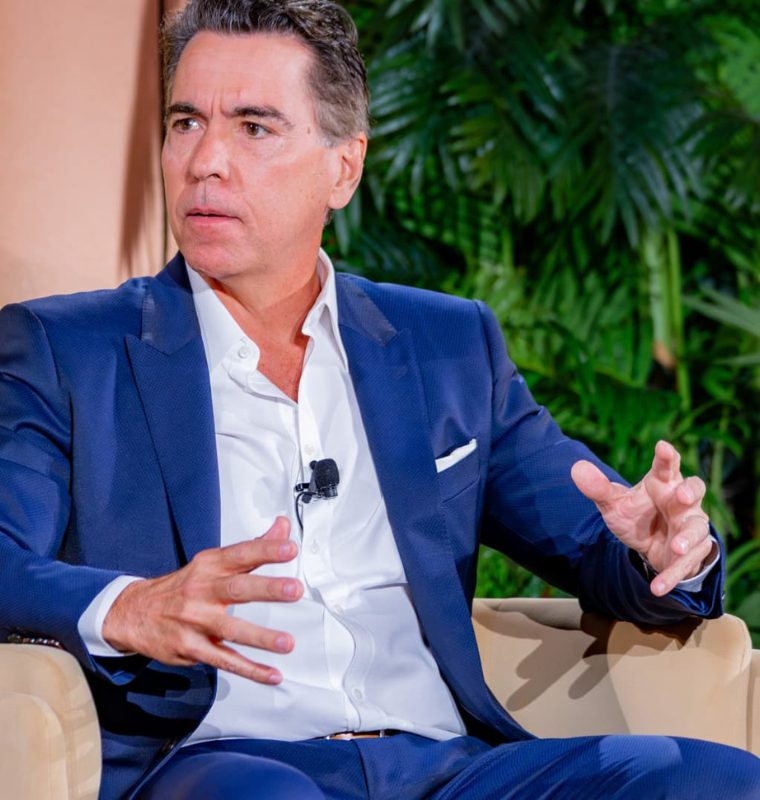
Photo: The Economic Times
While Hollywood continues to grapple with regulatory concerns, labor disputes, and ethical questions surrounding artificial intelligence, India’s entertainment industry is rapidly integrating generative AI into mainstream film and streaming production at scale.
From mythology-based series to experimental animation workflows, filmmakers in India are increasingly using AI tools to reduce costs, accelerate production timelines, and expand creative output across both digital and theatrical platforms.
The result is a fast-emerging production ecosystem where artificial intelligence is not a future experiment but an active part of daily filmmaking.
AI-Generated Storytelling Enters Mainstream Streaming
One of the most prominent examples of AI-driven production in India comes from JioStar, the joint venture between Reliance Industries and Walt Disney.
In October of last year, the platform launched a 100-episode series based on the Indian mythological epic Mahabharat, reimagined using generative AI tools.
The series, titled “Mahabharat: Ek Dharmayudh,” attracted approximately 6.5 million views on its launch day alone, significantly outperforming platform benchmarks and reportedly delivering more than double the average engagement levels.
Executives behind the project stated that the series was not intended as a one-time experiment but rather as a foundational step toward building long-form AI-assisted storytelling pipelines.
The goal, according to production leadership, is to use AI to expand narrative scale while maintaining production efficiency across large episodic formats.
AI Feature Films and Mythology Projects Gain Momentum
Beyond streaming platforms, Indian production houses are also exploring AI-first filmmaking for theatrical releases.
Abundantia Entertainment is developing “Chiranjeevi Hanuman – The Eternal,” a feature film based on Hindu mythology, which has been described in industry reports as one of India’s first fully AI-assisted feature productions.
The project reflects a broader industry trend where mythological and historical narratives are being adapted using generative tools to reduce reliance on expensive physical sets, large-scale VFX teams, and long post-production cycles.
At the same time, streaming platforms such as Amazon’s MX Player have already begun incorporating AI-generated sequences into existing productions.
In one example, the series “Made in India: The Titan Story” reportedly used more than 100 AI-generated shots to recreate 1970s-era Mumbai, blending archival realism with digitally reconstructed environments.
Production Costs and Timelines Drop Dramatically
One of the most significant drivers of AI adoption in India’s entertainment sector is cost efficiency.
Traditional film production, particularly in animation or large-scale historical reconstructions, often requires budgets running into millions of dollars and production timelines stretching between six months and a year or more.
By contrast, creators using generative AI tools report being able to complete comparable sequences within weeks at a fraction of the cost, sometimes even under a few hundred dollars depending on complexity.
This shift is fundamentally changing the economics of filmmaking, particularly for independent creators and mid-sized studios operating with limited access to traditional financing.
A Rapidly Expanding AI Creator Economy
The adoption of generative AI tools has created a surge in demand for AI-based production roles across India’s media industry.
AI artists and digital creators report a sharp increase in project opportunities over the past year, with some professionals receiving multiple collaboration requests each week.
This marks a dramatic shift from previous years, when creators often had to actively pitch studios for work and compete for limited production contracts.
The acceleration is being driven by widespread adoption of tools such as Midjourney, Adobe Firefly, Google AI Studio, Minimax, Seedance, and other generative video and image platforms.
Many production teams also use integrated systems like Higgsfield, which allows creators to combine multiple AI models into a single workflow for enhanced flexibility and output control.
India’s Entertainment Market Fuels AI Expansion
India’s media and entertainment industry is now valued at approximately $32 billion and continues to grow at nearly 9 percent annually, outpacing broader economic growth in the country.
This rapid expansion has created strong demand for scalable content production methods, particularly as streaming platforms compete for audiences in a highly fragmented and mobile-first market.
Industry analysts note that India’s massive domestic audience, combined with global demand for digital content, is placing significant pressure on production pipelines to deliver faster and at higher volume.
AI Reduces Barriers for Independent Filmmakers
One of the most transformative effects of generative AI in India’s film industry is its impact on accessibility.
Traditionally, filmmaking in India has been heavily dependent on access to funding, established industry networks, and relationships with distributors and production houses.
AI is beginning to disrupt this structure by allowing smaller teams and independent creators to produce high-quality visual content without requiring large budgets or studio backing.
For many emerging filmmakers, AI provides an alternative pathway to bring ideas to market, bypassing traditional gatekeepers in the industry.
Some independent producers have stated that if they are unable to secure financing within a limited timeframe, they intend to complete entire projects using AI workflows and distribute them directly through digital platforms.
Hybrid Production Models Emerge
Despite rapid adoption, many creators are not replacing traditional filmmaking entirely but instead combining human performance with AI enhancement.
In several experimental productions, filmmakers first record scenes with live actors and then use AI systems to generate stylized animations or enhanced visual interpretations based on real facial expressions and movements.
This hybrid approach is particularly useful in areas where AI still struggles with nuanced human expression and emotional continuity.
By combining live-action input with generative processing, creators are able to maintain emotional authenticity while still benefiting from reduced production time and cost.
Global Contrast With Hollywood’s Cautious Approach
The acceleration of AI adoption in India stands in contrast to Hollywood, where debates over job displacement, intellectual property rights, and creative control have slowed large-scale integration.
While U.S. studios continue to test AI applications in visual effects and script assistance, concerns around labor negotiations and regulatory frameworks have limited widespread deployment in core production workflows.
India, by comparison, is moving more quickly toward practical implementation, driven by cost advantages, production demand, and a rapidly growing streaming market.
India’s film and streaming industry is entering a structural transformation driven by generative AI technologies that are redefining how content is created, produced, and distributed.
From multi-episode mythological series to AI-assisted feature films and hybrid animation workflows, artificial intelligence is becoming embedded in the core of production processes rather than existing as an experimental add-on.
As costs fall and production speed increases, India’s $32 billion entertainment industry is positioning itself as one of the most aggressive adopters of AI-driven filmmaking globally, potentially reshaping the competitive balance of global content creation in the years ahead.
.webp)
Popular articles



Subscribe to unlock premium content
Iceland’s Adventure Lodges Are Redefining Remote Work

Inside Japan’s Luxury Ryokans That Blend Tradition with Modern Experiences

Greece’s Tourism-Driven Economy: Lessons From Financial Crises

Iceland’s Adventure Lodges Are Redefining Remote Work
Inside Japan’s Luxury Ryokans That Blend Tradition with Modern Experiences
Iceland’s Adventure Lodges Are Redefining Remote Work