China’s GPU Challenger Moore Threads Skyrockets Over 400 Percent in Shanghai Debut After Massive 1.1 Billion Dollar IPO

China’s GPU Challenger Moore Threads Skyrockets Over 400 Percent in Shanghai Debut After Massive 1.1 Billion Dollar IPO
By
Calder Monroe
Last updated:
December 5, 2025
First Published:
December 5, 2025

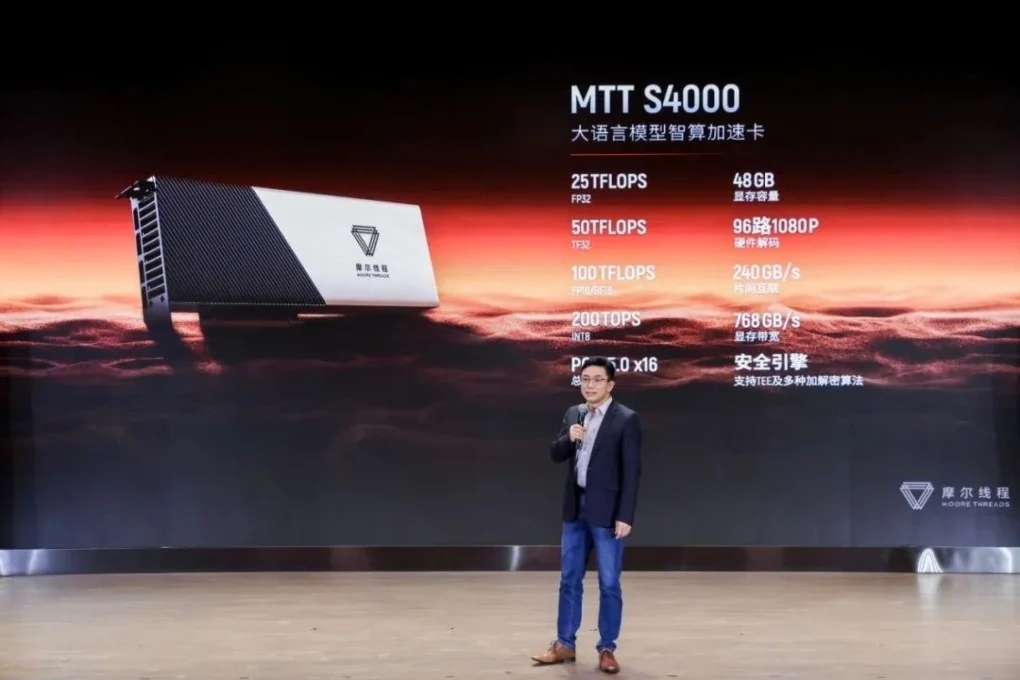
Photo: South China Morning Post
A Stunning Market Debut That Shook Shanghai
Moore Threads, the Beijing-based GPU developer frequently labeled as “China’s Nvidia,” delivered one of the most dramatic IPO debuts of the year. Its shares surged more than 400 percent on the first day of trading on the Shanghai Stock Exchange, following a blockbuster 1.1 billion dollar fundraising round.
The stock opened at a premium and continued climbing through the session, ultimately trading at 584.98 yuan, more than five times its initial IPO price of 114.28 yuan. The surge reflects intense investor enthusiasm for domestic semiconductor players amid geopolitical pressure and rising national ambitions in AI technology.
Backing, Underwriting, and a High-Stakes R&D Roadmap
The IPO was spearheaded by CITIC Securities as lead underwriter, backed by book runners BOC International Securities, China Merchants Securities, and GF Securities.
Moore Threads clarified in its filing that it remains unprofitable, but the capital infusion will accelerate several major projects. These include the development of next-generation self-designed AI training and inference GPU chips, expanded software ecosystem development, and enhanced working capital to support scaling operations.
The company’s roadmap reflects China’s fast-growing need for domestic AI computing solutions as demand for GPUs in cloud computing, large language models, gaming, and industrial automation grows exponentially.
Rising Under U.S. Sanctions — And Thriving Anyway
Moore Threads’ achievement is even more striking given that it was placed under U.S. sanctions in 2023, restricting its access to advanced chip manufacturing nodes and key foundry partners. The restrictions were part of Washington's long-standing effort to curb China’s access to high-end AI processors.
Nonetheless, the firm has emerged as a central figure in China’s broader strategy to reduce its reliance on foreign semiconductor providers. Beijing has doubled down on domestic chip cultivation, clearing more semiconductor IPOs and supporting firms that can replace American giants like Nvidia in sensitive AI applications.
A Crowded, Competitive, and Fast-Moving AI Chip Ecosystem
Moore Threads is far from alone in this race. China’s semiconductor ecosystem is rapidly expanding as both tech conglomerates and specialized chip startups respond to unprecedented demand.
Huawei has accelerated development of its Ascend AI processors, while Cambricon — another AI chip designer — has seen its Shanghai-listed shares climb more than 100 percent this year.
New entrants such as Enflame Technology and Biren Technology are targeting high-performance computing workloads, positioning themselves to capture market share left open by Nvidia’s inability to supply its most advanced chips to China due to export restrictions.
Beijing has also tightened controls on Nvidia chip imports, signaling a shift toward self-sufficiency not only in design but also across the entire semiconductor supply chain.
What the Moore Threads Debut Means for Investors
The 400 percent-plus surge underscores several key themes shaping the market:
- Chinese AI chipmakers remain hot investment targets, especially those aligned with national strategic priorities.
- Sanctions are reshaping global semiconductor supply chains, creating opportunity for firms that can fill the hardware gap.
- Demand for GPU computing in China is exploding, driven by AI model training, cloud providers, and enterprise adoption.
Moore Threads’ debut indicates strong speculative interest, but also signals a structural shift in the region’s semiconductor landscape as local companies race to replace foreign technology. Investors will likely watch closely to see whether the company can turn explosive market enthusiasm into sustainable technological gains and long-term profitability.
.webp)
Popular articles



Subscribe to unlock premium content
Driven by Desire in London

Hyper-Niche Gold

The Rise of Private Robotics Tutors for Children

Driven by Desire in London
Hyper-Niche Gold
Driven by Desire in London