China Rolls Back Key Export Curbs on Critical Minerals to U.S.

China Rolls Back Key Export Curbs on Critical Minerals to U.S.
By
Calder Monroe
Last updated:
November 10, 2025
First Published:
November 30, 2025

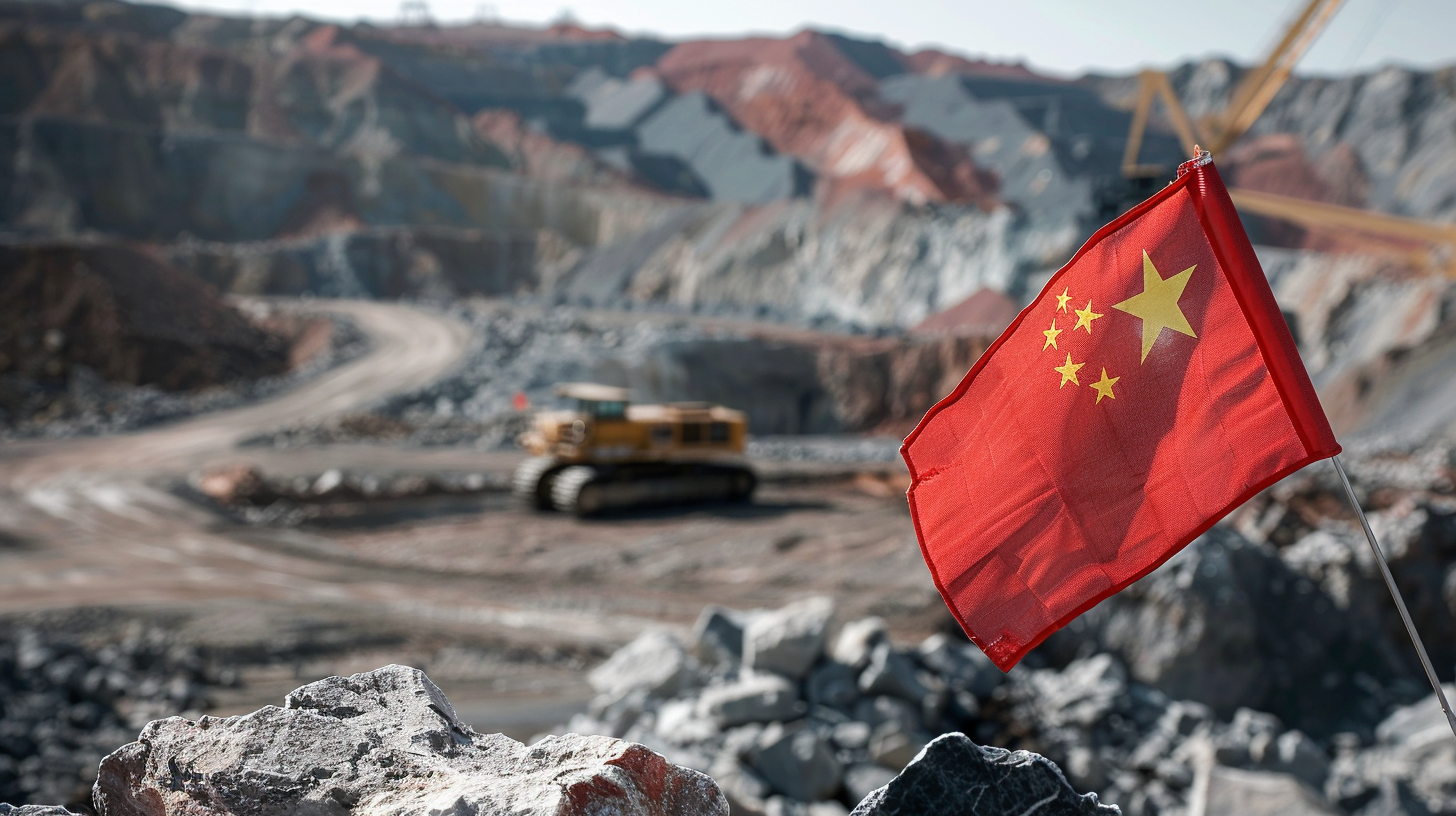
Photo: Channelchek
China has announced a one-year suspension of export restrictions on several important minerals and technologies that serve both civilian and military uses. The move follows high-level talks between Chinese President Xi Jinping and U.S. President Donald Trump and may signal a deeper trade truce taking hold between the world’s two largest economies.
Background & Scope of the Roll-Back
On 9 October 2025, China’s Ministry of Commerce declared that it would pause restrictions imposed earlier on exports of key rare earth elements, lithium-battery materials and advanced processing technologies. These curbs were initially justified on national-security grounds and reached into dual-use materials used in semiconductors, defence hardware and high-tech manufacturing.
In addition, export bans introduced in December 2024 on gallium, germanium, antimony and “super-hard” materials such as synthetic diamonds and boron nitride have now been suspended for the coming year. Analysts note that China’s dominance in refining such critical minerals (for example >90% of global refined gallium output in recent years) gives it substantial leverage.
By lifting—or at least pausing—these restrictions, Beijing is sending a signal of de-escalation in the trade conflict, which has rippled through tech supply-chains globally.
Why It Matters: High-Tech Supply Chains and Strategic Minerals
These minerals are far more than commodities. Gallium and germanium feed into advanced radar, infrared sensors, fibre-optics and semiconductor systems, while antimony is used in flame-retardants, ammunition primers and energy-storage. Lithium battery materials underpin electric vehicles and grid-storage systems.
According to recent industry estimates, China accounted for nearly 60% of global refined germanium production and virtually all (99%) of refined gallium output. Disruption of these flows is seen as a potential “$3.4 billion hit” to the U.S. economy if supply remains constrained.
For the United States and its high-tech and defence sectors, ensuring reliable access to these materials is a strategic priority. For China, the ability to restrict or resume exports gives it a powerful bargaining chip.
What the Agreement Entails
Under the new agreement:
- China will grant general export licences for rare-earths, gallium, germanium, antimony and key graphite supplies destined for U.S. end-users and their global supply-chains.
- The one-year suspension covers multiple categories of dual-use goods and technologies, including processing equipment for rare-earth magnets and battery cathodes.
- The truce also includes U.S. commitments: Washington has agreed to reduce tariffs on certain Chinese imports by 10 percentage-points, and to suspend its reciprocal tariff escalation until at least November 2026.
- Importantly, China will also ease end-use and end-user verification requirements for U.S. bound shipments of dual-use graphite, introduced as part of the December 2024 restrictions.
Implications for Global Trade & Industry
Short-term relief: Manufacturers dependent on Chinese-sourced critical materials will have a clearer pathway for supply-chain planning, easing cost pressures and inventory risks.
Geopolitical signalling: The move underscores a willingness on both sides to stabilise trade ties—and offers a glimpse of what a deeper restructuring of supply chains might look like.
Continuing caution: Despite the step forward, industry watchers caution that China’s leverage remains significant and future disruptions remain possible if political winds shift.
Competitive response: Affected industries in the U.S., Europe and elsewhere may still accelerate efforts to diversify away from Chinese supply, ramp up domestic mining/processing and build alternative sourcing networks.
Looking Ahead
In the coming months stakeholders will watch for:
- Whether China honours the one-year suspension in full, or re-imposes curbs ahead of the 2026 expiry.
- How quickly companies move to reset supply-chain contracts and whether any bottlenecks of processing capacity remain.
- Additional trade rounds between Washington and Beijing, and whether deeper structural reforms to trade or technology access are negotiated.
- Movements in global prices and availability of these critical minerals—if the suspension holds, it may dampen recent price spikes.
The suspension of export restrictions by China represents a tangible step toward thawing trade tensions and restoring critical supply-chains in high-tech and defence industries. While the meaning remains the same — China relaxing curbs and the U.S. gaining breathing room in access to minerals — the tone has shifted from confrontation toward recalibration. For industries, governments and investors, the implications are material: supply-chain risk falls, but vigilance remains essential.
.webp)
Popular articles



Subscribe to unlock premium content
Driven by Desire in London

Hyper-Niche Gold

The Rise of Private Robotics Tutors for Children

Driven by Desire in London
Hyper-Niche Gold
Driven by Desire in London