
China Moves to Tighten Silver Exports Signaling a Strategic Shift in Metals Policy

China Moves to Tighten Silver Exports Signaling a Strategic Shift in Metals Policy
By
David Goldfarb
Last updated:
December 31, 2025
First Published:
April 25, 2026

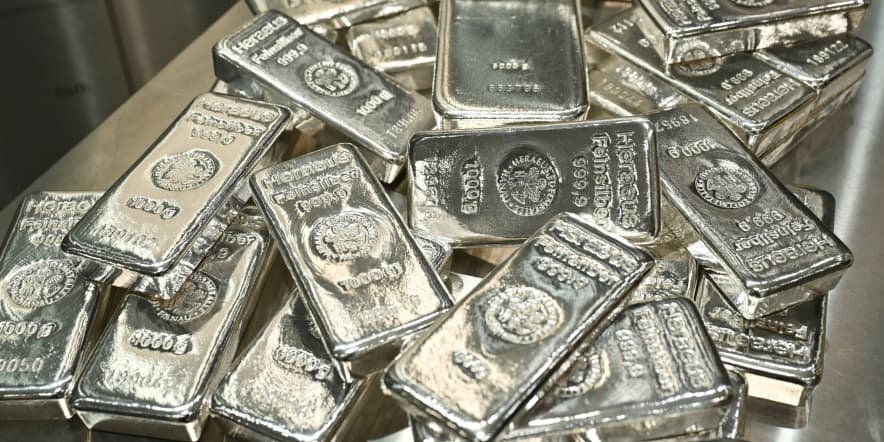
Photo: CNBC
China Elevates Silver to Strategic Status
China is set to introduce tighter controls on silver exports starting Thursday, marking a significant policy shift that places the metal under the same regulatory framework as rare earth elements. The move signals Beijing’s intention to treat silver not as a routine commodity, but as a strategic resource with national security and industrial implications.
State run Securities Times cited an industry insider who said the new measures formally move silver into a higher regulatory tier. While authorities have stopped short of announcing a blanket export ban, the change gives regulators greater oversight and discretion over who can export, how much, and for what purpose.
A Policy Rooted in Earlier Trade Negotiations
The restrictions are not sudden. China’s Commerce Ministry first outlined the measures in October as part of a broader effort to strengthen oversight of critical and rare metals. That announcement coincided with high level talks between US President Donald Trump and Chinese President Xi Jinping in South Korea, where both sides agreed to temporarily pause certain rare earth controls while the US eased some tariffs.
Earlier this month, Beijing published a list of 44 companies approved to export silver in 2026 and 2027, effectively creating a licensing system. Similar frameworks are already in place for rare earths, tungsten, and antimony, all materials where China dominates global supply and which are widely used in defense systems, electronics, and advanced manufacturing.
Global Supply Chains Feel the Pressure
China plays a central role in the global silver market. In the first 11 months of the year, the country exported more than 4,600 tons of silver while importing just around 220 tons, highlighting its position as a net exporter and major supplier. It is also among the world’s largest producers and hosts some of the biggest known reserves.
The EU Chamber of Commerce in China reported in a November survey that most responding firms have already been affected or expect to be affected by China’s expanding export controls. Manufacturers reliant on stable silver supplies, particularly in electronics, renewable energy, and medical devices, are now reassessing sourcing strategies.
The United States added silver to its official list of critical minerals in November, citing its importance in electrical circuits, batteries, solar panels, and antimicrobial medical tools. The designation reflects growing concern in Washington about dependence on Chinese controlled supply chains.
Industry Reaction and Political Pushback
The policy has drawn criticism from industry leaders. Tesla CEO Elon Musk publicly questioned the decision, warning that silver is essential to a wide range of industrial processes and that tighter controls could disrupt manufacturing and innovation.
Meanwhile, market behavior suggests buyers are already reacting. Canada based Kuya Silver confirmed that two Chinese firms recently offered to purchase physical silver at premiums of roughly $8 above prevailing market prices. An Indian buyer followed with an offer around $10 above market, pointing to intensifying competition for available supply.
Surging Prices Reflect Broader Economic Anxiety
The timing of China’s move coincides with a powerful rally in precious metals. Silver prices have more than doubled this year, putting the metal on track for its strongest annual performance since 1979. Earlier this week, spot prices briefly crossed $80 an ounce before easing back to around $73.
Gold has also surged, gaining more than 60 percent so far this year. Analysts link the rally to investor efforts to hedge against currency weakness and economic uncertainty. The US dollar index has fallen nearly 9.5 percent in 2025, its steepest decline since 2017.
Some economists view the price action as a warning signal. Rising demand for hard assets, combined with tighter supply controls, suggests growing concern about the stability of traditional financial systems.
Silver’s Strategic Role Comes Into Focus
Beyond investment demand, silver’s industrial importance is a key factor. It is a critical input for semiconductors, defense electronics, renewable energy infrastructure, and next generation batteries. By tightening oversight, China gains greater leverage over industries that rely heavily on uninterrupted access to the metal.
While Beijing has framed the policy as a regulatory upgrade rather than a restriction, the impact is likely to be felt well beyond China’s borders. As with rare earths, even incremental controls can influence prices, reshape trade flows, and accelerate efforts by other countries to secure alternative supply chains.
What Comes Next
China’s decision to align silver with its rare earths playbook underscores a broader strategy of using resource dominance as an economic and geopolitical tool. For governments and companies alike, the message is clear. Critical materials once taken for granted are becoming instruments of policy, and the race to secure resilient supply chains is entering a new phase.
.webp)
Popular articles



Subscribe to unlock premium content
How Finland Uses Ice Swimming Festivals to Boost Winter Tourism and Local Economies

The Boom of Luxury Personal Libraries Renting Rare Books to the Ultra-Wealthy

Why Bhutan’s Hand-Woven Textiles Are Gaining Global Collector Value

How Finland Uses Ice Swimming Festivals to Boost Winter Tourism and Local Economies
The Boom of Luxury Personal Libraries Renting Rare Books to the Ultra-Wealthy
How Finland Uses Ice Swimming Festivals to Boost Winter Tourism and Local Economies


