Vance Casts Decisive Tie-Breaker to Defeat Senate War Powers Resolution on Venezuela

Vance Casts Decisive Tie-Breaker to Defeat Senate War Powers Resolution on Venezuela
By
Calder Monroe
Last updated:
January 15, 2026
First Published:
January 15, 2026

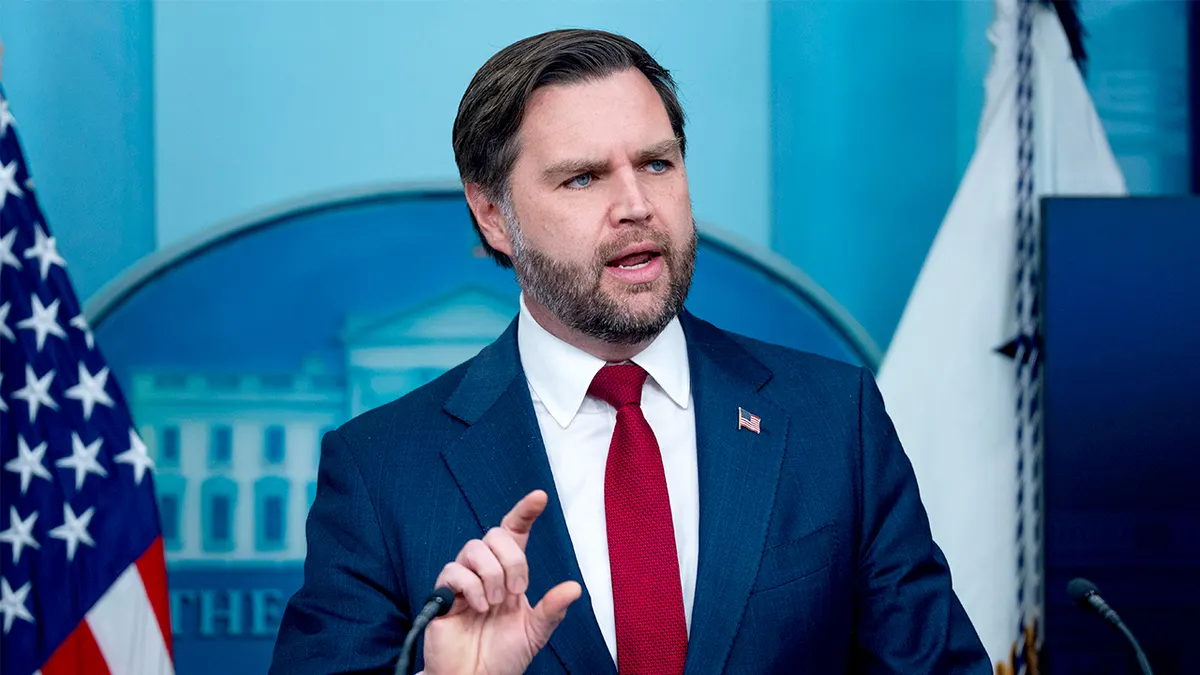
Photo: Fox News
In a dramatic Senate session Wednesday, Vice President J.D. Vance delivered the deciding vote that blocked a bipartisan effort to limit President Donald Trump’s ability to use U.S. military force in or against Venezuela without explicit congressional approval. The final count stood at 51-50, underscoring the razor-thin margin by which the Trump administration secured victory after a concerted lobbying campaign.
A high-stakes clash over military oversight
The war powers resolution, championed by Democratic Senator Tim Kaine and supported initially by a bipartisan group of lawmakers, sought to rein in executive authority after a surprise U.S. military operation earlier this month resulted in the capture of Venezuelan President Nicolás Maduro and his wife. Critics of the raid argued it exemplified an unconstitutional use of military force without prior legislative consent, triggering broad debate in the Capitol over the balance of war powers between Congress and the executive branch.
Last week, the Senate advanced the measure 52-47, with five Republicans—Josh Hawley (Missouri), Todd Young (Indiana), Susan Collins (Maine), Lisa Murkowski (Alaska), and Rand Paul (Kentucky)—joining Democrats in a rare rebuke of the administration. But in a swift reversal, Hawley and Young switched their positions ahead of Wednesday’s final vote after receiving assurances from senior national security officials and personal outreach from the White House, including Vice President Vance and Secretary of State Marco Rubio.
Intense pressure and political maneuvering
President Trump played a direct role in the outcome, publicly criticizing the original GOP defectors and warning that their actions jeopardized national security. His pressure campaign—via social media, phone calls, and behind-the-scenes discussions—was credited with influencing Hawley and Young to abandon their earlier support. Rubio sent a letter to Congress affirming that no U.S. ground troops are currently deployed in Venezuela and that any future “major military operations” would be preceded by requests for congressional authorization.
The strategic framing of the issue by Republicans focused on technical interpretations of war powers law and the current status of U.S. involvement. Senate Majority Leader John Thune argued that the nation is not engaged in active “hostilities” in Venezuela, asserting that without boots on the ground, the resolution was both unnecessary and procedurally inappropriate.
A tight vote with lasting implications
The final tally highlighted sharp divisions within the Senate. On the affirmative side of the floor, all Senate Democrats stood united in support of the resolution, joined by Senators Collins, Murkowski, and Paul. On the opposing side, the Republican majority coalesced behind the administration’s position once Hawley and Young reversed their votes. With a 50-50 tie on the motion to dismiss debate, Vance stepped in as the presiding officer of the Senate to break the deadlock, handing the Trump administration a significant procedural win.
While the resolution’s defeat means the Senate will not immediately constrain Trump’s military authority over Venezuela, the episode has reinvigorated discussions on congressional oversight in foreign engagements. Democratic leaders have vowed to continue introducing similar measures and pressuring the administration for transparency and legal justification for military actions abroad.
Broader context and future outlook
This showdown reflects an ongoing tension over the constitutional distribution of war powers—a debate that intensified following the administration’s assertive foreign policy moves. The White House has maintained that the Maduro capture was a law enforcement action rather than an act of war, a claim contested by many lawmakers who argue that broader military implications demand legislative involvement.
With midterm elections approaching and geopolitical flashpoints rising worldwide, the outcome of this Senate vote reinforces President Trump’s influence over his party while spotlighting internal fractures that could shape future legislative battles. The narrow margin and high drama of the vote suggest that Congress may revisit war powers issues as the administration’s foreign policy evolves in the months ahead.

Popular articles


Subscribe to unlock premium content
Snow, Silence, and Splendor

The $60 Million Market for Ultra-Exclusive Executive Pop-Up Experiences

Conquering the Poles in Absolute Luxury

Snow, Silence, and Splendor
The $60 Million Market for Ultra-Exclusive Executive Pop-Up Experiences
Snow, Silence, and Splendor