Trailing in Polls, Trump Pivots Republicans Toward Populist Economics With Uncertain Payoff

Trailing in Polls, Trump Pivots Republicans Toward Populist Economics With Uncertain Payoff
By
Alina Sinclair
Last updated:
January 15, 2026
First Published:
January 15, 2026

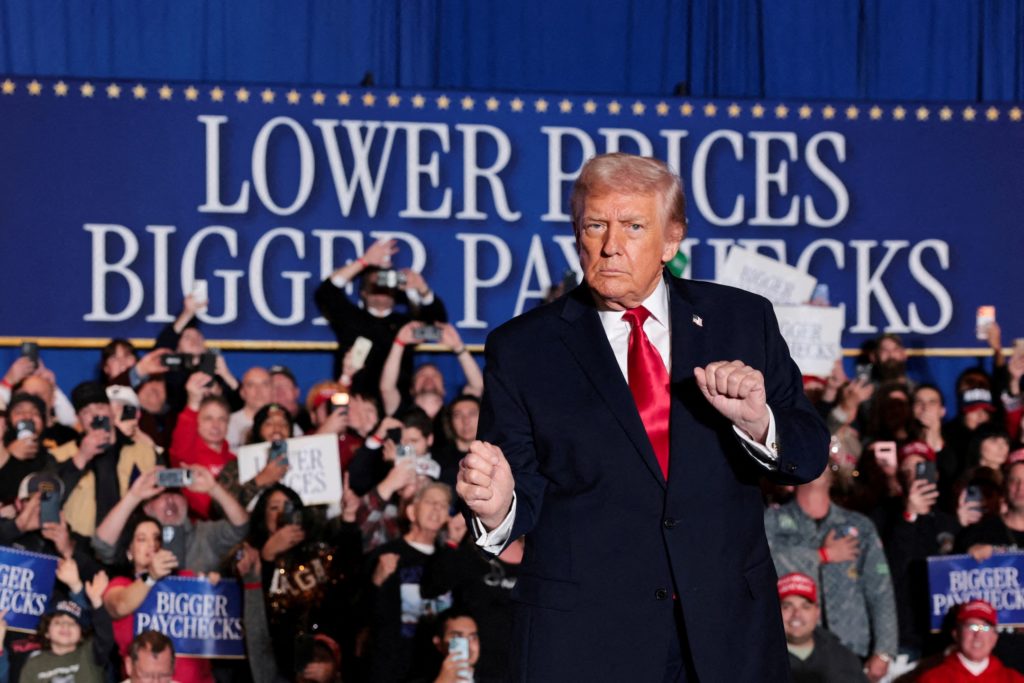
Photo: PBS
With less than ten months until the midterm elections, President Donald Trump is steering Republicans toward an economic playbook that looks strikingly closer to left-wing populism than traditional conservatism. The shift comes as polling shows Trump and his party struggling on the economy, the very issue that helped power his return to the White House.
In recent weeks, Trump has rolled out a series of proposals aimed squarely at cost-of-living concerns. They include a one-year cap on credit card interest rates at 10%, restrictions on large private equity firms buying single-family homes, and limits on defense contractors issuing dividends or stock buybacks. Together, these ideas echo long-standing priorities of progressive Democrats and signal a tactical recalibration as Republicans face a difficult electoral landscape.
Poll pressure drives a change in tone
Trump’s populist turn follows a steady slide in public confidence on his economic leadership. A recent national poll showed only 39% of voters approving of his handling of the economy, while 61% disapproved, placing the issue among his weakest areas of support since returning to office.
That erosion matters politically. Republicans currently control the House by a narrow 218–213 margin and hold a slim 53–47 edge in the Senate. With multiple GOP lawmakers announcing retirements and competitive races expected across key districts, even a small swing in voter sentiment could flip control of Congress in November.
Democrats have seized on affordability as their central campaign theme, arguing that Republicans have failed to meaningfully lower prices for everyday Americans. That message proved effective in several high-profile state races in late 2025 and is now being scaled nationally.
Borrowing from the left’s economic playbook
Trump’s proposals align closely with ideas long championed by progressive Democrats. The credit card interest rate cap mirrors legislation promoted by Senator Bernie Sanders, who has argued for years that rates approaching 30% exploit consumers. Trump announced his cap shortly after Sanders criticized his earlier deregulatory record on banking.
The housing proposal also overlaps with Democratic efforts. Large institutional investors currently own less than 5% of single-family rental homes, but both Trump and Democrats such as former Vice President Kamala Harris have argued that restricting further purchases could ease pressure on housing costs and first-time buyers.
Trump framed the policies in blunt terms on social media, repeatedly invoking “affordability” and casting corporations and Wall Street as beneficiaries of a system tilted against ordinary Americans.
Republican skepticism and internal pushback
Not all Republicans are convinced the populist pivot will rescue the party. Several lawmakers privately and publicly question whether the proposals conflict too sharply with core GOP principles or risk alienating business allies.
Some retiring House Republicans have been particularly candid, arguing that the messaging blurs ideological lines and muddies the party’s economic identity. Others dismiss the proposals as an attempt to distract from a mixed record rather than a coherent governing agenda.
Even GOP leadership has tread carefully. While House Speaker Mike Johnson praised Trump as an “ideas guy” focused on lowering the cost of living, he urged lawmakers not to overreact to unconventional proposals, signaling hesitation rather than full-throated endorsement.
Banks and financial industry groups have also warned that a 10% cap on credit card interest could reduce access to credit for higher-risk borrowers and slow consumer spending, potentially undercutting economic growth.
Democrats divided on whether to engage
Democratic reactions range from cautious openness to outright dismissal. Some lawmakers, particularly those with populist leanings, have welcomed Trump’s embrace of policies they have long supported, saying they would back legislation that genuinely lowers costs for consumers.
Others argue the shift is purely rhetorical and accuse Trump of pursuing policies that have contributed to higher prices in the first place. They contend that without reversing existing trade, tax, and immigration measures, affordability pressures will persist regardless of new proposals.
Behind the scenes, there are signs Trump may be exploring limited bipartisan cooperation, reaching out to Democratic lawmakers on issues like credit card rates and housing supply. Whether such outreach produces legislation remains uncertain, especially in a polarized election year.
A gamble ahead of the midterms
Pollsters say Trump is searching for a decisive “game changer” to reset voter perceptions of the economy before November. The strategy appears designed to show rapid action and signal empathy for household financial stress, even if implementation would require congressional approval.
Critics note that many of the proposals would face stiff resistance from lawmakers in both parties and from powerful industry groups, raising questions about how much can realistically be delivered before voters head to the polls.
There is also the possibility that the policy blitz serves another purpose: shifting attention away from controversies that have recently dominated headlines, from foreign policy decisions to domestic enforcement actions.
Whether Trump’s embrace of populist economics tightens the race or deepens internal Republican divisions remains an open question. What is clear is that affordability has become the central battleground of the midterms, and Trump is betting that a dramatic pivot, even one that breaks with conservative tradition, is better than staying the course.
.webp)
Popular articles



Subscribe to unlock premium content
Colombia’s Coffee Regions Are Becoming Luxury Travel Destinations Hidden in the Highlands

Chile’s Desert Skies Are Becoming the World’s Most Exclusive Destination

The Rise of Heritage Manor Stays in the United Kingdom Countryside

Colombia’s Coffee Regions Are Becoming Luxury Travel Destinations Hidden in the Highlands
Chile’s Desert Skies Are Becoming the World’s Most Exclusive Destination
Colombia’s Coffee Regions Are Becoming Luxury Travel Destinations Hidden in the Highlands