SpaceX's Explosive Market Debut Sparks High-Stakes Trading as Investors Weigh Massive Risks and Rewards

SpaceX's Explosive Market Debut Sparks High-Stakes Trading as Investors Weigh Massive Risks and Rewards
By
Rachel Steinberg
Last updated:
June 17, 2026
First Published:
June 17, 2026

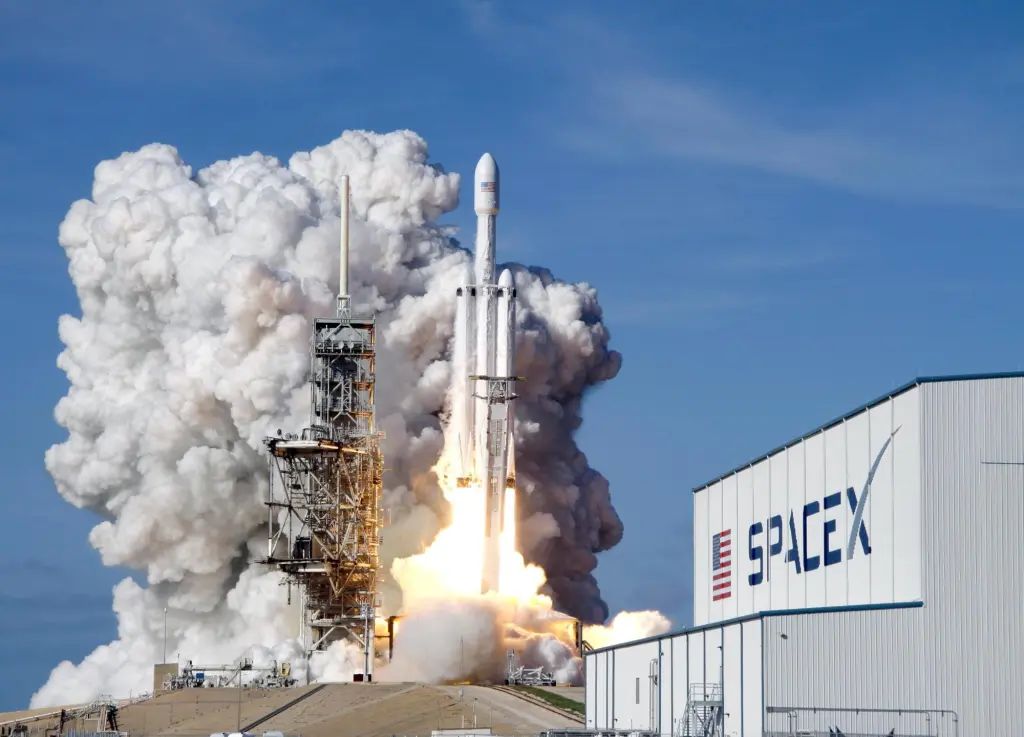
SpaceX's arrival in the public markets has quickly become one of the most closely watched events on Wall Street, drawing intense interest from traders, institutional investors, and market analysts alike. Following a powerful rally after its initial public offering, the aerospace giant has become a focal point for speculative trading, with options markets signaling expectations for dramatic price movements in both directions.
While the company has captured investor imagination through its leadership in commercial spaceflight, satellite communications, and launch services, many market participants are now debating whether the company's rapidly rising valuation can be justified by its future financial performance.
The early trading activity suggests investors are deeply divided, creating one of the most volatile and unpredictable setups currently seen in the equity market.
Options Market Signals Extraordinary Expectations
The first day of options trading provided a revealing look into investor sentiment surrounding SpaceX.
According to market analysis, current options pricing indicates roughly a 15% probability that the company's shares could climb another 50% by September. At the same time, traders are assigning approximately a 13% probability that the stock could lose half of its value during the same period.
Such extreme outcomes are relatively rare for companies of this size and underscore the unusually high level of uncertainty surrounding SpaceX's future stock performance.
The options market is effectively signaling that investors see enormous upside potential but are equally aware of significant downside risks.
This type of pricing typically reflects a market struggling to determine a company's fair value, particularly when investor enthusiasm has pushed valuations far beyond traditional benchmarks.
Trading Activity Dominated by Speculation and Hedging
SpaceX quickly became one of the most actively traded names in the options market, ranking among the top stocks by call option volume.
Call options, which allow investors to profit from rising share prices, attracted substantial demand as traders positioned themselves for the possibility of further gains. However, put options designed to protect against declines also saw strong activity.
Market strategists suggest that many of the largest trades were likely linked to hedging strategies rather than outright speculation.
Investors appear to be balancing several competing factors:
- Continued momentum from the IPO rally
- Potential supply increases after lock-up restrictions expire
- Valuation concerns
- Long-term growth expectations
- Market sentiment surrounding Elon Musk
- Future earnings and cash flow performance
This combination has created a market environment where both bullish and bearish positions remain expensive, reflecting uncertainty about the company's next major move.
SpaceX's Valuation Has Reached Historic Levels
The company has experienced a remarkable surge since its public debut.
Shares have climbed approximately 50% above their IPO price within a matter of days, adding hundreds of billions of dollars in market value and propelling SpaceX into the ranks of the world's most valuable publicly traded companies.
The rally has pushed the company's market capitalization beyond that of some of the world's largest corporations and placed it within striking distance of the highest-valued technology firms globally.
Such rapid appreciation reflects investor confidence in SpaceX's dominant position across several high-growth industries, including:
- Commercial rocket launches
- Satellite internet services
- Space infrastructure
- National security contracts
- Deep-space exploration technologies
- Next-generation communications networks
However, the speed of the stock's ascent has also raised concerns among analysts who question whether current valuations are getting ahead of underlying business fundamentals.
Investors Are Buying More Than Just Financial Results
A significant portion of the excitement surrounding SpaceX extends beyond traditional financial metrics.
The company represents a unique combination of technological innovation, ambitious long-term vision, and leadership under entrepreneur Elon Musk, whose track record has attracted a devoted following among retail and institutional investors alike.
For many shareholders, investing in SpaceX is not simply a bet on revenue growth or profitability. It is also a bet on the future of space exploration, satellite connectivity, and transformative technologies that could reshape entire industries over the coming decades.
This narrative-driven investing approach often creates powerful momentum during a company's early public-market life cycle.
However, history has shown that narrative alone is rarely enough to sustain elevated valuations indefinitely.
Eventually, investors begin demanding measurable financial performance that supports market expectations.
The Challenge of Growing Into a Massive Valuation
Analysts caution that SpaceX now faces one of the most difficult challenges in corporate finance: growing into an exceptionally large valuation.
The company undoubtedly possesses significant competitive advantages, including its reusable rocket technology, expanding satellite network, government contracts, and industry-leading launch capabilities.
Yet the scale of expectations embedded in the stock price is enormous.
To justify continued gains, SpaceX will likely need to demonstrate:
- Sustained revenue expansion
- Strong profit growth
- Increasing cash flow generation
- Successful commercialization of new technologies
- Expansion of global satellite services
- Continued dominance in launch markets
- Progress on long-term space initiatives
Even companies with outstanding businesses can struggle when investor expectations become exceptionally high.
The market's current valuation implies years of successful execution and continued leadership across multiple rapidly evolving industries.
Why Volatility May Remain Elevated
Several factors could contribute to significant volatility in the coming months.
Lock-up expiration periods could introduce additional shares into the market, increasing supply and potentially affecting prices. At the same time, any updates regarding launches, satellite deployments, government contracts, or financial performance could trigger substantial market reactions.
Broader market conditions may also play a role.
Technology stocks, growth companies, and innovation-focused businesses tend to be particularly sensitive to changes in interest rates, economic growth expectations, and investor risk appetite.
As a result, SpaceX could experience larger price swings than many traditional blue-chip companies.
The options market is already reflecting this reality through elevated premiums and wide ranges of expected outcomes.
The Debate Between Vision and Fundamentals
The current discussion surrounding SpaceX ultimately centers on a familiar question that has accompanied many high-profile technology companies throughout market history.
Can extraordinary innovation and long-term potential justify extraordinary valuations?
Supporters argue that SpaceX is building infrastructure that could define the future of transportation, communications, and space exploration, creating opportunities far larger than current financial statements might suggest.
Skeptics counter that even transformative companies must eventually produce earnings and cash flows that support investor expectations.
The truth likely lies somewhere between those positions.
The company's long-term prospects remain highly attractive, but the path toward validating its valuation could take years rather than months.
What Investors Should Watch Next
The next phase of SpaceX's public market journey will be shaped by execution rather than excitement.
Key areas investors will monitor include:
- Quarterly financial results
- Revenue growth trends
- Profitability metrics
- Satellite subscriber expansion
- Government and commercial contract wins
- Launch frequency and reliability
- Capital expenditure requirements
- Future growth guidance
While the initial IPO enthusiasm has fueled a remarkable rally, long-term performance will ultimately depend on the company's ability to convert technological leadership into sustainable financial results.
For now, the options market is sending a clear message: investors see tremendous opportunity ahead, but they also recognize that the risks are equally substantial.
.webp)
Popular articles



Subscribe to unlock premium content
Step Into the Future of Art

London’s Gourmet Playgrounds

The New Frontier of Children’s Entertainment

Step Into the Future of Art
London’s Gourmet Playgrounds
Step Into the Future of Art