Khanna Revives Bill to Curb Wall Street Landlords as Trump Signals Support for Housing Crackdown

Khanna Revives Bill to Curb Wall Street Landlords as Trump Signals Support for Housing Crackdown
By
Rachel Steinberg
Last updated:
January 19, 2026
First Published:
January 19, 2026

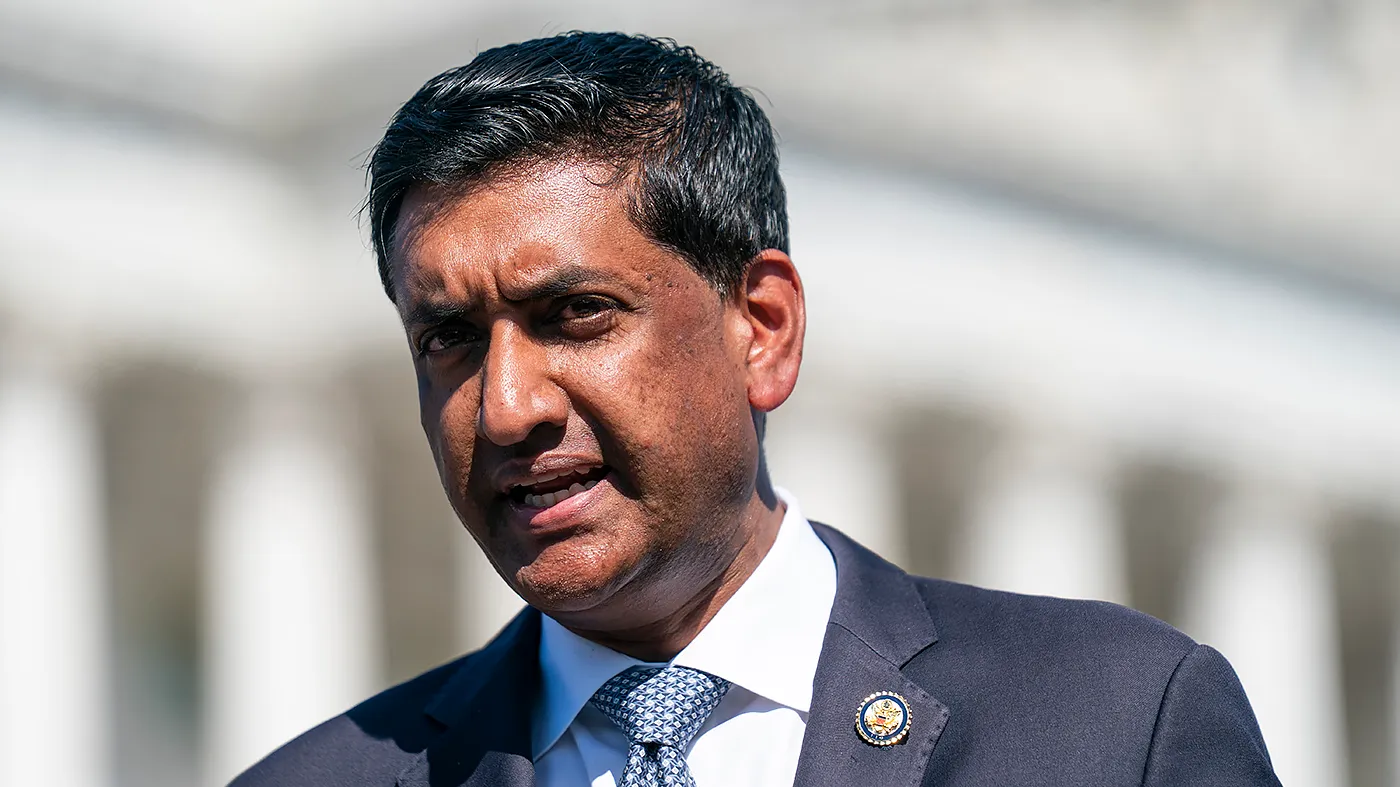
Photo: The Hill
Housing affordability returns to the political spotlight
Housing policy has reemerged as a central political issue in Washington after Democratic Representative Ro Khanna reintroduced legislation aimed at restricting large institutional investors from buying single-family homes. The move follows recent comments from President Donald Trump, who publicly called for limits on corporate landlords as voter frustration over housing costs intensifies.
Khanna’s proposal, known as the Stop Wall Street Landlords Act, seeks to reduce the role of large investors in the housing market, arguing that corporate ownership has pushed home prices higher and made homeownership increasingly unattainable for middle- and working-class Americans.
Trump’s remarks reshape the debate
Earlier this month, Trump said he would take immediate steps to ban large institutional investors from purchasing additional single-family homes. The statement marked a notable shift in tone and aligned closely with policy ideas traditionally associated with the populist left.
The remarks come as Trump faces mounting political pressure over the economy. Recent polling shows public dissatisfaction with economic conditions, particularly around affordability, housing costs, and cost of living. With the 2026 midterm elections approaching and congressional majorities razor-thin, housing has become a key pressure point for both parties.
What the bill aims to do
While the full legislative text has not yet been released, Khanna’s office outlined several major provisions. The bill would strip large institutional investors of access to housing-related tax benefits, including deductions for mortgage interest, insurance, and depreciation. These incentives, critics argue, give corporate buyers an unfair advantage over individual homebuyers.
The proposal would also require federal and government-backed housing agencies such as Fannie Mae and Freddie Mac to prohibit large institutional investors from purchasing or securitizing mortgages tied to single-family homes.
One of the most aggressive elements of the bill targets investor exit strategies. Institutional investors who sell single-family homes more than 18 months after the law takes effect would face a real estate transfer tax equal to 100% of the property’s sale value, effectively eliminating the profit motive.
Previous versions of the legislation defined a large institutional investor as any individual or firm holding more than $100 million in assets, a threshold intended to exclude small landlords while focusing on private equity firms and large real estate funds.
Political support and potential bipartisan interest
So far, the bill has attracted 13 Democratic cosponsors. No Republicans have formally signed on, but Trump’s comments have opened the door to potential bipartisan discussions. Some lawmakers believe the president’s stance could provide political cover for Republicans concerned about rising housing costs in their districts.
Khanna has signaled openness to working across party lines, stating that he would collaborate with the administration if it results in meaningful relief for working-class households. He has emphasized that the issue is not ideological, but structural, arguing that housing markets function poorly when dominated by large-scale financial players.
The broader housing market context
Institutional investors have increased their footprint in U.S. housing over the past decade, particularly in fast-growing metropolitan areas. In some regions, large investors account for more than 20% of single-family home purchases, intensifying competition and driving up prices.
At the same time, housing supply has failed to keep pace with population growth, while higher mortgage rates have sidelined many first-time buyers. These dynamics have fueled public anger and renewed scrutiny of Wall Street’s role in residential real estate.
Economists remain divided on how much institutional investors contribute to price increases, but there is broad agreement that affordability pressures are reshaping political priorities across the spectrum.
What comes next
Trump is expected to elaborate on his housing proposals during an upcoming speech at the World Economic Forum in Davos, where he has indicated that affordability and housing supply will be part of a broader economic agenda.
Whether the Stop Wall Street Landlords Act advances remains uncertain, but the renewed attention underscores a growing consensus that housing affordability has become a defining economic issue. As rhetoric converges across party lines, pressure is mounting on Congress to translate proposals into concrete policy action.
.webp)
Popular articles



Subscribe to unlock premium content
Namibia Is Quietly Building the Future of Ultra Remote Eco Luxury
.png)
Colombia’s Coffee Regions Are Becoming Luxury Travel Destinations Hidden in the Highlands

Chile’s Desert Skies Are Becoming the World’s Most Exclusive Destination

Namibia Is Quietly Building the Future of Ultra Remote Eco Luxury
Colombia’s Coffee Regions Are Becoming Luxury Travel Destinations Hidden in the Highlands
Namibia Is Quietly Building the Future of Ultra Remote Eco Luxury