Japan Sidesteps Recession as Growth Returns but Falls Short of Forecasts

Japan Sidesteps Recession as Growth Returns but Falls Short of Forecasts
By
Augusta Parker
Last updated:
February 16, 2026
First Published:
February 16, 2026

Getty Images
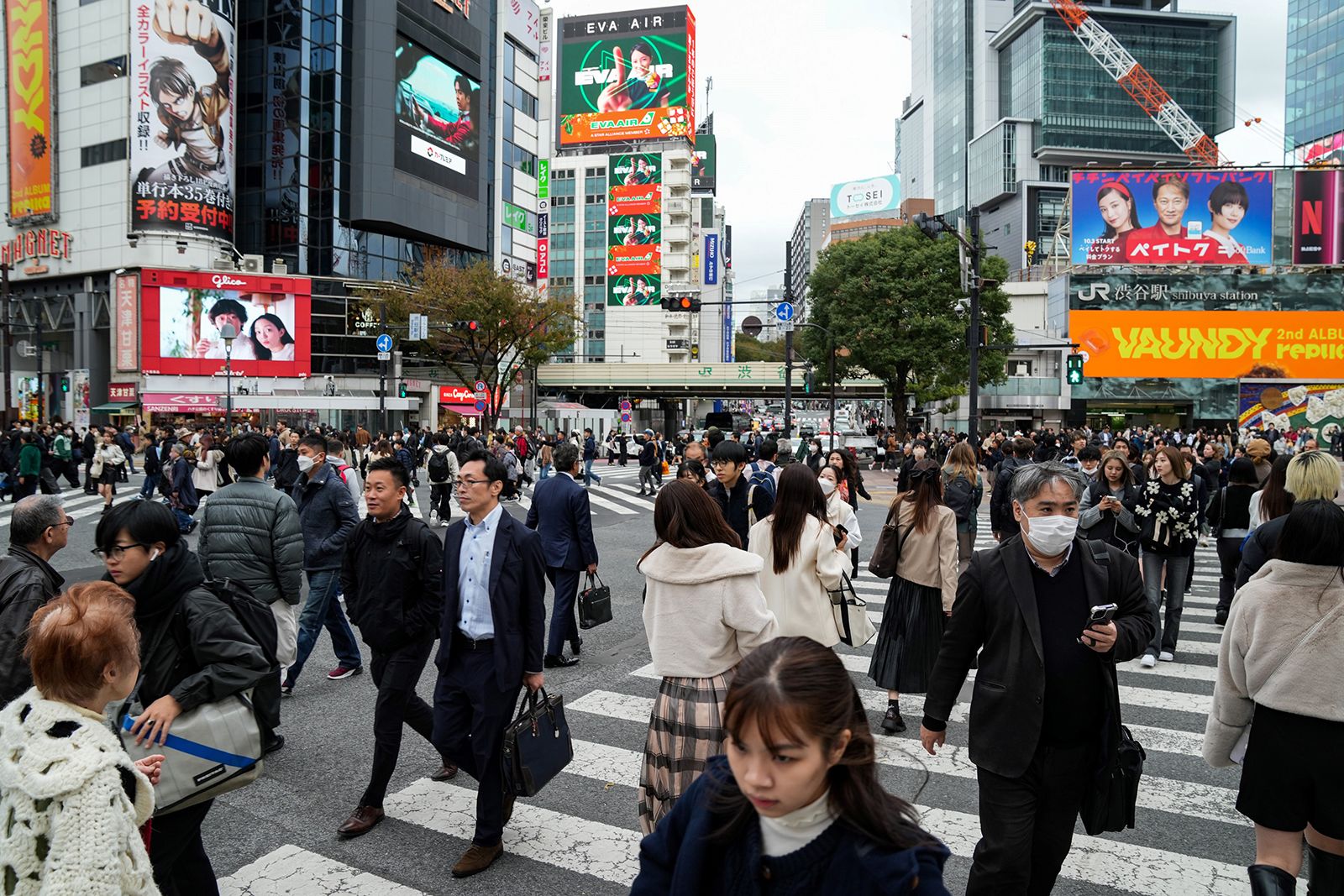
Japan managed to avoid slipping into a technical recession at the end of 2025, but the recovery was far weaker than economists had anticipated. Fresh national accounts show the economy expanding just 0.1% quarter-on-quarter, a marginal rebound that underscores the country’s uneven growth trajectory amid soft external demand and cautious business investment.
The uptick follows a 0.7% contraction in the third quarter, meaning the return to growth technically halted a recession scenario, typically defined as two consecutive quarters of decline. Still, the outcome missed market expectations of roughly 0.4% growth, reinforcing concerns about the durability of Japan’s recovery.
Growth Details
On an annualized basis, output rose 0.2%, significantly below forecasts near 1.6%, highlighting the subdued pace of expansion. Compared with the same period a year earlier, GDP increased 0.1%, slowing from 0.6% year-on-year growth in the prior quarter.
Private consumption — which accounts for more than half of Japan’s economic activity — was the primary driver of the modest improvement. Household spending on services and daily goods showed resilience, helped by gradual wage gains and easing inflation pressures.
However, exports weakened as global demand softened, particularly in manufacturing and electronics, while public spending also contributed less to growth than in earlier quarters.
Market Reaction
Financial markets reacted cautiously to the data. The benchmark Nikkei 225 edged slightly higher at the open, reflecting relief that the economy avoided contraction, while the Japanese yen slipped modestly against the U.S. dollar as investors reassessed the outlook for monetary tightening.
Currency movements suggest traders expect policy to remain accommodative for longer, especially given the lackluster pace of expansion.
Policy Outlook and Central Bank View
The Bank of Japan recently upgraded its growth projections, forecasting the economy to expand about 0.9% in fiscal 2025 and 1% in fiscal 2026, citing improving global conditions and a gradual pickup in domestic demand.
Officials have reiterated expectations of a “virtuous cycle” in which rising wages support consumption while moderate inflation sustains corporate earnings. Japan’s consumer price growth slowed to around 2.1% in January, the lowest level in nearly two years, though inflation has remained above the central bank’s 2% target for nearly four consecutive years.
Political and Fiscal Context
The economic data arrives at a pivotal political moment following the election victory of Prime Minister Sanae Takaichi, who has pledged a more proactive fiscal stance to stimulate growth.
Her administration has signaled plans to:
- Encourage private investment through targeted incentives
- Provide temporary relief on food taxes
- Increase defense spending toward 2% of GDP
Japan has also approved a record 122 trillion yen national budget for the upcoming fiscal year, marking a second consecutive year of historically high public expenditure aimed at supporting households and strengthening economic resilience.
Trade and Global Investment Dynamics
Japan continues to deepen economic cooperation with the United States, its second-largest trading partner, including a $550 billion bilateral investment framework focused on infrastructure, manufacturing, and advanced technologies.
While specific projects are still under negotiation, policymakers view the initiative as a long-term catalyst for industrial growth and supply-chain resilience, particularly in sectors such as automation, semiconductors, and shipbuilding.
What It Means Going Forward
The latest figures paint a picture of an economy stabilizing but still lacking strong momentum. Domestic demand is holding up, yet external headwinds and muted capital spending continue to cap growth potential.
For investors and policymakers, the key question is whether wage growth and fiscal stimulus can generate a more robust expansion in 2026. If consumption remains resilient and global demand improves, Japan could gradually shift from stagnation toward a steadier growth phase.
For now, the narrow escape from recession offers reassurance, but the softer-than-expected rebound signals that the recovery remains fragile and highly dependent on supportive policy and global conditions.
.webp)
Popular articles



Subscribe to unlock premium content
Chile’s Desert Skies Are Becoming the World’s Most Exclusive Destination

The Rise of Heritage Manor Stays in the United Kingdom Countryside

H&M’s Circular Fashion Model Is Redefining Fast Fashion’s Future

Chile’s Desert Skies Are Becoming the World’s Most Exclusive Destination
The Rise of Heritage Manor Stays in the United Kingdom Countryside
Chile’s Desert Skies Are Becoming the World’s Most Exclusive Destination