Kering Surges 12% as CEO Outlines Revival Plan and Q4 Sales Beat Expectations

Kering Surges 12% as CEO Outlines Revival Plan and Q4 Sales Beat Expectations
By
Alina Sinclair
Last updated:
February 16, 2026
First Published:
April 25, 2026

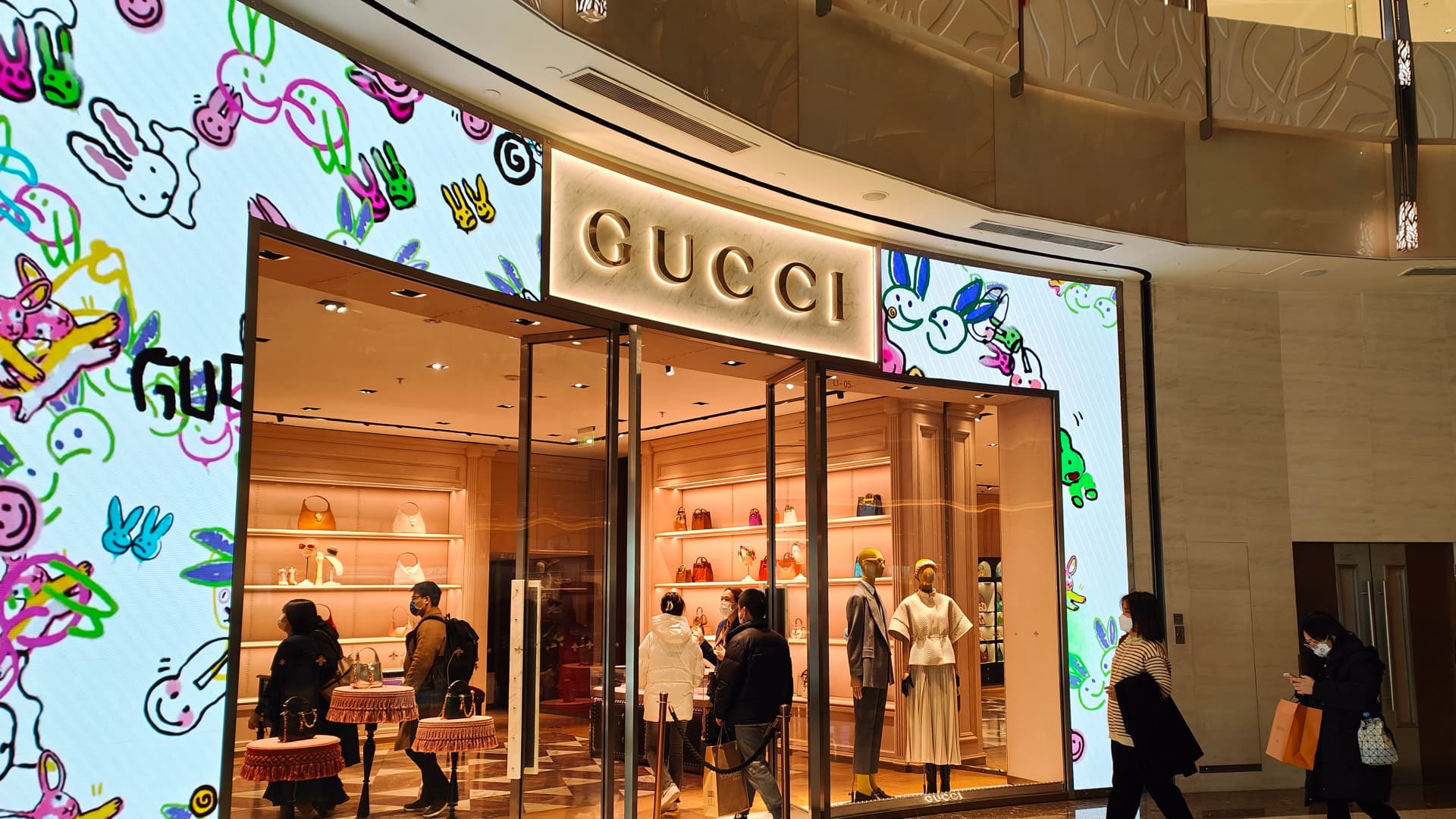
Customers shop at a GUCCI luxury store in Shanghai, China.
Cfoto | Future Publishing | Getty Images
Kering Posts Slight Sales Beat Amid Luxury Market Challenges
Kering, the French luxury powerhouse behind Gucci, Yves Saint Laurent, Bottega Veneta, and Balenciaga, reported fourth-quarter sales of €3.9 billion ($4.64 billion), marking a 3% decline on a comparable basis — modestly exceeding FactSet estimates. While Gucci, the group’s flagship brand, fell 10%, other houses delivered flat to moderate year-on-year growth.
CEO Luca de Meo acknowledged the difficult year, saying, “2025 was not the year we wanted. It didn’t reflect the full potential of Kering, and we all know it.” Despite these declines, the stock surged as much as 14% following the results, finishing the session up 10.3%. However, the shares remain down nearly 14% year-to-date, reflecting ongoing investor caution.
Performance Breakdown and Market Response
The luxury segment overall reacted positively to Kering’s report. Shares of Burberry climbed 3.4%, Hermes rose 3%, Italy’s Brunello Cucinelli added 2.7%, while LVMH gained 1.4% and Richemont 2%. Analysts noted that Kering’s slight sales beat signals early traction under De Meo’s leadership, though the group continues to face headwinds from softer Chinese demand and previous pricing strategies that alienated some consumers.
For the full year 2025, Kering’s sales dropped 10% to €14.7 billion, while recurring operating income fell 33%, with the operating margin narrowing to 11.5%. The results reflect both cyclical challenges and the residual effects of elevated pricing during the post-pandemic luxury boom.
Strategic Moves Under De Meo’s Leadership
De Meo, who joined from the automotive sector and previously led a turnaround at Renault, is implementing several measures to restore Kering’s momentum. Among his early actions:
- Deleveraging the balance sheet, including the €4 billion sale of Kering’s beauty division to L’Oréal.
- Repositioning Gucci through creative leadership changes, including Demna’s appointment as artistic director and the launch of his “La Famiglia” collection.
- Exploring expansion into wellness and longevity markets, as well as refining the company’s jewelry strategy, with more details expected at the Capital Markets Day in April.
“Since the second half of the year, I can assure you, we have been taking action decisively to put the group back on the right trajectory,” De Meo said. He added that Kering remains “far from” its full potential, highlighting that 2026 will focus on growth and margin improvement.
Analysts Eye Turning Point
Analysts are cautiously optimistic about Kering’s trajectory. Bernstein’s Luca Solca noted that the results indicate incremental improvement across the group’s portfolio, with the potential for Gucci and other key brands to return to growth in 2026. Jefferies’ James Grzinic added that easing pressures in the luxury market, coupled with cost-saving initiatives, could further support performance if De Meo successfully executes his strategy.
Industry observers also highlight that Kering’s move to streamline operations and focus on high-margin segments could position the company to capture demand from value-conscious and affluent consumers alike.
Outlook for 2026 and Beyond
Looking ahead, Kering projects a return to growth and margin expansion in 2026, though detailed guidance remains limited. Investors will be watching for tangible signs that strategic changes, including brand repositioning, product innovation, and expansion into wellness and jewelry, translate into measurable sales and profitability gains.
With the luxury market showing signs of stabilization and Kering taking decisive steps to adapt, 2026 could mark the beginning of a broader revival for the group — one that blends creative reinvention with disciplined financial management.
.webp)
Popular articles



Subscribe to unlock premium content
Remote Himalayan Villages Transforming Ancient Traditions into Lucrative Wellness Ventures

Gilded Holidays in Fashion
Frozen Frontiers of Luxury
Remote Himalayan Villages Transforming Ancient Traditions into Lucrative Wellness Ventures
Gilded Holidays in Fashion
Remote Himalayan Villages Transforming Ancient Traditions into Lucrative Wellness Ventures