Free Hotel Breakfast Faces Mounting Pressure Across U.S. Chains

Free Hotel Breakfast Faces Mounting Pressure Across U.S. Chains
By
David Goldfarb
Last updated:
February 16, 2026
First Published:
February 16, 2026

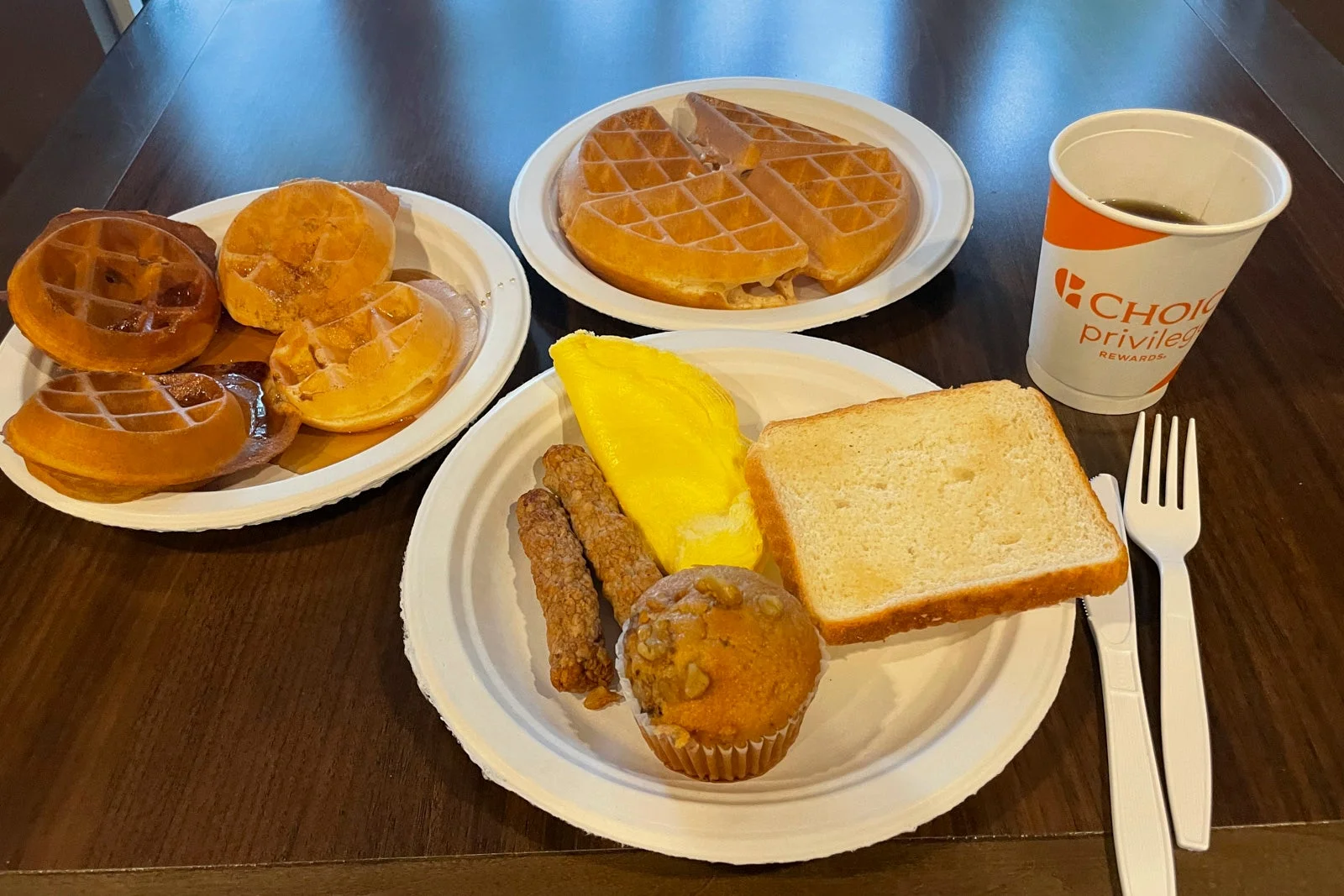
Photo: The Points Guy
A Travel Tradition Under Financial Strain
For decades, the complimentary hotel breakfast has been a defining feature of the American travel experience. From self-serve waffle stations to buffet trays of eggs and pastries, the morning spread has long served as both a convenience for guests and a loyalty driver for hotel brands.
But across the industry, operators from Hyatt Hotels to Holiday Inn — part of InterContinental Hotels Group — are reevaluating the economics behind the perk. Rising labor costs, food inflation, and pressure to improve margins are pushing some properties to scale back, repackage, or eliminate free breakfast altogether.
Industry estimates suggest breakfast programs can consume 5% or more of a property’s total revenue, and once staffing is included, the true cost can climb closer to 6–7%. For hotels operating on thin margins, that expense has become increasingly difficult to justify.
Cost Cutting Meets Changing Business Models
Several brands have already begun experimenting with new approaches. Select properties under Hyatt’s limited-service portfolio have tested room rates that exclude breakfast, while some hotels have shifted toward “grab-and-go” formats or buffet-only service to reduce food waste and staffing needs.
The changes reflect a broader cost-control trend across hospitality, where operators have also reduced housekeeping frequency, replaced mini toiletries with bulk dispensers, and streamlined in-room amenities.
Executives and owners say the original rationale for free breakfast — boosting occupancy and loyalty — has weakened as travelers now view it as a baseline expectation rather than a differentiator. In economic terms, what was once a marketing investment has increasingly become a fixed operating cost.
A K-Shaped Travel Economy
The evolution of breakfast policies mirrors a wider split in travel spending. Luxury hotels, which cater to higher-income guests less sensitive to price, are more willing to replace complimentary meals with paid dining or loyalty credits.
Companies such as Marriott International have tested alternative models at select upscale properties, offering bonus points or discounts instead of free meals. Meanwhile, midscale brands continue to rely heavily on breakfast as a value proposition for cost-conscious travelers.
This divergence reflects what industry leaders often describe as a K-shaped travel recovery, where premium segments outperform while budget and mid-tier operators face tighter margins and more price-sensitive customers.
Guests Still Expect Breakfast
Despite the financial pressures, consumer data shows breakfast remains a critical amenity. Surveys indicate that roughly three-quarters of hotel guests eat breakfast on property, and nearly half of travelers in midscale segments consider complimentary breakfast a must-have feature when booking.
For families and business travelers alike, the perk simplifies travel planning and reduces daily expenses. Many guests also perceive it as part of the overall room value, even if the cost is indirectly embedded in nightly rates.
Brands such as Best Western and Holiday Inn Express have reiterated their commitment to maintaining free breakfast, arguing that the amenity strengthens loyalty, boosts satisfaction scores, and supports repeat bookings.
Owners vs. Brand Standards
Tension often arises between hotel owners and franchisors. While major chains set brand standards that include breakfast requirements, individual property operators bear the direct costs. Some owners transitioning properties to independent status have signaled plans to remove free breakfast once contractual obligations end, hoping to replace it with paid or simplified offerings.
The debate ultimately centers on whether the amenity truly drives incremental revenue or simply preserves competitiveness in crowded markets.
What the Future Breakfast May Look Like
Rather than disappearing entirely, the hotel breakfast is likely to evolve. Industry analysts expect more segmented models, including:
- Room-only versus breakfast-included pricing tiers
- Loyalty-based access or dining credits
- Smaller buffets paired with premium paid options
- Packaged deals bundling breakfast with extended stays
These approaches allow hotels to control costs while preserving perceived value for guests.
The Emotional Value of a Simple Perk
Beyond economics, free breakfast carries a nostalgic and experiential appeal. For many travelers, it represents a small ritual that makes trips feel easier and more enjoyable — whether it is grabbing a quick coffee before meetings or watching kids crowd around a waffle maker on vacation.
That emotional connection helps explain why, despite mounting financial pressure, the amenity remains one of the most debated features in modern hospitality strategy. As hotels balance profitability with guest expectations, the future of free breakfast will likely depend on how effectively brands can redefine value without eroding the travel experience.

Popular articles


Subscribe to unlock premium content
Electrifying the Streets of Vietnam
Sky-High Living in Singapore

Sweden’s Startup Visa Sparks a $200 Million Entrepreneurial Boom
Electrifying the Streets of Vietnam
Sky-High Living in Singapore
Electrifying the Streets of Vietnam