EV Pullback Shakes Southern Factories and Jobs, Forcing Industry to Pivot

EV Pullback Shakes Southern Factories and Jobs, Forcing Industry to Pivot
By
Leah Rosenfeld
Last updated:
February 2, 2026
First Published:
February 2, 2026

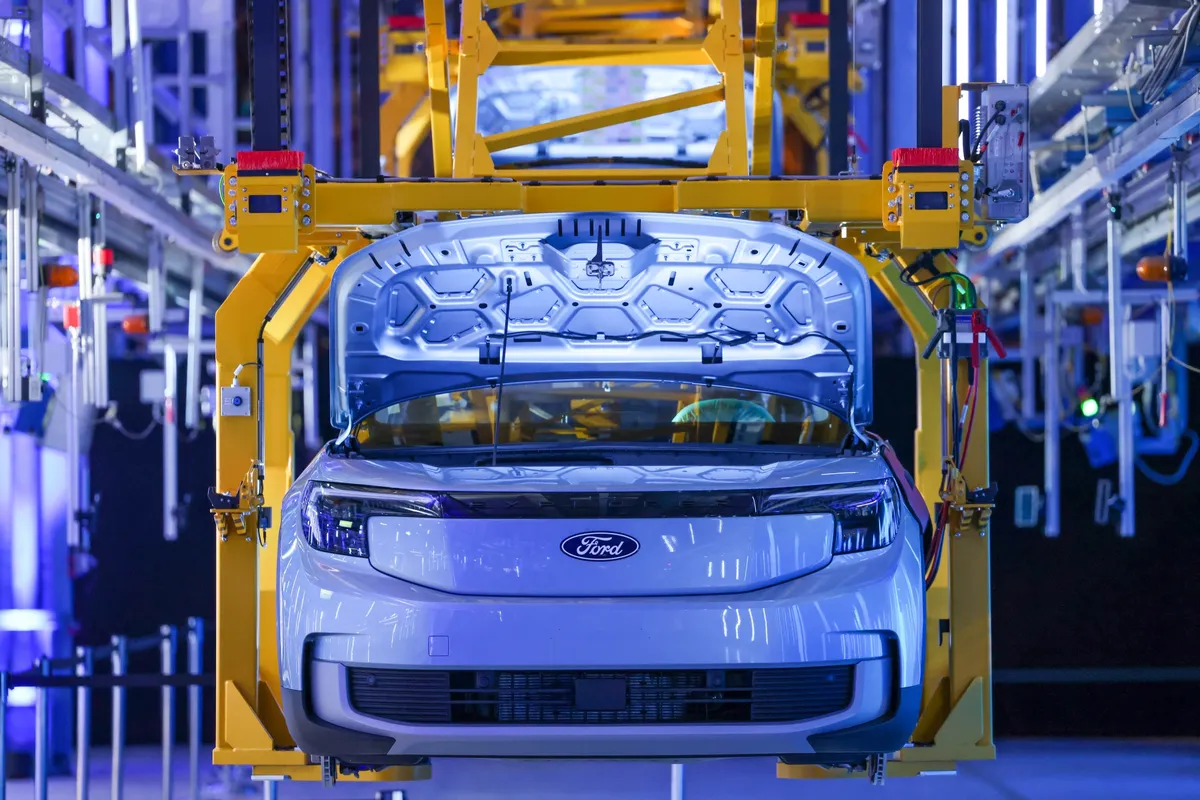
Photo: Automotive News
Southern EV Boom Faces Unexpected Challenges
The U.S. electric vehicle (EV) boom, once heralded as a transformative force for the Southern economy, is now facing turbulence. Automakers, battery producers, and suppliers poured more than $200 billion into EV-related investments across the country over the last two decades, with nearly half directed to the Southeastern U.S. — a region historically dominated by traditional automotive manufacturing.
These investments, expected to generate over 200,000 jobs, were concentrated in Republican-led districts, accounting for 84% of battery manufacturing funds and 62% of EV plant spending, according to research from Atlas Public Policy. Now, with federal incentives scaled back and EV sales lagging, many companies are reevaluating these projects, pivoting to hybrids, and seeking ways to protect jobs and investments.
Hyundai’s High-Stakes Gamble
Hyundai Motor Group exemplifies the industry’s dilemma. At one point, the company was the nation’s second-largest EV seller after Tesla. But the end of federal tax credits precipitated a sharp decline: EV sales fell 50% from the first to the fourth quarter of 2025, even as overall market performance remained above average.
Hyundai had announced a $12.6 billion EV plant, the Metaplant, near Savannah, Georgia — the largest investment in the state’s history, eclipsing Rivian’s $5 billion facility outside Atlanta. The project aimed to create roughly 8,500 direct jobs and an additional 6,900 at local suppliers by 2031. By January 2026, only about 1,440 workers had been hired.
Initially designed for EVs like the Ioniq5 crossover to qualify for the federal $7,500 tax credit, the plant now plans a mix of 10 hybrid and EV models, with projections of roughly 30% EV production and 70% hybrids and gas-powered vehicles. Hyundai also committed an additional $2.7 billion to expand output by 200,000 units, targeting an annual capacity of 500,000 cars.
Widespread Write-Downs Across the Industry
Financial consequences are mounting. Industry analysts at Haig Partners estimate U.S. automakers could face at least $100 billion in write-downs on EV investments that may not achieve projected returns. Ford announced a $19.5 billion charge on its EV operations in December, while General Motors followed with a $7.6 billion write-down. International automakers including Honda, Porsche, and Volvo have warned of similar multi-billion-dollar adjustments.
Hyundai, however, expects to avoid massive write-downs due to its flexible production strategy. CEO José Muñoz highlighted the company’s ability to produce multiple models on a single production line, a strategy that mitigates the risk of market volatility.
EV Market Projections Fall Short
EV sales forecasts have dropped significantly from government expectations. The Biden administration initially targeted 50% of new vehicle sales to be electric by 2030. Industry estimates have since plummeted to around 17%, a dramatic shortfall that has forced suppliers like Bosch to adjust. Bosch had invested $250 million in its Charleston, South Carolina plant, planning a new electric motors division. With lower EV demand, many employees were reassigned to traditional powertrain production and safety systems, reflecting a strategic pivot back to internal combustion vehicles.
Peter Tadros, Bosch North America president, described the situation as “painful but manageable,” noting that idle equipment and underutilized capacity remain challenges, though the company is positioning itself to scale production if EV demand rebounds.
The South’s Manufacturing Future
The Southeast’s decades-long reputation as a manufacturing hub is being tested. States such as Georgia, Alabama, and South Carolina had become magnets for EV investment, drawn by political support, lower costs, and existing automotive infrastructure. Now, with investments restructured and incentives altered, the region’s economic outlook depends on the ability of automakers and suppliers to adapt, protect jobs, and find profitable pathways amid a fluctuating EV market.
While the industry grapples with these shifts, the Southern workforce faces uncertainty, and local economies must reconcile lost projections with ongoing job creation efforts. Analysts predict that hybrid production, flexible manufacturing, and diversified product lines will be critical to stabilizing the Southern EV industry over the next decade.
.webp)
Popular articles



Subscribe to unlock premium content
LEGO Boutique Flagship Stores Are Redefining Global Play

How Boutique Safari Camps in Kenya Are Creating Premium Eco Experiences

Discovering Southeast Asia’s Private Culinary Travel Boom

LEGO Boutique Flagship Stores Are Redefining Global Play
How Boutique Safari Camps in Kenya Are Creating Premium Eco Experiences
LEGO Boutique Flagship Stores Are Redefining Global Play