Europe’s Carmakers Shift Into Defense as Military Spending Sparks New Growth Opportunities

Europe’s Carmakers Shift Into Defense as Military Spending Sparks New Growth Opportunities
By
David Goldfarb
Last updated:
June 17, 2026
First Published:
June 17, 2026

Getty Images
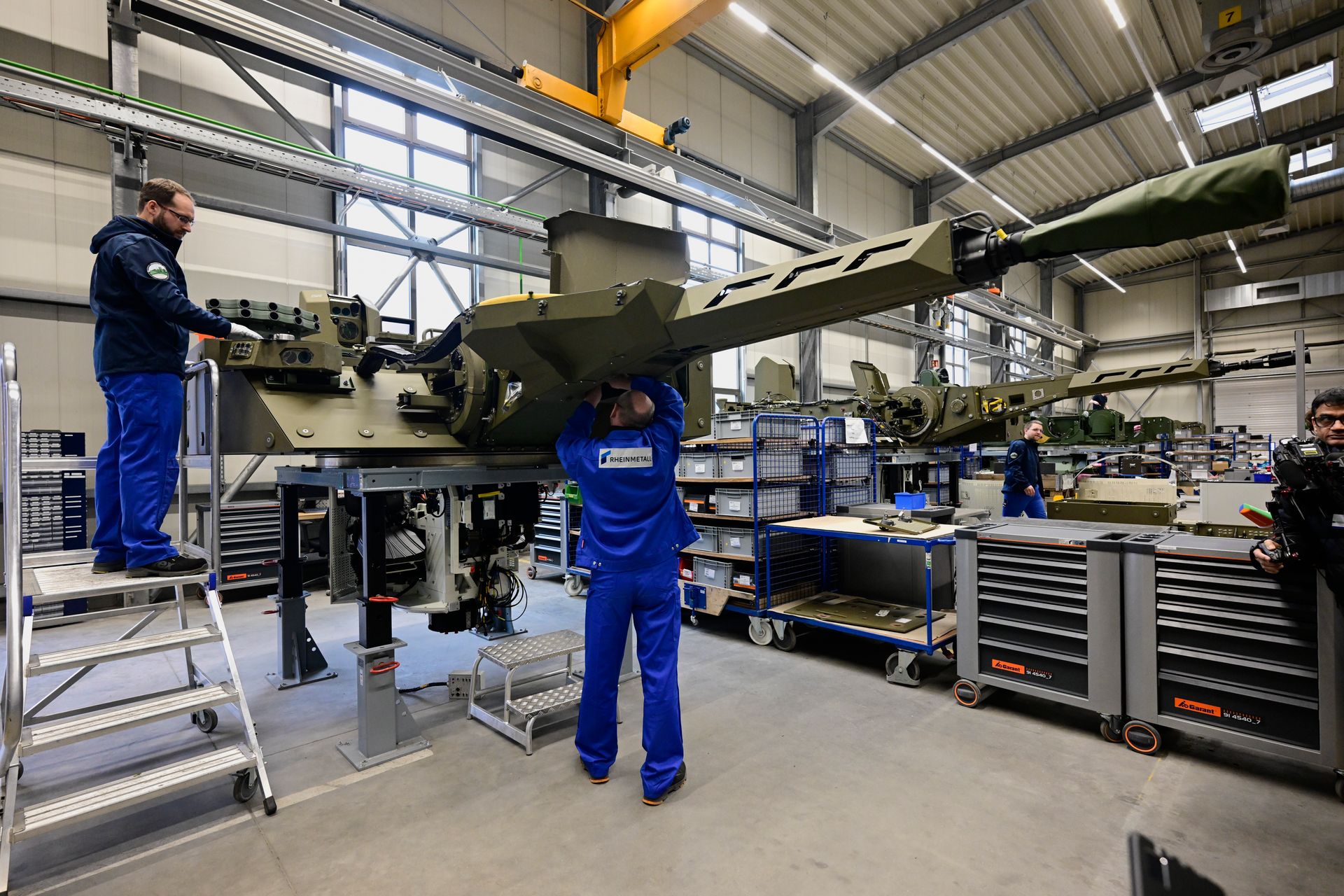
Europe’s automotive industry is increasingly turning toward the defense sector as rising military budgets create new opportunities for growth. Faced with slowing electric vehicle demand, mounting competition from Chinese manufacturers, and economic uncertainty, several major automakers are now leveraging their engineering expertise to support national defense initiatives.
The latest example comes from Ineos Automotive, which has announced a new partnership with the U.K. Ministry of Defence (MoD) to develop military vehicles based on its flagship Grenadier 4x4. The agreement highlights a broader trend sweeping across Europe, where automakers and defense companies are forming strategic alliances to meet growing demand for military mobility and logistics solutions.
As governments commit hundreds of billions of euros to strengthen defense capabilities following Russia’s invasion of Ukraine, the line between the automotive and defense industries is becoming increasingly blurred.
Ineos Joins the U.K.’s Military Vehicle Program
Ineos Automotive revealed that it has joined forces with armored vehicle specialists SMT Defence and NMS UK to form the "Team Grenadier" consortium.
The partnership will compete to support the U.K. Ministry of Defence’s Light Mobility Vehicle program, a project designed to modernize military transportation capabilities for a wide range of operational environments.
At the center of the initiative is the Grenadier, Ineos Automotive’s rugged off-road vehicle that was originally developed as a utilitarian 4x4 capable of handling extreme conditions.
The company believes the vehicle’s permanent four-wheel-drive system, heavy-duty beam axles, exceptional payload capacity, and durability make it an ideal foundation for military applications. Potential roles include troop transport, reconnaissance operations, command support missions, logistics, communications platforms, and specialized battlefield mobility functions.
Military vehicle programs across Europe increasingly favor adaptable platforms that can be modified for multiple mission profiles while reducing procurement and maintenance costs.
Defense Spending Boom Creates New Market for Automakers
The partnership arrives during one of the most significant defense spending expansions Europe has witnessed in decades.
Since Russia launched its full-scale invasion of Ukraine in 2022, European governments have announced major increases in military budgets aimed at strengthening national security and reducing reliance on external defense suppliers.
NATO members across Europe are moving toward or beyond the alliance’s defense spending targets, while several countries have unveiled long-term rearmament plans worth tens of billions of euros.
This surge in spending has created substantial demand for:
- Armored transport vehicles
- Military logistics trucks
- Tactical mobility platforms
- Drone defense systems
- Battlefield communication vehicles
- Engineering and support vehicles
- Autonomous military technologies
For automakers with existing manufacturing expertise, large-scale production facilities, and advanced engineering capabilities, defense contracts offer an attractive new revenue stream.
Daimler Truck Expands Military Ambitions
The automotive industry's defense pivot gained further momentum when Daimler Truck announced the creation of a dedicated defense division.
The new business unit, Daimler Truck Defence, is supported by an investment worth several hundred million euros and is designed to provide military mobility and logistics solutions for governments worldwide.
The company already has an established presence in defense transportation through military truck platforms used by armed forces in various countries. However, the new initiative signals a significantly larger commitment to the sector.
Chief Executive Karin Rådström described defense as a strategic growth pillar for the company, reflecting expectations that military demand will continue rising throughout the decade.
Daimler Truck currently employs around 1,000 people within its defense-related operations and anticipates increasing recruitment as new projects and contracts emerge.
Renault and Thales Team Up for Next-Generation Military Vehicles
French automaker Renault has also entered the defense arena through a partnership with defense technology giant Thales.
The collaboration focuses on developing a new armored vehicle platform capable of supporting a broad range of military missions.
According to company statements, the vehicle is intended to perform reconnaissance operations, troop coordination tasks, battlefield communications support, and unmanned aerial vehicle deployment.
The platform is expected to be used by French land forces both domestically and in overseas operations, reflecting growing demand for versatile, digitally connected military vehicles capable of operating in complex combat environments.
The project combines Renault’s automotive engineering expertise with Thales’ advanced defense systems, sensors, communications technologies, and battlefield management solutions.
Mercedes-Benz Targets the Growing Anti-Drone Market
Another emerging opportunity for automakers lies in counter-drone technology.
Mercedes-Benz recently announced a partnership with German startup Tytan Technologies aimed at developing specialized anti-drone vehicles.
The collaboration focuses on integrating drone detection, tracking, and neutralization systems into vehicle platforms such as the Mercedes G-Class and Sprinter.
The growing threat posed by unmanned aerial systems has become a major concern for military forces, critical infrastructure operators, airports, and government agencies worldwide.
Vehicle-based counter-drone solutions are increasingly viewed as essential tools for protecting personnel, facilities, and strategic assets against evolving aerial threats.
As drone warfare continues to reshape modern conflict, demand for mobile defense platforms is expected to rise significantly.
Why the Automotive Industry Is Looking Beyond Passenger Cars
Europe’s automotive sector has been navigating one of the most challenging periods in its history.
Manufacturers are simultaneously managing multiple pressures, including:
- Slower-than-expected electric vehicle adoption
- Intensifying competition from Chinese automakers
- Higher financing and borrowing costs
- Supply chain disruptions
- Regulatory pressures related to emissions and sustainability
- Increasing development costs for advanced technologies
Many companies are searching for new growth engines capable of offsetting weakness in traditional automotive markets.
Defense contracts offer several advantages. They often involve long-term procurement programs, predictable revenue streams, and government-backed funding. Additionally, many of the engineering, manufacturing, logistics, and workforce capabilities required for automotive production can be adapted for military applications.
Industry experts note that skills related to vehicle design, powertrain development, electronics integration, software systems, and large-scale manufacturing are highly transferable between the automotive and defense sectors.
A New Era of Industrial Convergence
The growing collaboration between Europe’s automakers and defense companies represents a significant shift in industrial strategy.
As governments prioritize national security and defense resilience, automakers are finding new ways to apply their technological expertise beyond consumer transportation.
What began as a response to geopolitical uncertainty is rapidly evolving into a long-term business opportunity. From armored mobility platforms and logistics vehicles to drone defense systems and advanced military technologies, Europe’s automotive industry is positioning itself as a key contributor to the continent’s defense modernization efforts.
With military spending expected to remain elevated for years to come, partnerships between automakers and defense contractors are likely to become an increasingly important feature of Europe’s industrial landscape.
.webp)
Popular articles



Subscribe to unlock premium content
Step Into the Future of Art

London’s Gourmet Playgrounds

The New Frontier of Children’s Entertainment

Step Into the Future of Art
London’s Gourmet Playgrounds
Step Into the Future of Art