China’s Trade Momentum Weakens as Export Growth Disappoints and Imports Surge

China’s Trade Momentum Weakens as Export Growth Disappoints and Imports Surge
By
Leah Rosenfeld
Last updated:
April 14, 2026
First Published:
April 14, 2026

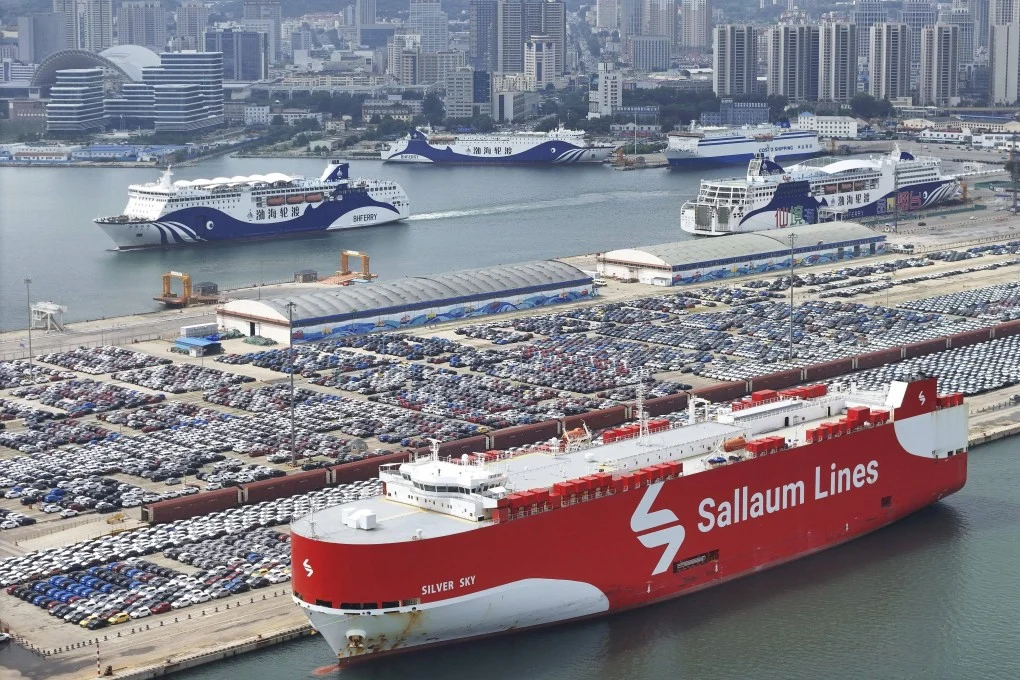
Photo: South China Morning Post
Export Growth Loses Steam
China reported a noticeable slowdown in export growth for March, raising concerns about the resilience of global demand. Exports increased by just 2.5% year-on-year in U.S. dollar terms, significantly below market expectations of 8.6% and marking the weakest performance in six months.
This slowdown comes after a strong start to the year, where exports surged a combined 21.8% in January and February. The sharp deceleration highlights growing pressure from external factors, including geopolitical tensions, weaker global consumption, and disruptions in key trade routes.
As an economy heavily reliant on exports, this drop signals a potential shift in momentum that could weigh on overall growth if conditions persist.
Imports Surge to Multi-Year High
In contrast, imports surged by 27.8% year-on-year, far exceeding forecasts of 11.2% and marking the strongest increase since late 2021. This rapid acceleration reflects a combination of higher commodity prices, increased domestic restocking, and efforts to secure critical resources amid global supply uncertainty.
The rise also builds on the 19.8% growth recorded in the first two months of the year, suggesting sustained demand within the domestic economy despite broader challenges.
Key import categories showed strong movement. Rare earth imports more than tripled in value, underlining strategic stockpiling, while soybean imports rose by around 20% in volume, indicating stable agricultural demand.
Trade Surplus Narrows Under Pressure
The imbalance between slower export growth and surging imports has led to a contraction in China’s trade surplus. Total surplus for the year reached $264.3 billion by the end of March, down 3% compared to the same period last year.
This decline reflects rising input costs and China’s limited ability to pass those costs onto global buyers. As energy and raw material prices climb, exporters are facing tighter margins, reducing the overall benefit of trade surpluses.
Trade with major partners also showed divergence. Exports to the United States fell sharply by 26.5%, continuing a downward trend driven by ongoing trade tensions. Imports from the U.S. saw only modest growth of around 1%, highlighting an imbalance in bilateral trade flows.
Energy Shock and Global Uncertainty
One of the biggest factors shaping China’s trade performance is volatility in global energy markets. The ongoing disruption around the Strait of Hormuz has created sharp fluctuations in oil prices, increasing costs for import-dependent economies like China.
Officials have described the current environment as complex and challenging, with energy price swings adding uncertainty to both import costs and export competitiveness.
Despite these challenges, China has built significant buffers. Strategic oil reserves, diversified energy sources, and reliance on domestic coal have helped mitigate the immediate impact. Estimates suggest that China’s oil stockpiles cover more than 120 days of net imports, providing a cushion against short-term disruptions.
Mixed Trends in Energy Imports
Interestingly, while overall imports surged, energy-specific imports showed a decline. Crude oil imports fell by approximately 2.8% in volume and 4.4% in value terms, suggesting cautious purchasing amid price volatility.
Natural gas imports dropped 10.6% year-on-year to 8.18 million tons, the lowest level since late 2022. This indicates a combination of inventory adjustments, demand moderation, and strategic resource management.
These mixed signals highlight how China is actively managing its energy exposure while navigating global uncertainty.
Rising Costs and Industrial Pressure
Higher global commodity prices are beginning to impact China’s manufacturing sector. Factory-gate prices rose by 0.5% in March, marking the first increase in over three years. This suggests that input cost pressures are building across industrial supply chains.
However, consumer inflation remains subdued, with the consumer price index rising just 1% year-on-year. This gap between producer and consumer prices indicates that companies are struggling to pass on higher costs, putting pressure on profit margins.
For manufacturers, this creates a challenging environment where rising expenses are not matched by equivalent increases in selling prices.
Economic Outlook and Growth Expectations
China’s economy continues to depend heavily on trade, with net exports contributing roughly one-third of total growth in recent years. However, the latest data suggests that this model is facing increasing strain from external and structural factors.
Analysts expect first-quarter GDP growth to come in at around 4.8%, slightly improving from 4.5% in the previous quarter. While this indicates some stability, the outlook remains uncertain as global conditions evolve.
The combination of slowing export growth, rising import costs, and narrowing trade surplus points to a more complex economic landscape. Policymakers will need to balance external risks with domestic demand support to sustain growth in the months ahead.
A Shifting Trade Landscape
China’s latest trade data reflects a broader shift in global economic dynamics. While the country remains a dominant manufacturing and export powerhouse, rising costs, geopolitical tensions, and changing demand patterns are reshaping its trade trajectory.
The strong surge in imports suggests resilience at home, but the slowdown in exports highlights vulnerabilities abroad. Moving forward, China’s ability to adapt to these changing conditions will be critical in maintaining its position in the global economy.
.webp)
Popular articles



Subscribe to unlock premium content
Estée Lauder – The Woman Who Revolutionized Cosmetics Marketing with Free Samples

Vending Machines in Japan
Polaroid The Instagram of the 70s

Estée Lauder – The Woman Who Revolutionized Cosmetics Marketing with Free Samples
Vending Machines in Japan
Estée Lauder – The Woman Who Revolutionized Cosmetics Marketing with Free Samples