China’s Economy Gains Momentum with 5% Growth in Q1 as Export Strength Masks Domestic Weakness

China’s Economy Gains Momentum with 5% Growth in Q1 as Export Strength Masks Domestic Weakness
By
David Goldfarb
Last updated:
April 16, 2026
First Published:
April 16, 2026

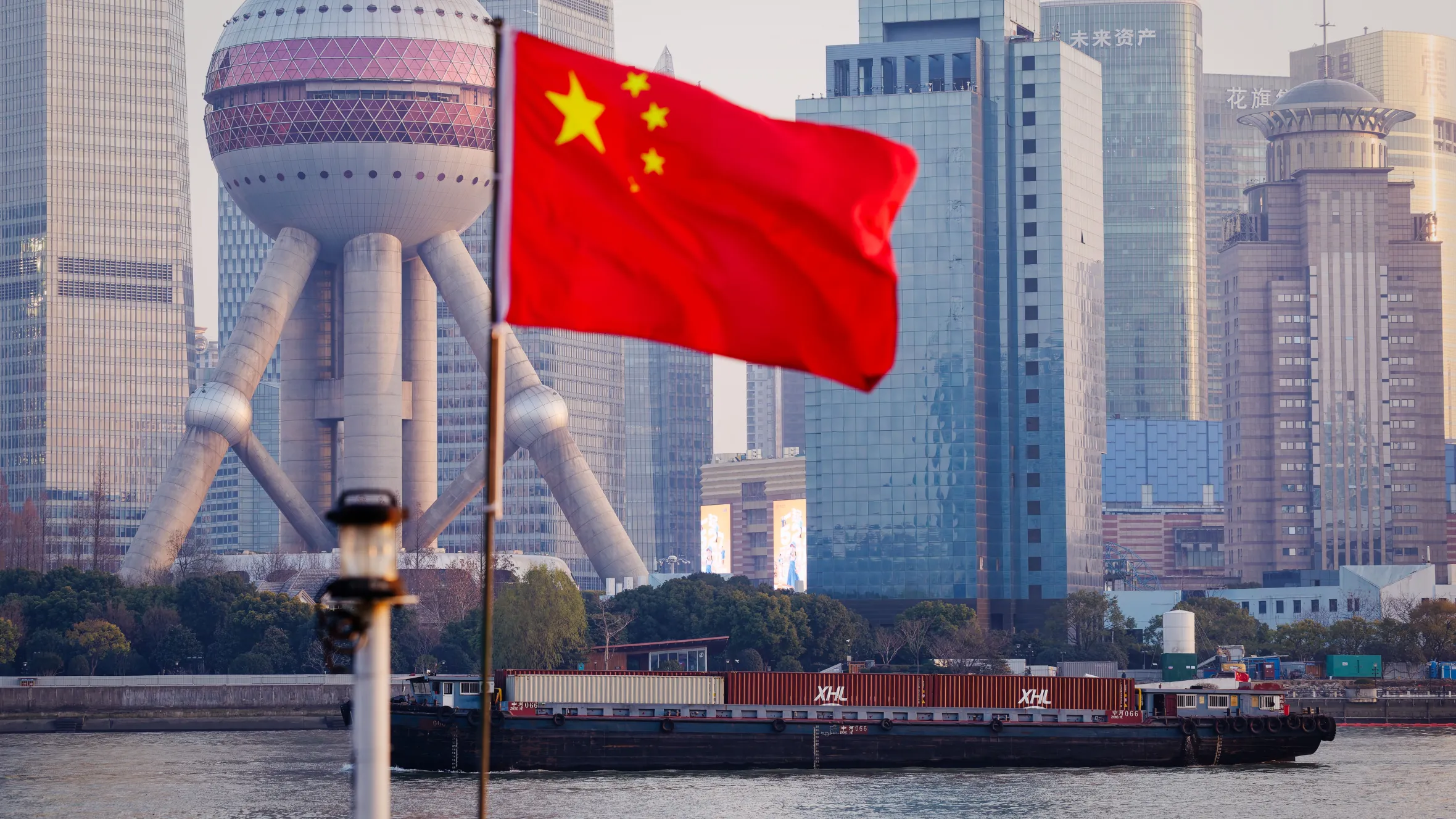
Photo: The Times
China’s economy showed renewed strength at the start of the year, with growth accelerating to 5% in the first quarter, beating expectations and marking an improvement from the previous quarter’s 4.5%. The latest data highlights the resilience of the world’s second-largest economy, largely driven by strong exports and industrial output, even as underlying domestic demand remains fragile.
The stronger-than-expected performance comes at a critical moment. Economists had forecast growth closer to 4.8%, making the actual figure a notable upside surprise. However, the headline number tells only part of the story, as structural imbalances and rising global risks continue to challenge the sustainability of this momentum.
A key driver of growth has been China’s export sector. Shipments surged 14.7% year-on-year in the first quarter, the fastest pace since early 2022, reflecting strong external demand and competitive pricing from Chinese manufacturers. Industrial production also played a central role, rising 6.1% over the quarter and reinforcing manufacturing’s position as the backbone of the economy.
March data further supports this trend. Industrial output expanded 5.7% year-on-year, outperforming expectations of 5.5%, though slightly down from February’s 6.3% growth. The steady expansion in factory activity signals continued global reliance on Chinese goods, particularly in electronics, machinery, and consumer products.
Yet, beneath this industrial strength lies a much weaker consumer landscape. Retail sales rose just 1.7% in March compared to a year earlier, falling short of expectations and slowing from February’s 2.8% increase, which had been boosted by Lunar New Year spending. While certain categories such as communication devices, gold, and jewelry saw temporary gains due to government subsidies and festive demand, broader consumption trends remain subdued.
This caution is especially evident in big-ticket purchases. Auto sales declined year-on-year, suggesting that households are holding back on discretionary spending amid economic uncertainty and fluctuating fuel prices. Consumer confidence continues to lag, limiting the pace of a full recovery.
Investment activity presents a similarly mixed picture. Urban fixed-asset investment, which includes infrastructure and real estate, grew just 1.7% in the first quarter, missing expectations. The property sector remains a significant drag, with real estate investment plunging 11.2% year-to-date, worsening from a 9.9% decline a year earlier. The prolonged downturn in housing continues to weigh heavily on overall economic sentiment and financial stability.
Labor market indicators also reflect mild pressure. The urban unemployment rate edged up to 5.4% in March from 5.3% in February, indicating that job creation is not yet keeping pace with economic expansion.
Policymakers are now navigating a complex balancing act. While first-quarter growth has reduced the urgency for aggressive stimulus measures, the government remains cautious. Beijing has already set a modest annual growth target of 4.5% to 5%, its lowest in decades, signaling recognition of deeper structural challenges including slowing domestic demand and ongoing trade frictions.
At the same time, the external environment is becoming increasingly unpredictable. The ongoing conflict in the Middle East has introduced a fresh layer of risk, particularly through energy markets. As the world’s largest importer of crude oil, China is highly exposed to rising energy prices. The recent surge in oil and gas costs is already feeding into production expenses, squeezing manufacturers and pushing factory-gate prices higher for the first time in over three years.
Export momentum is also beginning to lose steam. Growth in outbound shipments slowed sharply to 2.5% in March, down from a combined 21.8% surge in the first two months of the year. Higher logistics costs, weaker global demand, and tightening financial conditions are all contributing to this deceleration.
Economists warn that the current growth model remains heavily skewed toward supply rather than demand. While China continues to gain market share in certain export sectors, the overall size of the global market may shrink if energy shocks and geopolitical tensions persist. This creates a scenario where even strong export performance may not be enough to sustain broader economic expansion.
In essence, China’s first-quarter data paints a picture of an economy that is stabilizing but not yet fully balanced. Strong manufacturing and export activity are keeping growth afloat, but weak consumption, a struggling property sector, and rising external risks are preventing a more robust recovery. The months ahead will be critical in determining whether China can shift toward more sustainable, demand-driven growth or remain vulnerable to global shocks.
.webp)
Popular articles



Subscribe to unlock premium content
Estée Lauder – The Woman Who Revolutionized Cosmetics Marketing with Free Samples

Vending Machines in Japan
Polaroid The Instagram of the 70s

Estée Lauder – The Woman Who Revolutionized Cosmetics Marketing with Free Samples
Vending Machines in Japan
Estée Lauder – The Woman Who Revolutionized Cosmetics Marketing with Free Samples