China Pushes for Stronger APEC Unity as Trade Talks Take Center Stage in Suzhou

China Pushes for Stronger APEC Unity as Trade Talks Take Center Stage in Suzhou
By
David Goldfarb
Last updated:
May 22, 2026
First Published:
May 22, 2026

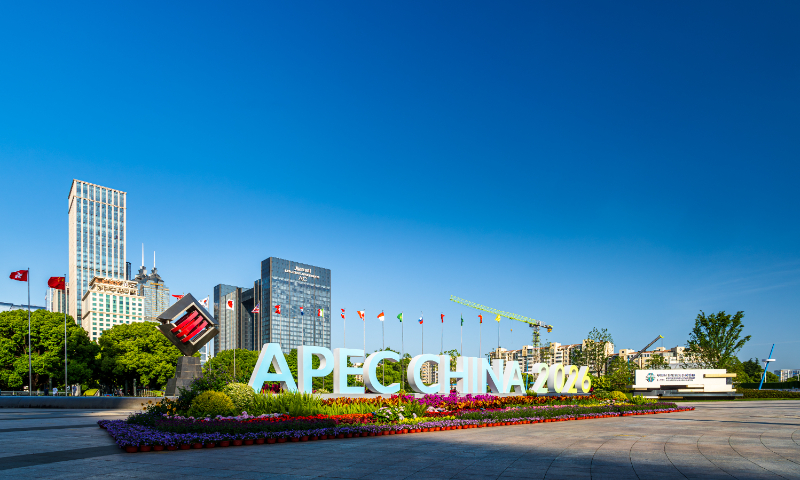
China used the opening of a major Asia-Pacific trade gathering to deliver a message focused on cooperation and economic stability, emphasizing the need for stronger regional partnerships at a time of ongoing geopolitical and trade uncertainty.
During the opening session of the Asia-Pacific Economic Cooperation (APEC) trade ministers' meeting in Suzhou, Chinese officials urged member economies to strengthen collaboration and accelerate progress on trade initiatives. The event, which brings together representatives from some of the world's largest economies, comes at a critical period for global commerce as countries navigate changing supply chains, tariff concerns, and shifting international alliances.
Notably, China’s Commerce Minister was absent from the opening session, with the country's senior trade envoy stepping in to lead discussions.
China’s Trade Representative Takes the Lead
Li Chenggang, China’s international trade representative and vice commerce minister, chaired the opening meeting in place of Commerce Minister Wang Wentao.
According to official remarks, Wang was unable to attend because of what was described as "urgent official business."
Li holds minister-level status and serves as one of China's leading figures on international trade policy. His role places him at the center of Beijing’s efforts to manage complex economic relationships with global partners.
Addressing delegates at the gathering, Li emphasized that APEC economies should deliver a unified message supporting cooperation and collective development.
He stressed that although APEC is not designed as a formal negotiating platform, it still plays an important role in shaping broader economic discussions and influencing regional policy direction.
China also urged members to move more quickly in turning agreements into measurable outcomes.
The message reflected Beijing's broader strategy of promoting multilateral cooperation during a period of increasing economic fragmentation worldwide.
Why the APEC Meeting Matters
The APEC trade ministers' meeting serves as one of the most important annual gatherings for economies across the Asia-Pacific region.
Founded in 1989 in Australia, APEC was created to encourage free trade, economic integration, and stronger cooperation among economies surrounding the Pacific Rim.
Today, the organization includes 21 member economies, representing:
• Nearly 40% of the world's population
• Roughly half of global trade
• Around 60% of global economic output
The forum includes major economies such as:
• China
• The United States
• Japan
• South Korea
• Australia
• Canada
• Mexico
• Hong Kong
• Chinese Taipei
Unlike formal treaty organizations, APEC operates as an informal platform focused on consensus building and practical cooperation.
Although it does not directly create binding trade agreements, discussions held during APEC meetings often influence future policy decisions and international economic strategies.
Trade Discussions Come During a Sensitive Global Moment
The Suzhou meeting is taking place against a backdrop of heightened global trade uncertainty.
Governments across multiple regions continue to reassess supply chains, trade partnerships, and strategic industries amid geopolitical competition and changing economic priorities.
The timing is particularly important because it comes shortly after high-level engagement between U.S. President Donald Trump and Chinese President Xi Jinping in Beijing.
Recent discussions between both countries produced several significant developments, including:
• China agreeing to place its first major Boeing aircraft order in nearly a decade
• Commitments involving approximately $17 billion annually in U.S. agricultural purchases through 2028
• Broader efforts aimed at maintaining economic dialogue between the world's two largest economies
While separate from APEC itself, these developments create additional attention around the broader regional trade environment.
The United States Maintains a Strong Presence
The United States remains a central participant within APEC and continues to play a significant role in discussions involving trade and regional growth.
Leading the U.S. delegation at the Suzhou meeting is Ambassador Rick Switzer, Deputy United States Trade Representative.
The United States was among the 12 original founding members of APEC and has long supported initiatives designed to improve trade flows and economic cooperation across the Pacific region.
As competition and cooperation increasingly coexist between major economies, meetings such as APEC have become more important for maintaining communication and reducing uncertainty.
China’s Broader Message Signals Long Term Priorities
China's emphasis on cooperation reflects a larger policy direction that increasingly focuses on stability, regional partnerships, and multilateral engagement.
With trade tensions, tariffs, and economic competition continuing to influence global markets, Beijing appears eager to reinforce the idea that economic growth can be strengthened through coordination rather than fragmentation.
Whether discussions at the Suzhou meeting produce immediate outcomes remains uncertain. However, the gathering highlights how major economies continue to rely on forums like APEC to manage challenges and shape the future of international trade.
As the meeting concludes, investors, businesses, and policymakers will be watching closely for signs of where regional economic relationships may be heading next.
.webp)
Popular articles



Subscribe to unlock premium content
Urban Sanctuaries in the Sky

Frozen Luxury Comes to Life

The Glow of Luxury Bioluminescence

Urban Sanctuaries in the Sky
Frozen Luxury Comes to Life
Urban Sanctuaries in the Sky