AI Is Reshaping the American Dream as Skilled Trade Workers Move Into the Spotlight

AI Is Reshaping the American Dream as Skilled Trade Workers Move Into the Spotlight
By
Alina Sinclair
Last updated:
May 22, 2026
First Published:
May 22, 2026

John Stankey, Chairman and CEO at AT&T, speaking at CNBC's Invest In America Forum in Washington, D.C. on April 15th, 2026.
Aaron Clamage | CNBC
For generations, the formula for economic success in the United States seemed straightforward: earn a college degree, secure a professional office job, climb the corporate ladder and build a stable middle-class life. But the rapid rise of artificial intelligence is beginning to challenge that long-standing model.
As AI tools become increasingly integrated across industries, many businesses are reducing or slowing hiring for traditional entry-level white-collar positions. At the same time, a different segment of the labor market is experiencing growing demand: skilled trade workers who build, maintain and operate the infrastructure powering the AI economy.
From telecom technicians and electricians to construction specialists and data center workers, the next wave of economic opportunity may look very different from what previous generations expected.
The AI Boom Is Changing Hiring Patterns
Artificial intelligence has quickly evolved from an experimental technology into a major force influencing hiring strategies across corporate America.
While widespread job losses have not materialized, hiring patterns are showing noticeable changes, especially among recent college graduates entering AI-exposed industries.
Fields increasingly impacted include:
• Marketing
• Accounting
• Human resources
• Information technology
• Legal services
• Finance
• Consulting
Many of these roles historically depended on junior employees handling repetitive research, data analysis, reporting and administrative tasks.
Today, AI systems are beginning to automate significant portions of that work.
Instead of replacing entire professions, AI is changing how entry-level jobs function and reducing the number of workers required for certain tasks.
Recent labor data has highlighted signs of this transition.
The unemployment rate for recent college graduates aged 22 to 27 has risen to approximately 5.4%, compared with a historical average of around 4.5%.
Research examining AI-exposed occupations also found slower employment growth among younger workers entering industries most vulnerable to automation.
Some studies estimate that employment growth among early-career workers in highly AI-exposed fields slowed by approximately 16% compared with less-exposed sectors.
The Rise of America's New Infrastructure Workforce
While AI may reduce hiring in some white-collar positions, it is also creating enormous demand elsewhere.
The technology revolution requires a massive physical foundation, including:
• Data centers
• Fiber networks
• Semiconductor facilities
• Electrical systems
• Telecommunications infrastructure
• Cooling and power systems
Building and maintaining that infrastructure requires workers with highly specialized practical skills.
Major companies increasingly say they face shortages of qualified technicians and skilled laborers.
Telecommunications companies, manufacturing firms and technology leaders are all expanding efforts to recruit workers capable of supporting AI-driven infrastructure projects.
Industry executives increasingly argue that the AI era is triggering one of the largest infrastructure expansions in decades.
The construction of AI ecosystems is creating demand not just for software engineers, but also for:
• Electricians
• Plumbers
• HVAC specialists
• Network technicians
• Telecommunications installers
• Construction workers
• Maintenance specialists
Some of these positions are increasingly offering competitive wages and long-term career opportunities.
AT&T Is Making a Massive Workforce Investment
One of the clearest examples of this shift can be seen at AT&T.
The telecom giant recently announced plans to invest approximately $250 billion over the next five years to expand its fiber infrastructure and support rising network demand driven by artificial intelligence, cloud computing and increasing data consumption.
Roughly 15% of that investment, representing around $38 billion, is expected to go toward hiring and workforce development.
The focus is not primarily on corporate office positions.
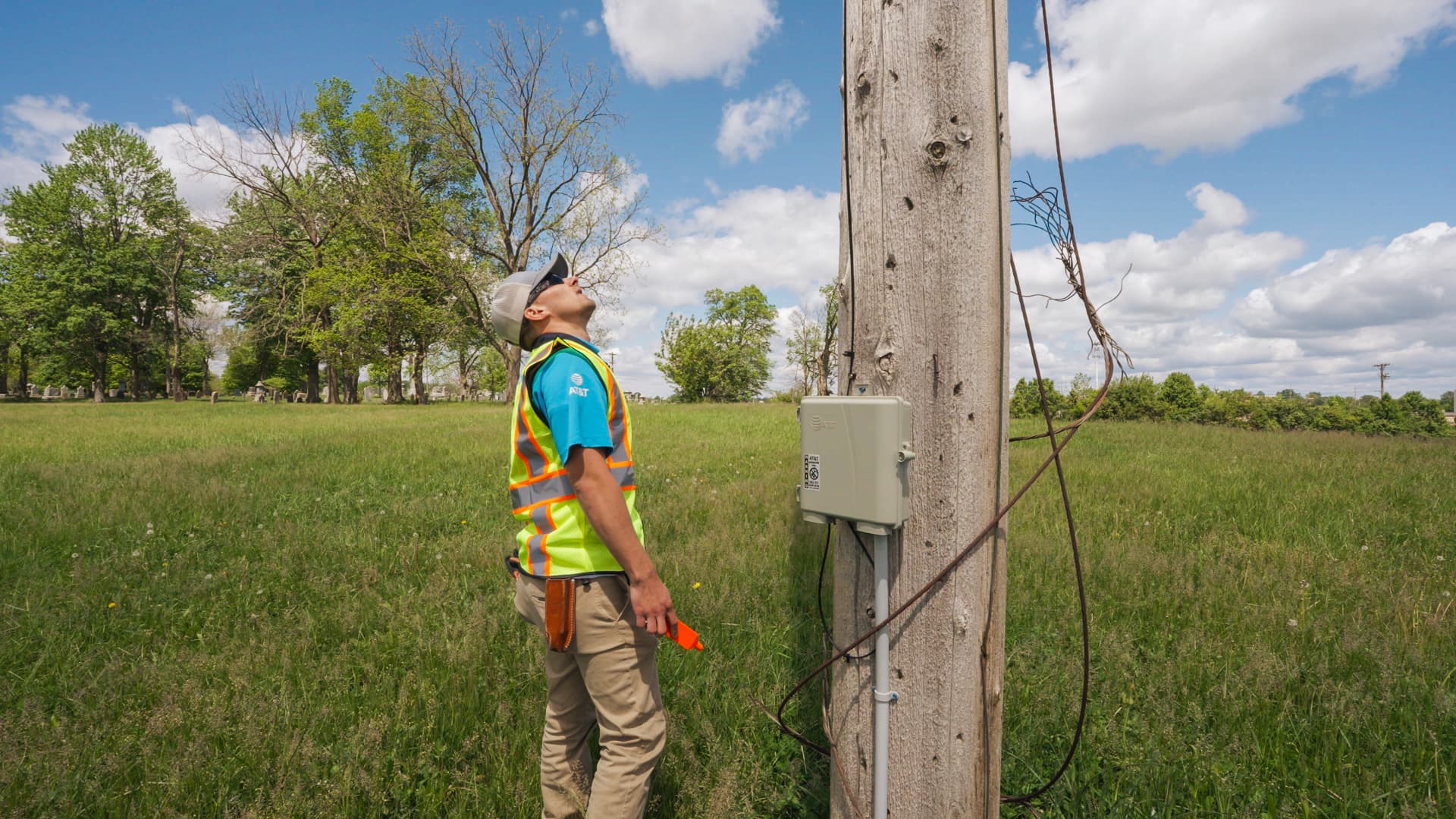
Instead, the company is prioritizing front-line technical workers.
AT&T plans include:
• Hiring approximately 3,000 technicians this year
• Expanding recruitment across multiple states
• Training thousands of additional workers
• Spending between $50,000 and $80,000 per employee on training programs
Over the last three years, the company has already added around 10,000 technicians.
The challenge, according to executives, is not finding applicants but finding workers with the right practical skills.
The Skilled Labor Shortage Is Becoming More Severe
The AI boom is arriving at a time when the U.S. labor market is already experiencing shortages in many skilled trades.
Current industry estimates suggest:
• The construction sector faces a shortage of approximately 350,000 workers
• The deficit may rise beyond 450,000 workers next year
• More than 2.1 million skilled trade positions could remain unfilled by 2030
Several factors are driving the issue:
An aging workforce is one major concern.
Approximately one-fifth of electricians are now over the age of 55, raising concerns about retirements and replacement needs.
Large semiconductor projects, infrastructure construction and manufacturing expansions are also increasing labor demand simultaneously.
The result is a tightening labor market for skilled technical workers.
Why College Degrees Are Facing New Questions
None of this suggests college degrees have suddenly lost value.
Historically, college graduates continue to enjoy:
• Higher lifetime earnings
• Lower average unemployment rates
• Stronger long-term career outcomes
Workers with bachelor's degrees have generally maintained lower unemployment rates than those with only high school education.
Still, concerns surrounding return on investment are growing.
Higher education costs have increased substantially over the past several decades.
Student debt burdens have also expanded.
Now AI introduces another layer of uncertainty.
Some analysts argue that AI performs many of the same functions previously assigned to junior employees.
Tasks such as:
• Research
• Data gathering
• Draft writing
• Administrative work
• Initial analysis
can increasingly be completed by AI systems in seconds.
This raises questions around whether companies will continue hiring large classes of entry-level workers at previous levels.
Instead, businesses may increasingly seek graduates who already possess advanced AI skills and practical experience.
Universities Face Pressure to Adapt
Educational institutions are now confronting difficult questions about preparing students for an AI-driven economy.
Employers increasingly want graduates capable of:
• Working alongside AI systems
• Managing automated workflows
• Using AI tools productively
• Solving real-world business problems
• Applying technical knowledge immediately
The traditional model of entering the workforce through gradual skill development may become less common.
Some experts believe future graduates may need to begin their careers with capabilities previously expected several years later.
The adjustment period could create challenges for younger workers entering the labor market during the transition.
Economists warn that extended difficulty securing early-career jobs can create long-term economic effects, including lower earnings growth and delayed financial milestones.
A New Version of the American Dream
As artificial intelligence reshapes the labor market, the definition of career success may also evolve.
For decades, social expectations often elevated office jobs and college degrees while overlooking skilled trades.
Yet many trade careers now provide:
• Competitive salaries
• Stable employment
• Benefits packages
• Homeownership opportunities
• Reduced student debt burdens
• Greater protection from automation risks
Unlike software or administrative tasks that can increasingly be handled digitally, physical infrastructure work remains difficult to automate.
Installing fiber networks, repairing electrical systems and maintaining large-scale infrastructure still require hands-on expertise.
The AI economy may ultimately create winners across both white-collar and blue-collar professions.
But the path toward economic opportunity is becoming broader and more complex than the traditional "college degree equals success" formula.
Rather than replacing the American Dream, AI may simply be rewriting how people reach it.
.webp)
Popular articles



Subscribe to unlock premium content
Urban Sanctuaries in the Sky

Frozen Luxury Comes to Life

The Glow of Luxury Bioluminescence

Urban Sanctuaries in the Sky
Frozen Luxury Comes to Life
Urban Sanctuaries in the Sky