Wendy’s Appoints Former Potbelly CEO Bob Wright as New Chief Executive Amid Turnaround Pressure

Wendy’s Appoints Former Potbelly CEO Bob Wright as New Chief Executive Amid Turnaround Pressure
By
David Goldfarb
Last updated:
May 22, 2026
First Published:
May 22, 2026

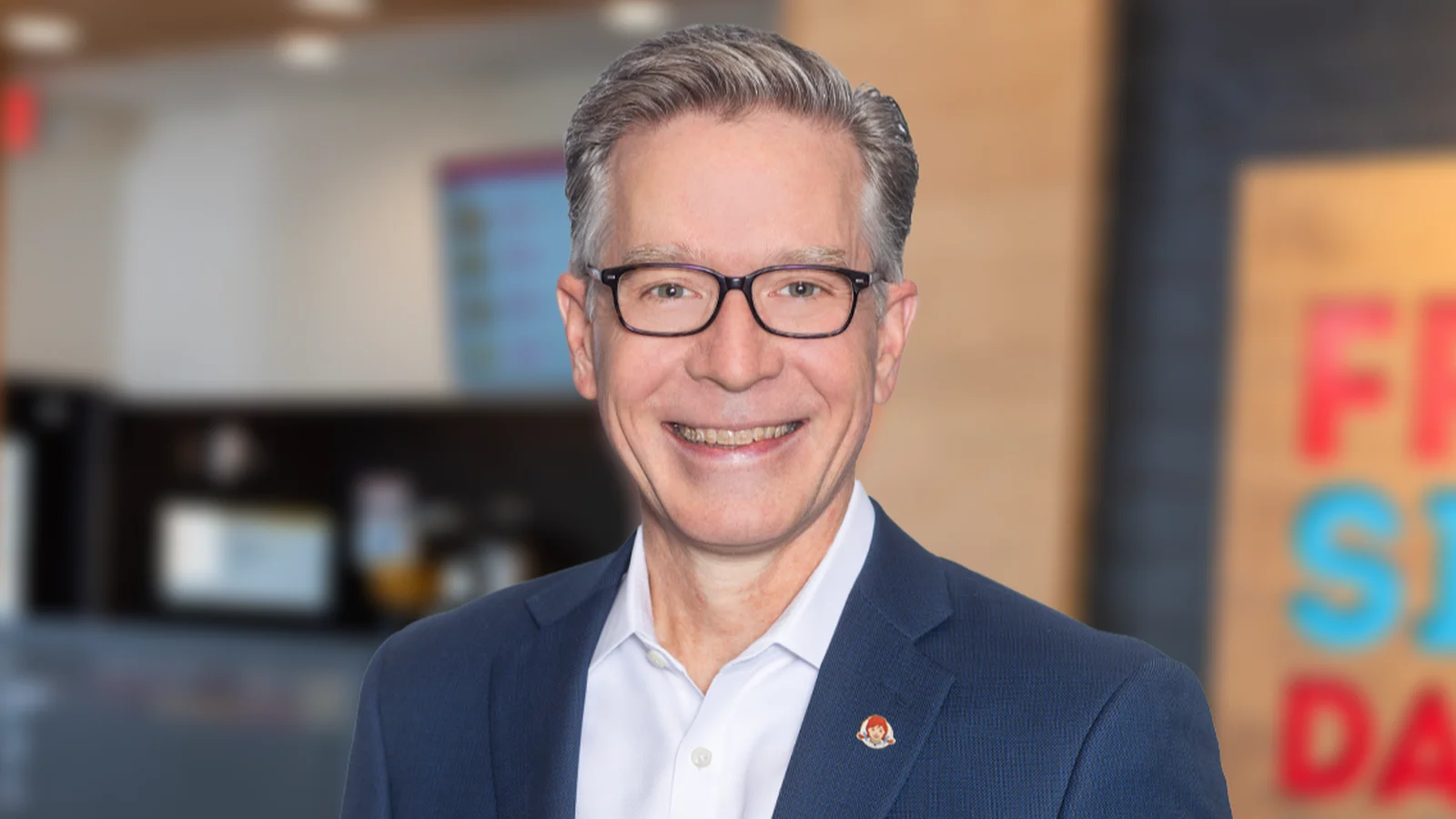
Photo: QSR Web
Wendy’s has appointed former Potbelly CEO Bob Wright as its new chief executive, marking a major leadership shift as the fast-food chain attempts to reverse a prolonged sales downturn and stabilize its market position.
The announcement comes during a difficult period for the company, which has reported five consecutive quarters of declining same-store sales and is facing renewed investor scrutiny amid reports of a possible take-private transaction involving activist investor Nelson Peltz’s Trian Fund Management.
Wright will officially assume the CEO role immediately, replacing Kirk Tanner, who left after roughly 18 months in the position to become CEO of Hershey.
A Turnaround Specialist Steps In
Bob Wright brings turnaround experience from his previous leadership role at Potbelly, where he served as CEO for five years during a period of post-pandemic restructuring.
Under his leadership, Potbelly stabilized operations before ultimately being taken private in a $566 million acquisition by convenience retailer RaceTrac last year.
Wright’s appointment signals that Wendy’s is prioritizing operational restructuring and performance recovery at a time when competitive pressure in the fast-food industry is intensifying.
Wendy’s Faces Sustained Sales Declines and Store Closures
Wendy’s has struggled to maintain customer demand in an increasingly price-sensitive consumer environment.
Key challenges include:
• Five consecutive quarters of same-store sales declines
• Loss of market share to competitors
• Increasing consumer shift toward value-focused menus
• Operational inefficiencies across certain locations
Earlier this year, the company announced plans to close approximately 300 underperforming restaurants during the first half of the year as part of a broader restructuring effort.
The closures reflect ongoing efforts to streamline operations and focus resources on higher-performing locations.
Competitive Pressure From Rivals Intensifies
The fast-food sector has become increasingly competitive, with major chains aggressively competing on pricing, loyalty programs, and digital ordering platforms.
Wendy’s has lost ground to larger rivals including:
McDonald's Corporation
Restaurant Brands International
These competitors have benefited from stronger global scale, expanded promotional strategies, and more aggressive value menus, which have attracted cost-conscious consumers amid persistent inflationary pressure.
Wendy’s ability to compete on pricing while maintaining margins has become a central strategic challenge.
Investor Pressure and Take-Private Speculation
The leadership change also comes amid increasing speculation that Wendy’s could become a private equity target.
The Financial Times previously reported that Nelson Peltz’s Trian Fund Management has been exploring funding options for a potential take-private deal.
Trian currently holds a significant stake in Wendy’s, with filings indicating:
• Approximately 7.85% direct ownership
• Around 16.24% beneficial interest linked to Nelson Peltz
The firm has previously described Wendy’s shares as undervalued, reigniting discussions about strategic restructuring outside of public markets.
Trian has a long history with Wendy’s, dating back to an activist campaign launched in 2005. Peltz has also served on the company’s board for many years and was later named chairman emeritus in 2024.
Stock Performance Reflects Business Struggles
Wendy’s financial performance has deteriorated alongside operational challenges.
Over the past year:
• Shares have fallen nearly 35%
• Market capitalization has declined to approximately $1.55 billion
• Investor sentiment has weakened due to sustained sales pressure
The decline has made the company more attractive to potential acquisition bidders, particularly in a market where undervalued consumer brands are increasingly targeted by private equity firms.
Leadership Instability Adds to Pressure
Wendy’s has also experienced notable leadership turnover in recent years.
• Kirk Tanner served roughly 18 months before departing
• Prior CEO Todd Penegor led the company for nearly eight years
• The company has now cycled through multiple leadership transitions in a short period
This instability has added uncertainty around long-term strategy execution at a time when the company is trying to regain momentum in a highly competitive sector.
Strategic Priorities Under New Leadership
Wright is expected to focus on stabilizing operations and improving performance metrics, particularly in core U.S. markets.
Key priorities are likely to include:
• Revitalizing same-store sales growth
• Improving franchise performance consistency
• Optimizing store footprint following closures
• Strengthening digital and delivery channels
• Reinforcing Wendy’s value proposition against competitors
Industry analysts expect the company to emphasize cost discipline and operational efficiency while reassessing its store-level economics.
A Critical Phase for the Brand
Wendy’s now enters a pivotal stage where leadership execution will determine whether the company can recover lost momentum or become a restructuring candidate.
With declining sales, intensifying competition, and renewed takeover speculation, the appointment of Bob Wright reflects a strategic shift toward experienced turnaround leadership.
The next several quarters will be critical in determining whether Wendy’s can reestablish growth or continue to face pressure from both markets and potential acquirers.
.webp)
Popular articles



Subscribe to unlock premium content
Urban Sanctuaries in the Sky

Frozen Luxury Comes to Life

The Glow of Luxury Bioluminescence

Urban Sanctuaries in the Sky
Frozen Luxury Comes to Life
Urban Sanctuaries in the Sky