China Pulls Ahead in Humanoid Robot Shipments as Global AI Investment Strategies Split

China Pulls Ahead in Humanoid Robot Shipments as Global AI Investment Strategies Split
By
Rachel Steinberg
Last updated:
April 21, 2026
First Published:
April 21, 2026

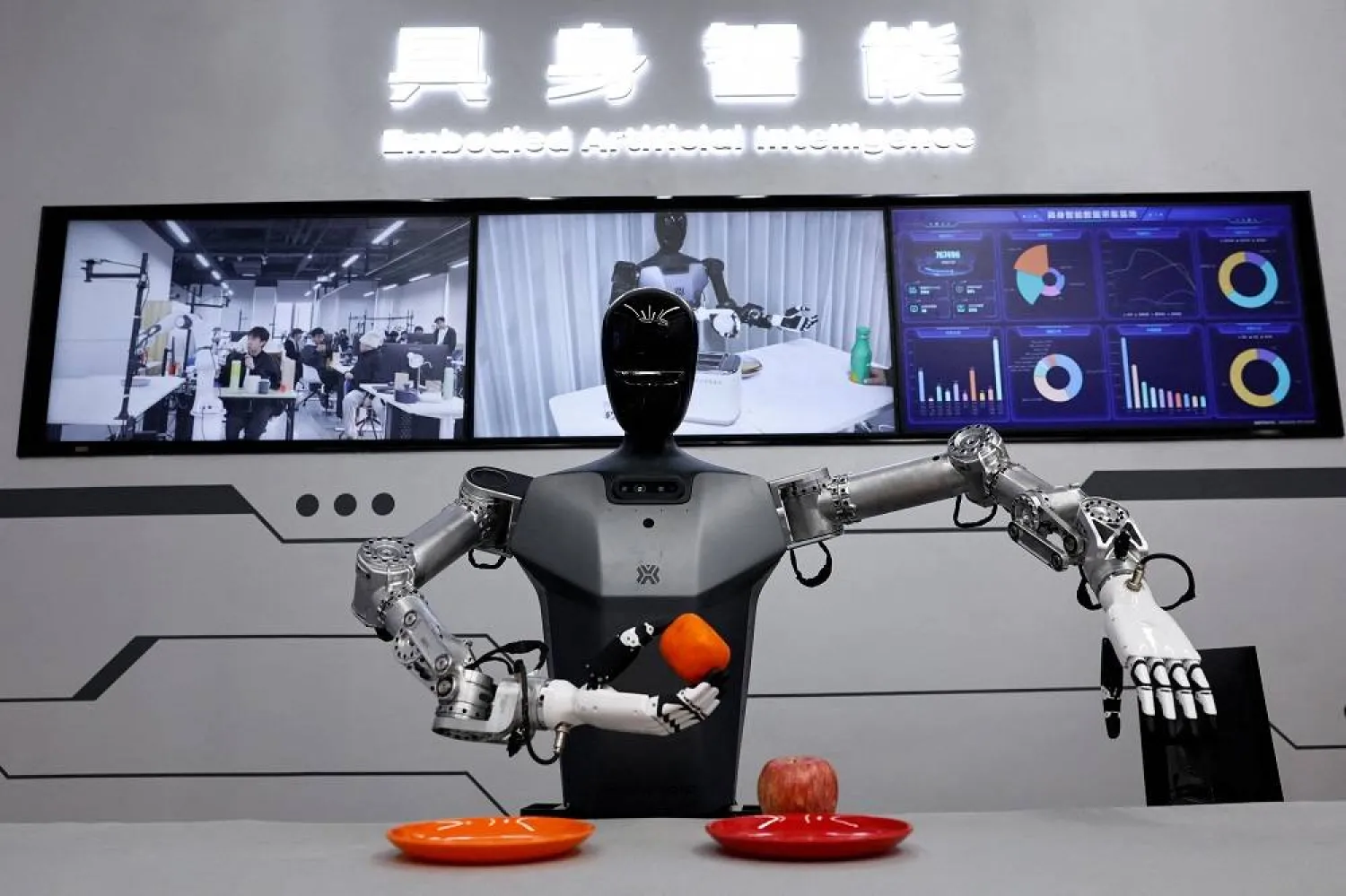
Photo: Asharq Al-Awsat
China is emerging as the clear leader in the real-world deployment of humanoid robots, shipping significantly more units than the United States, even as American companies dominate in valuations and investor hype. The divergence highlights a deeper shift in how the global AI and robotics race is unfolding, with commercialization and scale increasingly competing against vision-driven capital inflows.
Chinese robotics firms have moved quickly from concept to deployment. Startups across the country are already delivering humanoid robots into factories, logistics centers, airports, and retail environments. These machines are being used for tasks ranging from industrial assembly to customer service, signaling that China is prioritizing immediate, practical use cases over long-term speculative development.
In contrast, many U.S.-based companies remain focused on building advanced, general-purpose humanoid systems that are not yet widely deployed. This difference in strategy is reflected sharply in valuations. U.S. robotics firm Figure has reached a valuation of at least $39 billion, while Apptronik, another key player, recently secured a $5 billion valuation. These figures significantly outpace their Chinese counterparts.
China’s most valuable private humanoid robotics company, Galbot, is valued at just over $3 billion. Other players, such as AI2 Robotics, have reached valuations near 20 billion yuan, or approximately $2.9 billion. While these numbers are smaller, they are backed by tangible deployments and growing commercial traction. In some cases, Chinese robots have already been selected over U.S. alternatives by global manufacturers for real-world operations, particularly in high-demand sectors like semiconductors and healthcare.
The scale advantage is becoming increasingly evident. China accounted for the top six spots in global humanoid robot shipments in 2025, according to industry rankings. Only a handful of U.S. companies, including Tesla and Figure, made it into the top ten. Even then, their products remain largely in development or early-stage rollout, limiting their presence in active commercial environments.
This growing gap is also rooted in how investors perceive the sector. U.S. humanoid robotics companies are often valued as expansive AI platforms with future applications across multiple industries, driving higher valuations. Chinese firms, by contrast, are typically viewed as hardware manufacturers focused on industrial efficiency, resulting in more conservative pricing despite faster execution.
Geopolitics has added another layer of complexity to the investment landscape. Rising tensions between the United States and China, combined with stricter regulatory oversight, have significantly reduced cross-border investment flows. Major U.S. pension funds that once played a key role in funding Chinese startups have scaled back their exposure, creating a noticeable funding gap.
That gap is now being filled by Middle Eastern investors. Sovereign wealth funds and regional venture capital firms are stepping in, backing Chinese robotics startups and acquiring advanced technologies as part of broader economic diversification strategies. These investors are uniquely positioned to operate across geopolitical lines, giving them access to opportunities on both sides of the global AI divide.
At the same time, capital allocation trends are shifting. In the United States, roughly 90 percent of venture funding continues to flow into software-driven AI initiatives, leaving hardware-intensive sectors like robotics relatively underfunded. This imbalance has created opportunities for investors willing to support manufacturing-heavy innovation, particularly in regions with strong industrial ecosystems like China.
China’s manufacturing expertise is proving to be a decisive advantage. Decades of experience in scaling industries such as electric vehicles and drones are now being applied to humanoid robotics. Companies are leveraging established supply chains, lower production costs, and rapid prototyping capabilities to accelerate deployment timelines.
This dynamic is also influencing global collaboration patterns. Increasingly, U.S. firms are sourcing robotic components from Chinese manufacturers while focusing on integrating advanced software and AI systems domestically. This hybrid approach reflects a broader trend where hardware and software innovation are becoming geographically fragmented but technologically interconnected.
Beyond robotics, China’s broader economic indicators provide additional context. The country reported 5 percent GDP growth in the first quarter, exceeding expectations, although retail sales growth remained modest at 1.7 percent in March. Export growth also slowed to 2.5 percent, partly due to global demand pressures linked to geopolitical tensions.
Meanwhile, Chinese technology companies continue expanding internationally. Robotaxi operators are entering Middle Eastern markets, and financial hubs like Hong Kong are introducing tax incentives to attract global commodity traders, signaling a broader push to strengthen economic influence.
The humanoid robotics race is no longer just about technological capability. It is increasingly defined by execution speed, manufacturing scale, and access to capital. China’s ability to rapidly deploy robots into real-world environments is giving it a critical edge, even as U.S. firms command higher valuations and investor attention.
As these two approaches continue to diverge, the long-term winner may not be determined solely by innovation, but by who can most effectively bridge the gap between technology and large-scale adoption.
.webp)
Popular articles



Subscribe to unlock premium content
Hidden Travel Gems That Boost Creativity According to Billionaires

How Streetwear Became a Billion-Dollar Industry From Niche to Mainstream

How Harry Potter Became a Global Brand and Took Over the Muggle World

Hidden Travel Gems That Boost Creativity According to Billionaires
How Streetwear Became a Billion-Dollar Industry From Niche to Mainstream
Hidden Travel Gems That Boost Creativity According to Billionaires