Alibaba’s Quiet Comeback: How the Tech Titan Survived Beijing’s Crackdown and Emerged as a Global AI Power

Alibaba’s Quiet Comeback: How the Tech Titan Survived Beijing’s Crackdown and Emerged as a Global AI Power
By
Rachel Steinberg
Last updated:
November 25, 2025
First Published:
November 30, 2025

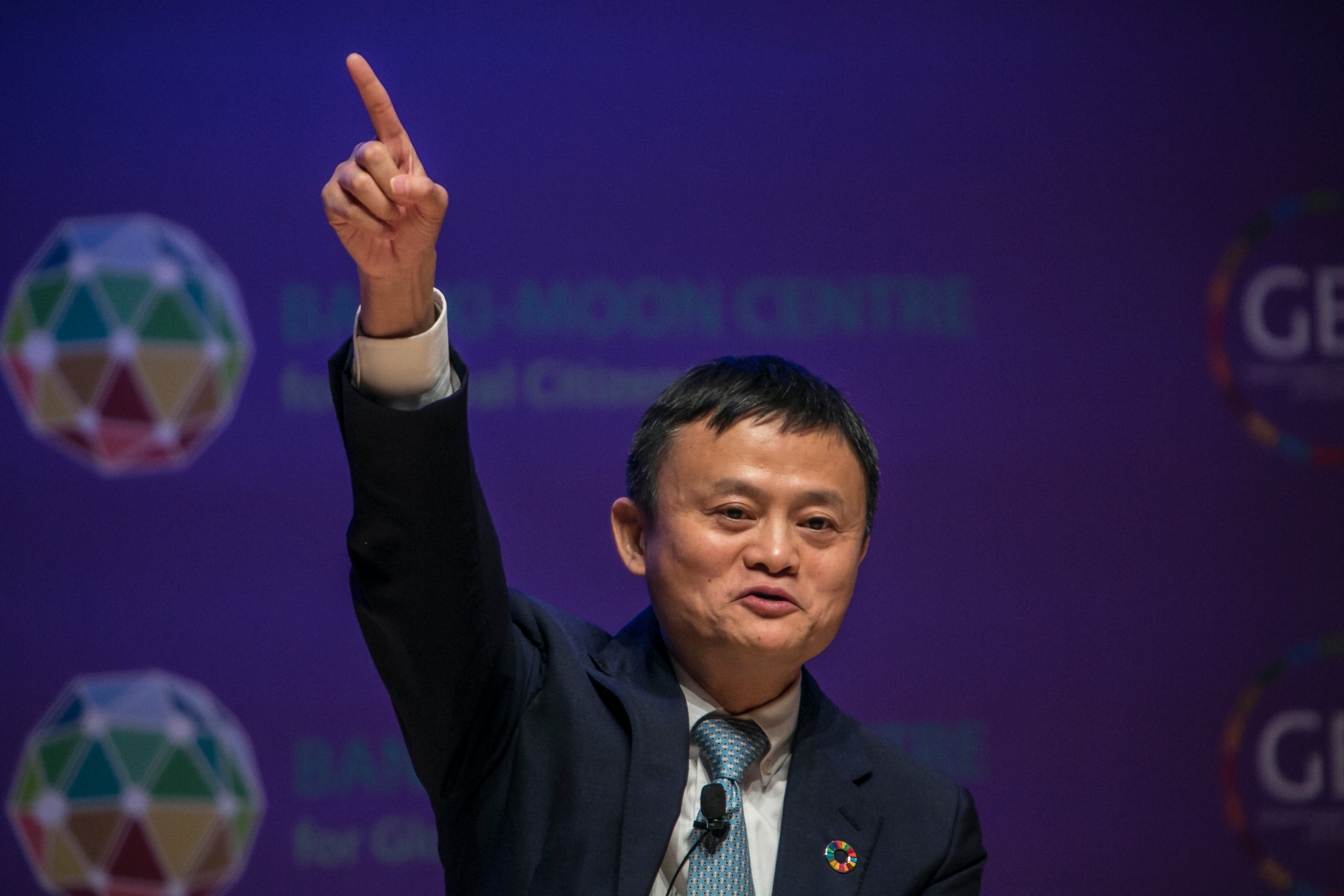
Getty Images
Alibaba’s journey over the past four years has been one of the most dramatic corporate reversals in modern tech history. Once valued at levels rivaling the world’s largest companies, the Chinese giant saw over $400 billion erased from its market capitalization after 2020. The collapse followed the sudden halt of Ant Group’s record-shattering IPO and a regulatory wave that sent shockwaves through China’s internet sector.
Yet in 2024 and 2025, Alibaba is regaining momentum. Strength in its core e-commerce operations, a steady leadership revival, and a long-term bet on artificial intelligence have repositioned the company as one of China’s most formidable tech players once again.
The Breakdown: From IPO Shock to Industry Reckoning
In November 2020, Ant Group’s IPO — expected to raise more than $34 billion, making it the largest public listing in history — was canceled overnight. Jack Ma’s comments criticizing Chinese financial regulators triggered intense scrutiny, forcing the billionaire into a prolonged period away from public view.
The repercussions were severe. Alibaba faced a sweeping antitrust crackdown, hefty penalties including a nearly $3 billion fine in 2021, and a dramatic slide in investor confidence. Leadership reshuffles and corporate restructuring only highlighted the uncertainty. Rivals like PDD and JD.com captured more domestic market share as consumer spending in China weakened.
But insiders knew this was not the end for Jack Ma’s influence — nor Alibaba’s vision.
Inside Alibaba: A Company Too Big to Count Out
Alibaba’s roots date back to 1999, long before China’s digital boom. What began as a simple B2B marketplace evolved into a sprawling ecosystem that today spans e-commerce, payments, logistics, cloud computing, entertainment, and AI.
One of the clearest displays of this scale is Singles Day, Alibaba’s shopping festival that drives tens of billions in sales. What used to be a 24 hour sale transformed into a multi week retail event drawing global brands and billions of transactions.
Experts have compared Alibaba with Amazon, but the analogy falls short. Alibaba is a digital economy in itself — a vast network of platforms, data, and services reaching both Chinese and international consumers.
Surviving the Pressure Cooker
After the Ant implosion, Beijing’s wider crackdown on influential tech firms reshaped the entire sector. Chinese regulators tightened rules across data security, competition, and fintech. The environment forced Alibaba to confront serious internal questions: How could it regain trust, rebuild growth, and adapt to a stricter regulatory climate?
Daniel Zhang, who had taken over as CEO and later chairman, pushed through sweeping structural reforms. But progress stalled, and in 2023 he stepped down unexpectedly. His successors — CEO Eddie Wu and chairman Joe Tsai — brought stability and direction at a time when Alibaba needed both.
Their strategy was simple but effective:
Refocus on Alibaba’s strongest asset, its e-commerce machine, while aggressively redirecting resources toward AI and cloud technologies. The results showed up quickly in earnings, with improved margins, customer growth, and renewed investor interest.
Jack Ma’s Resurfacing
Although quiet during the regulatory storm, Jack Ma never fully stepped away. In early 2024, he appeared in a rare meeting with President Xi Jinping alongside other major entrepreneurs. For markets, this symbolized not only his return but also a signal that Alibaba’s tensions with Beijing were beginning to ease.
The AI Transformation: Alibaba’s New Identity
Years before ChatGPT made global headlines, Alibaba had already begun its AI pivot. The company invested heavily between 2016 and 2021, building its own foundational models, custom chips, and cloud infrastructure. The pandemic years accelerated this timeline, with Alibaba strengthening its research labs and preparing for large scale AI deployment.
So when OpenAI released ChatGPT in 2022, Alibaba was ready. Within months, it launched its own generative AI models and took a distinctive approach by offering open source and open weight versions that developers worldwide could adopt freely. These models quickly became some of the most downloaded on Chinese and global platforms.
CEO Eddie Wu emphasized this transformation immediately after taking office, instructing teams to operate with a “startup mindset” and placing two principles at the center of Alibaba’s future:
User first and AI driven.
This shift boosted Alibaba Cloud, now positioning itself not only as a domestic leader but a key player in the global AI race between China and the United States.
A Renewed Giant in a Global AI Race
Industry analysts now see Alibaba as one of China’s flagship competitors in AI innovation. Whether in cloud services, enterprise solutions, or open source models, the company is embedding AI across every layer of its business.
China aims to be a dominant AI power by 2030, and Alibaba is one of the companies carrying that mandate forward. Its investments, partnerships, chips, and developer community give it a central role in shaping the country’s AI ecosystem.
Alibaba’s fall was dramatic, but its comeback is even more remarkable. Through leadership renewal, strategic reinvention, and long term bets on AI, the company has transitioned from regulatory victim to AI trailblazer.
Its story is not just about surviving Beijing’s crackdown, but about emerging more innovative, more disciplined, and more globally competitive than before.
.webp)
Popular articles



Subscribe to unlock premium content
The Rise of Micro-Cruises Offering Boutique Cultural Experiences in the Mediterranean

Iceland’s Adventure Lodges Are Redefining Remote Work

Inside London’s Private Wealth Advisory Firms Catering to Millennial Investors

The Rise of Micro-Cruises Offering Boutique Cultural Experiences in the Mediterranean
Iceland’s Adventure Lodges Are Redefining Remote Work
The Rise of Micro-Cruises Offering Boutique Cultural Experiences in the Mediterranean