Zuckerberg Signals Meta Could Enter Cloud Computing as AI Spending Explodes

Zuckerberg Signals Meta Could Enter Cloud Computing as AI Spending Explodes
By
Augusta Parker
Last updated:
May 28, 2026
First Published:
May 28, 2026

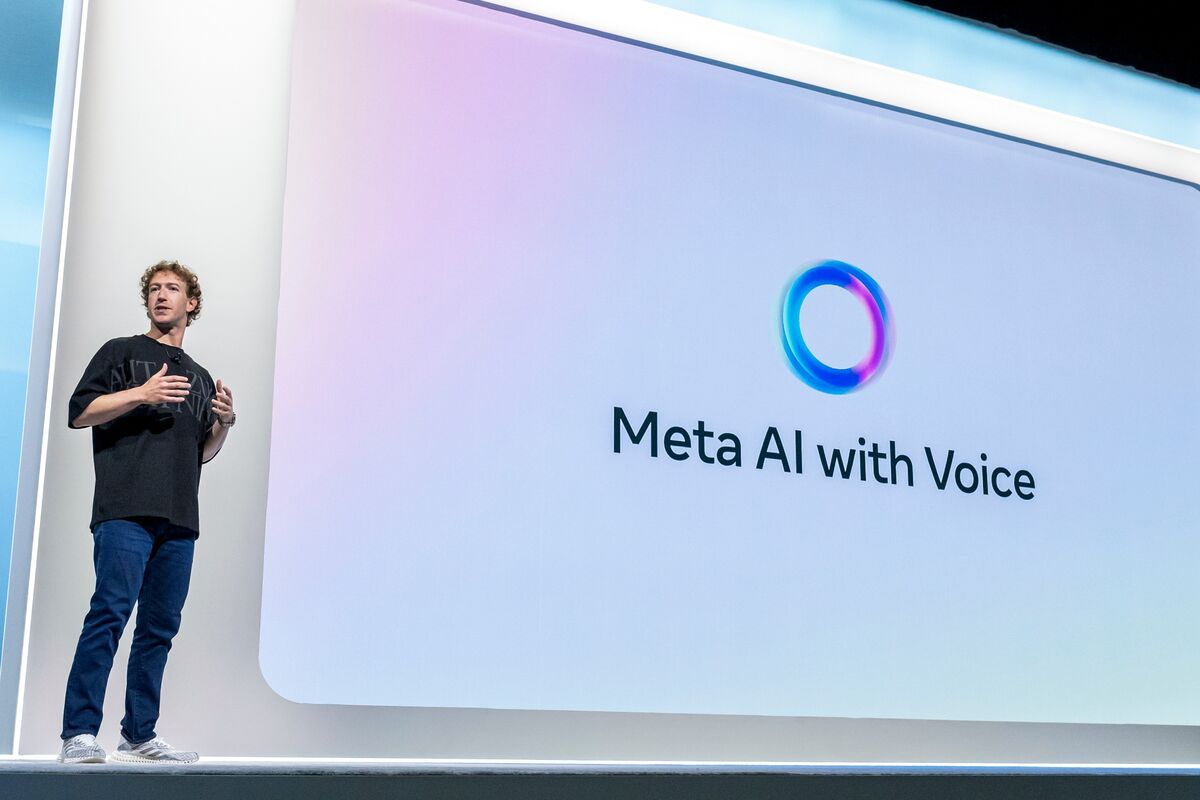
Photo: Bloomberg.com
Meta CEO Mark Zuckerberg says the social media giant may eventually launch its own cloud computing business if its aggressive artificial intelligence infrastructure expansion creates excess data center capacity.
Speaking during Meta’s annual shareholder meeting, Zuckerberg said the idea of entering the cloud market is “definitely on the table,” especially as the company dramatically increases spending on AI servers, chips, and computing power.
The comments mark one of the clearest indications yet that Meta could someday challenge major cloud computing leaders including Amazon, Microsoft, and Google in one of the world’s most profitable technology sectors.
At the moment, Meta remains the only major U.S. hyperscaler without a commercial cloud infrastructure business. Amazon dominates the market through Amazon Web Services, Microsoft operates Azure, and Google continues expanding Google Cloud. Meta, by contrast, has historically focused on using its computing power internally for platforms such as Facebook, Instagram, WhatsApp, Threads, and its growing AI ecosystem.
That may eventually change.
AI Boom Is Driving Massive Infrastructure Spending
Meta has become one of the biggest spenders in the global AI race.
Earlier this year, the company increased its projected 2026 capital expenditures to between $125 billion and $145 billion, sharply above its previous estimate of $115 billion to $135 billion. A major portion of that spending is tied to AI-related infrastructure, including advanced data centers, Nvidia AI chips, networking equipment, and large-scale computing clusters.
The spending surge reflects the escalating battle among tech giants to dominate artificial intelligence development.
Meta is aggressively building infrastructure to support its growing lineup of AI products, including generative AI tools, advertising systems, recommendation algorithms, digital assistants, and future AI-powered services across its apps.
However, the scale of the spending has also unsettled some investors.
Despite reporting stronger-than-expected quarterly earnings earlier this year, Meta shares fell roughly 7% after the company disclosed its sharply higher AI investment plans. Wall Street analysts expressed concern about whether the enormous spending would generate sufficient returns in the near term.
Zuckerberg argued that one reason Meta feels comfortable making such large investments is because the infrastructure could eventually be monetized externally if the company builds more computing capacity than it needs internally.
“If we get to a point where we feel we have overbuilt, renting out compute is absolutely an option,” Zuckerberg said.
Companies Are Already Asking Meta for Computing Power
According to Zuckerberg, outside interest in Meta’s infrastructure is already growing rapidly.
He revealed that companies frequently approach Meta asking for access to its AI computing resources or requesting API-based services built on Meta’s infrastructure.
“Almost every week there are companies asking if they can buy compute from us,” Zuckerberg said.
That demand highlights how scarce high-performance AI infrastructure has become globally. As demand for artificial intelligence accelerates, companies are scrambling for access to graphics processing units, advanced servers, and large-scale data center capacity.
Industry experts estimate that global spending on AI infrastructure could surpass hundreds of billions of dollars annually over the next several years as businesses race to deploy generative AI systems, automation tools, and advanced machine learning platforms.
If Meta decides to commercialize excess infrastructure, it could quickly become a serious competitor in the cloud computing market simply because of the scale of its data center investments.
Meta Is Also Expanding AI Subscription Plans
Alongside infrastructure expansion, Meta is increasingly exploring ways to directly monetize its AI products.
The company recently announced plans to begin testing paid subscription tiers for its Meta AI app and website. The subscriptions will reportedly cost either $7.99 or $19.99 per month depending on the level of features and computing access provided to users.
The initial rollout will begin in Singapore, Guatemala, and Bolivia before potentially expanding into larger global markets.
This marks the first time Meta has directly charged consumers for AI-focused services.
The subscription plans are expected to include premium AI assistant capabilities, faster processing, advanced generation tools, and higher compute limits for users who require more intensive AI workloads.
Zuckerberg suggested that AI-powered personal assistants could eventually become one of the company’s biggest long-term revenue opportunities.
“People will likely want increasingly advanced AI agents,” he explained. “As demand grows, there will naturally be opportunities to charge for premium or higher-compute experiences.”
Meta’s AI Ambitions Are Reshaping the Company
Meta’s transformation into an AI-first company has accelerated rapidly over the past two years.
While the company originally built its business around social networking and digital advertising, artificial intelligence is now influencing nearly every division inside the company. AI systems currently power content recommendations, ad targeting, moderation systems, translation tools, messaging features, and creative products across Meta’s platforms.
The company also recently introduced its Muse Spark AI model as part of broader efforts to compete directly with leading AI developers including OpenAI, Anthropic, Google DeepMind, and xAI.
At the same time, Meta continues investing heavily in open-source AI models through its Llama ecosystem, positioning itself differently from competitors that rely more heavily on closed commercial systems.
Industry analysts believe Meta’s long-term strategy may involve building an interconnected ecosystem where AI assistants, cloud infrastructure, advertising systems, subscriptions, and social platforms all reinforce each other.
Cloud Computing Could Become Meta’s Next Major Business
Cloud computing remains one of the most lucrative sectors in technology.
Amazon Web Services generates tens of billions of dollars annually and contributes a major portion of Amazon’s operating profits. Microsoft Azure and Google Cloud have also become critical growth engines for their parent companies as demand for AI and enterprise computing continues rising.
If Meta enters the market, it would instantly bring enormous scale, advanced AI expertise, and one of the world’s largest data center networks into the industry.
For now, Zuckerberg says the company still intends to use most of its computing power internally. But his comments suggest that Meta is increasingly keeping its options open as AI infrastructure becomes one of the most valuable assets in the global technology economy.
As the AI race intensifies, the line between social media companies, cloud providers, and AI infrastructure giants is beginning to blur — and Meta appears determined to position itself at the center of that transformation.
.webp)
Popular articles



Subscribe to unlock premium content
Gliding Through Ice and Luxury

Frozen Luxury in the World’s Last Frontier

From Passion to Profit: How Celebrity Hobbies Create Billion-Dollar Industries

Gliding Through Ice and Luxury
Frozen Luxury in the World’s Last Frontier
Gliding Through Ice and Luxury