Fed’s Kashkari Prioritizes Inflation Fight as Labor Market Holds Firm in Uneven Economic Landscape

Fed’s Kashkari Prioritizes Inflation Fight as Labor Market Holds Firm in Uneven Economic Landscape
By
Alina Sinclair
Last updated:
May 28, 2026
First Published:
May 28, 2026

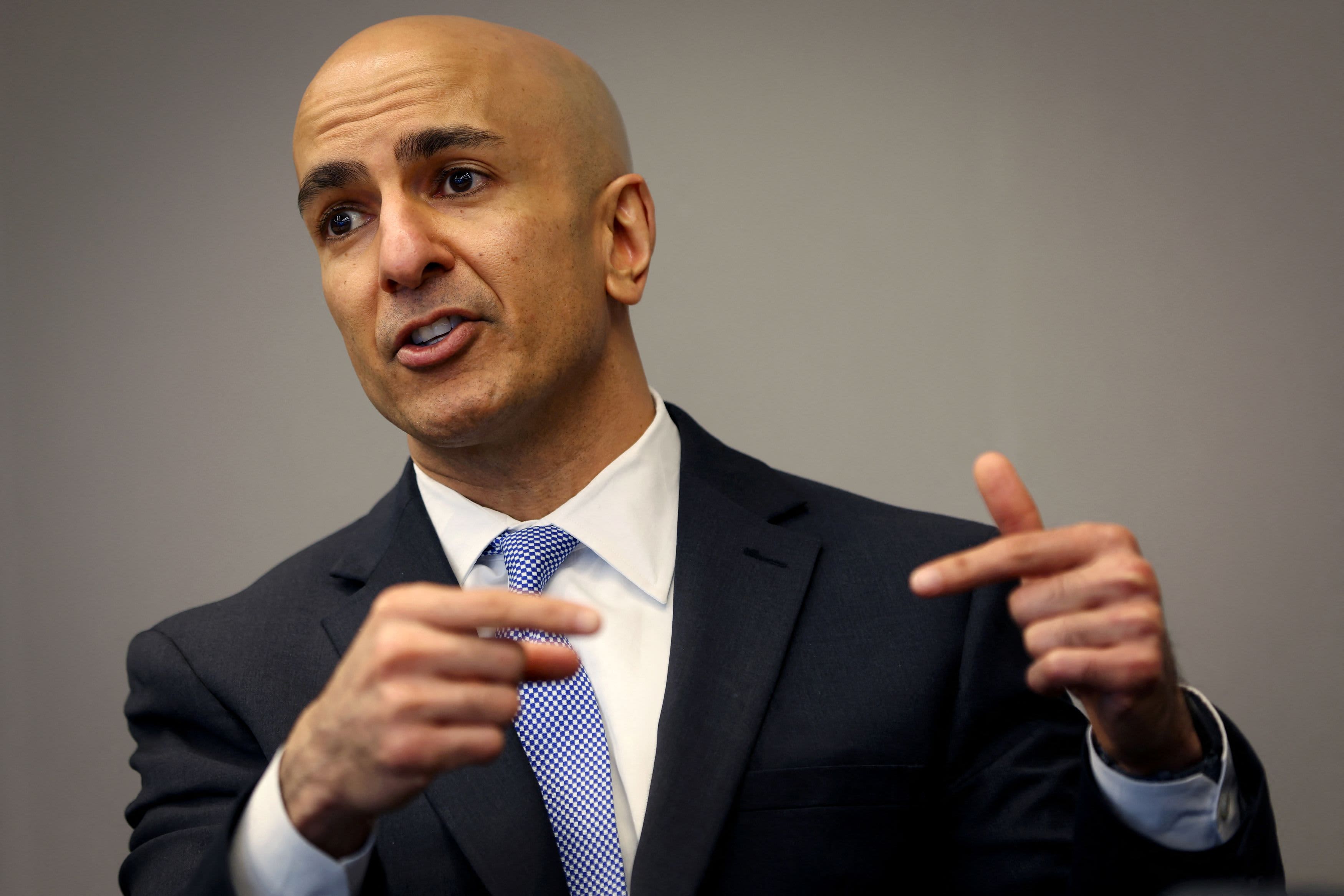
Federal Reserve policymaker Neel Kashkari said inflation control remains the central priority for the U.S. central bank, even as labor market conditions continue to show relative stability across the economy.
Speaking to CNBC at the Bank of Japan-IMES Conference, the Minneapolis Fed president stressed that while employment levels remain “in decent shape,” consumer prices are still running above the central bank’s comfort zone, requiring continued policy vigilance.
Inflation Still Above Target After Years of Pressure
Kashkari emphasized that inflation remains significantly elevated compared with the Federal Reserve’s 2% long-term target, with price pressures persisting for more than five years.
Most recent U.S. inflation readings show headline inflation around 3.8% in April, while core inflation excluding food and energy remains elevated at roughly 2.8% on an annual basis, reflecting continued stickiness in underlying price trends.
He warned that if inflation remains high for too long, it risks becoming embedded in public expectations, which could force the central bank to take more aggressive policy action later.
“If inflation expectations become unanchored, we would have to respond even more forcefully,” Kashkari said, stressing the importance of maintaining credibility in long-term price stability.
Labor Market Shows Strength but No Room for Complacency
Despite inflation concerns, Kashkari acknowledged that the U.S. labor market continues to perform relatively well compared to historical standards.
Job creation remains steady, unemployment remains near long-term averages, and wage growth—while moderating from post-pandemic peaks—continues to support household incomes.
He described current labor conditions as “decent,” suggesting that the immediate risk of labor market collapse remains low compared to inflationary pressures.
However, he reiterated that the Federal Reserve must balance both sides of its dual mandate, even if inflation remains the dominant concern in the near term.
Global Shocks Continue Driving Inflation Volatility
Kashkari attributed recent inflation pressures to a combination of global and structural shocks that have accumulated over several years.
These include disruptions from the COVID-19 pandemic, supply chain bottlenecks, geopolitical conflict in Ukraine, ongoing tensions in the Middle East, and policy shifts such as tariffs that have affected global trade flows.
More recently, energy and fertilizer costs have emerged as key contributors to renewed inflationary pressure, with ripple effects spreading across transportation, agriculture, and consumer goods pricing.
He noted that these input costs tend to cascade through the broader economy, meaning sustained increases in energy prices could eventually filter into a wider range of goods and services.
AI Could Change the Interest Rate Landscape Over Time
Kashkari also addressed the growing influence of artificial intelligence on economic productivity and monetary policy, noting that the long-term effects remain uncertain.
He suggested that if AI leads to sustained productivity gains, it could potentially support a higher equilibrium level of interest rates, as a more productive economy can sustain stronger growth without overheating.
However, he cautioned that the timing and scale of AI-driven productivity gains are still unclear.
Business leaders across multiple industries have told Federal Reserve officials that AI tools are already improving efficiency, enhancing decision-making, and unlocking new capabilities. Yet Kashkari emphasized that these effects are still in early stages and difficult to measure in macroeconomic data.
Debate Over Federal Reserve Communication Strategy
The remarks also come at a time when the Federal Reserve is reassessing its communication framework under Chair leadership changes, including renewed scrutiny of tools such as forward guidance and the “dot plot,” which reflects policymakers’ interest rate projections.
Kashkari said he is open to revisiting how the central bank communicates future policy expectations, noting that economic uncertainty makes precise forecasting inherently difficult.
He expressed skepticism about the usefulness of requiring policymakers to submit detailed long-term projections, given how quickly economic conditions can change.
Instead, he suggested that alternative approaches—such as scenario-based projections or more conditional guidance—could provide markets with better context without overstating certainty.
Forward guidance, he noted, can be powerful in stabilizing markets when used carefully, but it should not create unrealistic expectations about the future path of policy.
Policy Outlook Remains Data Dependent
Overall, Kashkari’s comments reinforce the Federal Reserve’s current stance: inflation remains the dominant concern, even as the broader economy continues to show resilience.
With global energy markets volatile, geopolitical risks elevated, and structural shifts like AI reshaping productivity trends, policymakers face a complex and uncertain environment.
For now, the central message from the Fed remains consistent—price stability will continue to take priority until inflation is convincingly on a path back toward target levels, even if the labor market continues to hold up in the meantime.
.webp)
Popular articles



Subscribe to unlock premium content
Gliding Through Ice and Luxury

Frozen Luxury in the World’s Last Frontier

From Passion to Profit: How Celebrity Hobbies Create Billion-Dollar Industries

Gliding Through Ice and Luxury
Frozen Luxury in the World’s Last Frontier
Gliding Through Ice and Luxury