Xiaomi’s YU7 Surges to No. 1 in China, Outselling Tesla Model Y by 2 to 1

Xiaomi’s YU7 Surges to No. 1 in China, Outselling Tesla Model Y by 2 to 1
By
Augusta Parker
Last updated:
February 13, 2026
First Published:
February 13, 2026

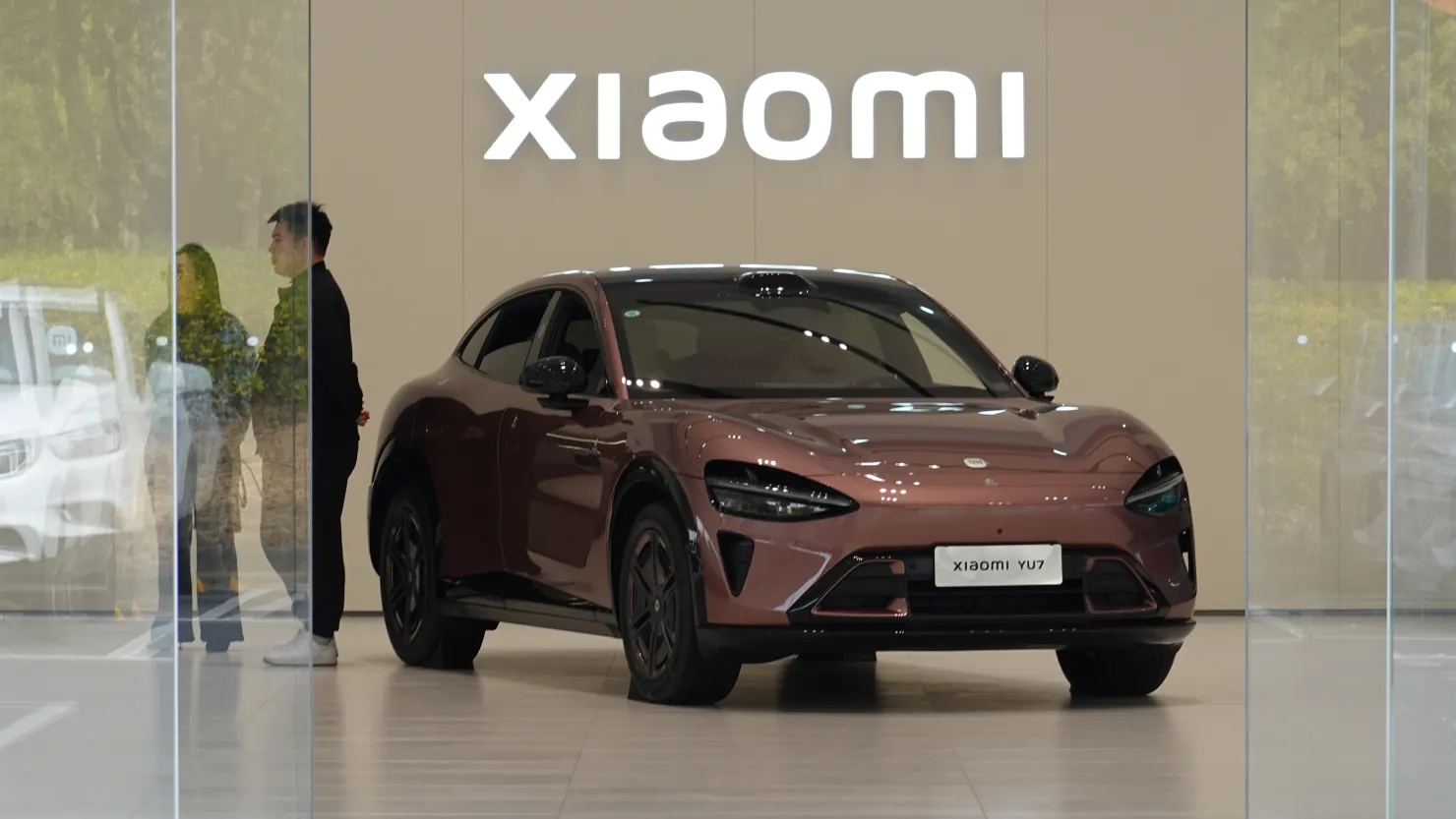
Chinese smartphone company Xiaomi launched its YU7 electric SUV in summer 2025, taking direct aim at Tesla’s Model Y.
Sopa Images | Lightrocket | Getty Images
Xiaomi has delivered a major blow to Tesla in China’s electric vehicle race. In January, the company’s YU7 electric SUV became the country’s top-selling vehicle, moving 37,869 units — more than double the 16,845 units sold by Tesla’s Model Y during the same period.
The sales data, released by the China Passenger Car Association and published by leading auto platform Autohome, marks a notable shift in momentum in the world’s largest car market. For a company that only entered the automotive sector recently, the achievement underscores Xiaomi’s rapid ascent from smartphone manufacturer to serious electric vehicle contender.
A Breakthrough Month for Xiaomi’s EV Ambitions
The Xiaomi YU7 SUV has been on the market for roughly six months, debuting in the summer of 2025 as the company’s second electric vehicle after the SU7 sedan. January’s performance represents its strongest monthly showing yet.
The 37,869 units sold not only placed the YU7 at the top of overall passenger vehicle rankings — including both gasoline and electric models — but also dramatically outpaced the Tesla Model Y, which fell to 20th place overall and seventh among new energy vehicles.
Just one month earlier, in December, the Model Y had topped the sales charts. The abrupt reversal highlights how volatile China’s EV market can be, especially amid aggressive pricing strategies, promotional campaigns, and shifting consumer demand ahead of the Lunar New Year holiday period.
Pricing Strategy and Competitive Positioning
From launch, Xiaomi made clear that it intended to challenge Tesla head-on. The YU7 debuted at a starting price approximately 10,000 yuan, or about $1,450, below the Model Y in China. That pricing gap positioned Xiaomi’s SUV as a value-driven alternative without sacrificing high-end specifications.
The company has emphasized key advantages such as extended driving range per charge, competitive battery efficiency, and advanced in-car connectivity features that leverage Xiaomi’s broader ecosystem of smartphones, smart home devices, and consumer electronics.
Analysts had predicted the YU7 would erode Tesla’s market share in the mid-to-high-end SUV segment. January’s figures suggest that those projections are materializing, at least in the short term.
China’s EV Landscape Remains Fiercely Competitive
China’s electric vehicle market remains the largest globally, accounting for more than 60% of worldwide EV sales. However, growth has slowed in recent months amid subsidy adjustments, consumer caution, and intensifying competition.
For full-year 2025, Tesla ranked fifth among electric vehicle sellers in China, while Xiaomi placed tenth, according to industry data. Market leader BYD sold more than 3 million vehicles last year, reinforcing its dominance across both premium and budget segments. Geely followed with approximately 2.6 million units sold.
In December, Tesla’s Model Y had outperformed competitors including BYD’s Qin Plus sedan. Xiaomi’s YU7 ranked third that month, making January’s leap to first place even more striking.
Despite January’s victory, monthly sales swings are common. Tesla has historically demonstrated strong consistency in China, supported by local production at its Shanghai Gigafactory and established brand recognition.
Safety Scrutiny and Regulatory Pressure
While Xiaomi celebrates its sales momentum, it also faces regulatory challenges. The company’s earlier SU7 sedan came under scrutiny after fatal accidents reportedly involving driver-assistance features and electronically concealed door handles.
In response, Beijing introduced tighter oversight measures, including a ban on hidden door handles and new requirements for external indicator lights to signal when advanced driver-assistance systems are active.
The regulatory changes apply broadly across automakers, but they underscore the heightened scrutiny facing newer entrants like Xiaomi as they scale production rapidly.
Global Expansion on the Horizon
Like many Chinese electric vehicle makers, Xiaomi is not limiting its ambitions to the domestic market. The company has announced plans to expand overseas, with Europe identified as a key target beginning next year.
International expansion will test Xiaomi’s ability to compete beyond China’s highly localized ecosystem. European markets present different regulatory standards, brand perceptions, and competitive dynamics, including established players such as Tesla and major European automakers accelerating their EV transitions.
Still, Xiaomi’s vertically integrated tech ecosystem — spanning smartphones, AI-powered operating systems, and connected devices — may offer a unique value proposition as vehicles increasingly become software-driven platforms.
A Defining Moment in the EV Race
January’s sales data marks more than just a temporary ranking shift. It signals the accelerating transformation of China’s automotive industry, where technology companies are now serious rivals to traditional carmakers.
For Tesla, the dip highlights mounting pressure in its most important overseas market. For Xiaomi, the YU7’s breakout month validates its aggressive pricing, branding, and rapid product development strategy.
With nearly 38,000 units sold in a single month and a growing production pipeline, Xiaomi has demonstrated that it is no longer an experimental newcomer in electric vehicles. It is now a central player in a fiercely competitive market that continues to shape the future of global mobility.
.webp)
Popular articles



Subscribe to unlock premium content
LEGO Boutique Flagship Stores Are Redefining Global Play
How Boutique Safari Camps in Kenya Are Creating Premium Eco Experiences

Discovering Southeast Asia’s Private Culinary Travel Boom

LEGO Boutique Flagship Stores Are Redefining Global Play
How Boutique Safari Camps in Kenya Are Creating Premium Eco Experiences
LEGO Boutique Flagship Stores Are Redefining Global Play