Axiom Space Secures $350 Million in New Funding Round Led by Qatar Fund and 1789 Capital

Axiom Space Secures $350 Million in New Funding Round Led by Qatar Fund and 1789 Capital
By
Leah Rosenfeld
Last updated:
February 13, 2026
First Published:
April 25, 2026

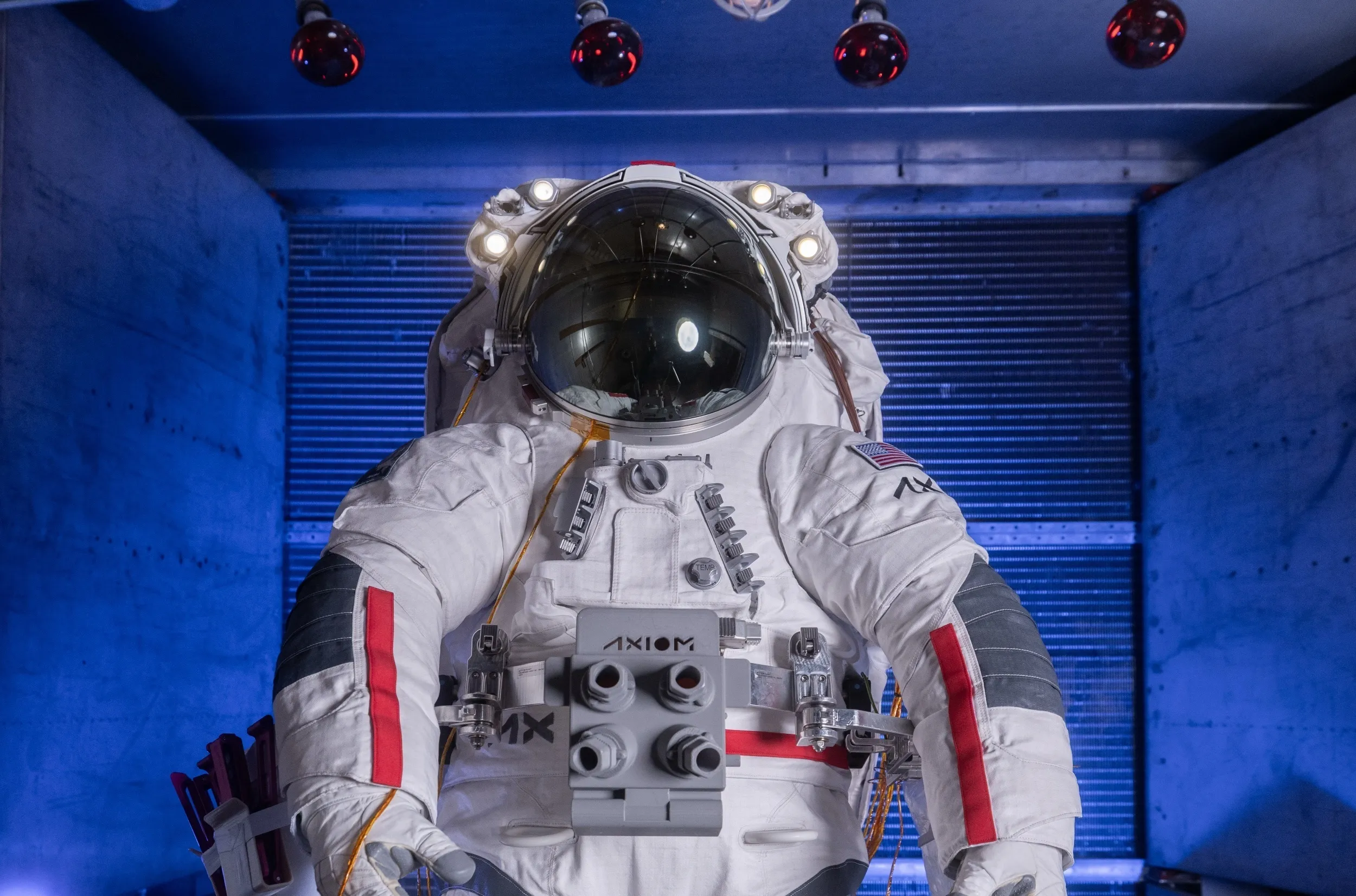
Photo: Bloomberg. com
Houston-based Axiom Space has raised $350 million in fresh capital, strengthening its balance sheet as it advances work on next-generation spacesuits for NASA and accelerates development of its planned commercial space station designed to succeed the International Space Station.
The funding round was led by Qatar’s sovereign wealth fund and Type One Ventures, with participation from Hungary-based technology company 4iG and 1789 Capital, where Donald Trump Jr. is a partner.
The capital injection underscores growing institutional confidence in the commercial space economy, particularly as investor enthusiasm builds around a potential IPO from SpaceX, which has dominated private launch services and expanded into satellite communications.
Funding to Advance Spacesuits and Station Modules
CEO Jonathan Cirtain, who assumed leadership of Axiom Space in October, said the new funds will primarily support the continued development of advanced lunar spacesuits and the construction of the first two modules of Axiom’s commercial space station.
The company, valued at more than $2.5 billion according to PitchBook estimates, is positioning itself as a central player in the post-ISS era. NASA plans to retire the International Space Station around 2030, creating an opportunity for private operators to establish commercially run platforms in low Earth orbit.
Axiom’s strategy involves initially attaching its modules to the ISS before detaching and operating them independently as a free-flying station. The first modules are expected to provide laboratory space, crew quarters and manufacturing capacity for research, defense and commercial customers.
Cirtain described the financing as validation of Axiom’s long-term roadmap and leadership position in the emerging commercial space infrastructure market.
Private Astronaut Missions and NASA Contracts
Axiom has worked closely with SpaceX for multiple private astronaut missions to the ISS, transporting both government-backed and commercial crews. Last month, NASA awarded the company its fifth private astronaut mission, currently targeted for launch as early as January 2027.
The company is also a key contractor for NASA’s Artemis program, which aims to return U.S. astronauts to the moon for the first time in over 50 years. Artemis timelines have faced delays due to technical and safety challenges, including issues tied to next-generation spacesuits.
NASA pushed back planned Artemis missions in 2024, shifting lunar launch targets to 2026 and 2027. Cirtain said Axiom remains on schedule to deliver its lunar-ready spacesuits by 2027, emphasizing a “multifaceted approach” to ensure timely completion.
Political and Industry Backdrop
The capital raise comes during a dynamic period for U.S. space policy. Following the 2024 election cycle, NASA underwent leadership transitions and workforce restructuring. Jared Isaacman, an ally of Elon Musk, was appointed to lead the agency in December after a delayed confirmation process.
In the interim, Sean Duffy temporarily oversaw NASA, drawing public criticism from Musk after raising concerns about SpaceX’s progress on lunar mission timelines.
At the same time, broader federal efforts to revitalize domestic manufacturing and defense capabilities have fueled renewed interest in aerospace and advanced technology companies. Investors have increasingly directed capital into space infrastructure, satellite communications, propulsion systems and orbital manufacturing ventures.
Growing Investor Appetite for Space Technology
Venture and private equity funding in space technology has accelerated in recent years as commercial launch costs decline and new revenue streams emerge, including in-space manufacturing, tourism and national security applications.
Axiom’s hybrid business model — combining government contracts, private astronaut missions and long-term infrastructure development — positions it uniquely within the sector. Its commercial station is expected to serve pharmaceutical research, semiconductor experimentation in microgravity and potential defense-related activities.
While Axiom did not disclose the valuation attached to the latest round, the $350 million infusion provides meaningful runway as the company navigates capital-intensive hardware development and prepares for a competitive future in low Earth orbit.
As the ISS approaches retirement and commercial players race to establish successor platforms, Axiom’s latest financing round signals that private capital remains confident in the long-term viability of a commercially driven space economy.
.webp)
Popular articles



Subscribe to unlock premium content
Step Into the Future of Art
London’s Gourmet Playgrounds
The New Frontier of Children’s Entertainment

Step Into the Future of Art
London’s Gourmet Playgrounds
Step Into the Future of Art