Why Sam’s Club Is Thriving in China Despite Slowing Consumer Demand

Why Sam’s Club Is Thriving in China Despite Slowing Consumer Demand
By
Rachel Steinberg
Last updated:
December 18, 2025
First Published:
December 18, 2025


Getty Images
A Consumer Slowdown With Important Exceptions
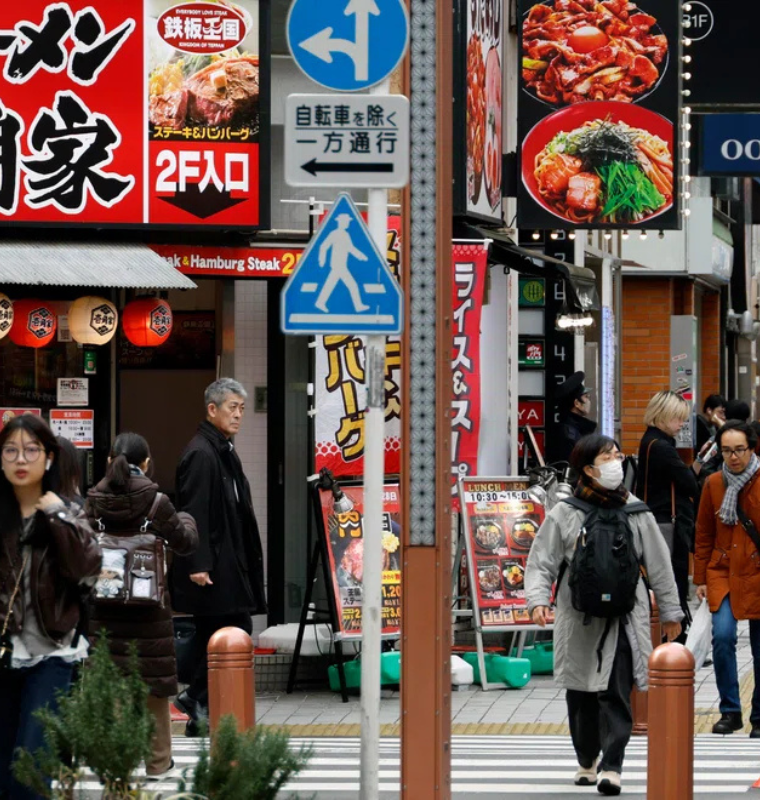
Recent data out of China shows a key measure of consumer activity sliding to its weakest level in nearly three years, reinforcing concerns about a prolonged consumption slowdown. Rising household caution, property market stress, and uneven income growth have weighed heavily on discretionary spending.
Yet beneath the surface, not all retailers are feeling the pain equally. American-style membership warehouse clubs are carving out a surprisingly resilient niche, telling a more complex story about Chinese consumers who are still willing to spend, provided the value proposition feels compelling.
Sam’s Club Draws Crowds as Others Struggle
Sam’s Club, Walmart’s membership-based warehouse chain, is emerging as one of the clearest winners. The company opened a new Beijing location last month, followed by another store in Shanghai this week. Both launches attracted massive crowds, with long queues and traffic congestion lasting for hours.
Walmart plans to open 10 new Sam’s Club stores in China this year, marking its fastest expansion pace in the country to date. The company is on track to hit that target, with its tenth new outlet scheduled to open in Guangzhou shortly.
This momentum stands out in a retail environment where many formats are shrinking rather than expanding.
Why the Warehouse Model Is Working
Warehouse clubs have traditionally thrived on bulk purchases and low unit prices, a model that historically clashed with China’s preference for frequent, small-basket grocery shopping. That dynamic is starting to shift.
Consumers are increasingly drawn to the perceived value of curated, premium-quality products offered at reasonable prices. In many cases, shoppers coordinate bulk purchases with friends or neighbors, effectively adapting the warehouse concept to urban Chinese living.
Sam’s Club reinforces this appeal with a differentiated product mix rather than deep discounts. Annual membership fees range from 260 yuan to 680 yuan, and while price savings matter, the larger draw is access to exclusive items that are difficult to find elsewhere.
Membership as a Service, Not Just a Fee
Industry analysts say the membership model resonates because customers feel they are paying upfront for a bundled experience. That includes product quality, consistency, fast delivery, and a shopping environment that feels intentional rather than overwhelming.
Sam’s Club positions itself distinctly from both traditional supermarkets and online marketplaces. Its private labels, such as Member’s Mark and Marketside, reduce price comparisons and reinforce a sense of exclusivity.
This approach has helped transform Sam’s Club locations into both destination stores and last-mile delivery hubs, blending physical retail with digital convenience.
Walmart’s Strategic Pivot in China
Walmart’s broader China business highlights how sharply fortunes have diverged between retail formats. Since 2020, the company has closed nearly 150 hypermarkets, leaving 279 stores in operation as of July, down from more than 400 four years ago. Hypermarkets lost ground as e-commerce platforms such as Alibaba and JD.com reshaped consumer expectations around convenience and pricing.
Sam’s Club, however, has moved in the opposite direction. With 56 stores nationwide, compared with Costco’s seven, it has become one of the fastest-growing foreign retail chains in China.
That growth has translated into strong financial performance. In the third quarter, Walmart’s China net sales jumped 21.9% year on year to $6.1 billion, more than double the growth rate of Walmart’s international segment overall.
The Experience Matters as Much as the Products
For many shoppers, the appeal of Sam’s Club goes beyond groceries. The in-store experience is designed around discovery, with wide aisles, limited product counts, and a sense of browsing that contrasts sharply with algorithm-driven online shopping.
Some customers visit infrequently in person but place multiple online orders afterward, using the app for repeat deliveries from the same store. Others treat the visit itself as a leisure outing, a predictable and well-designed form of “treasure-hunt” shopping that feels almost like an event.
Speed also plays a crucial role. Walmart says nearly 80% of Sam’s Club digital orders in China are delivered within one hour, reinforcing habit-forming behavior among urban consumers.
Why Competitors Struggle to Replicate the Model
Despite the apparent success, few local players have managed to challenge Sam’s Club or Costco in membership retail. Alibaba’s Freshippo closed its last members-only store earlier this year, highlighting the difficulty of making the model work at scale.
Regional chain Pangdonglai is often cited as a rare local success, built around trust, service quality, and a strong people-first culture. However, its influence remains largely confined to its home region in Henan province, and scaling that ethos nationally has proven difficult.
Retail experts note that premium value concepts require exceptional execution. High standards, supplier discipline, and customer trust are hard to replicate across large geographies, especially as competition intensifies.
A Bright Spot in a Cautious Market
China’s consumer downturn has not eliminated spending power; it has made shoppers more selective. Demand is increasingly bifurcated between low-price discount formats and premium value offerings that justify their cost through quality and experience.
Warehouse clubs sit squarely in that middle ground. By combining reasonable pricing, curated products, and an offline experience that e-commerce platforms struggle to match, Sam’s Club has positioned itself as a rare growth story in an otherwise challenging retail landscape.
As long as Chinese consumers continue to prioritize value over volume, and experience over excess, membership warehouse retailers look set to remain one of the sector’s most resilient performers.
.webp)
Popular articles



Subscribe to unlock premium content
The Rise of Micro-Cruises Offering Boutique Cultural Experiences in the Mediterranean

Iceland’s Adventure Lodges Are Redefining Remote Work

Inside London’s Private Wealth Advisory Firms Catering to Millennial Investors
The Rise of Micro-Cruises Offering Boutique Cultural Experiences in the Mediterranean
Iceland’s Adventure Lodges Are Redefining Remote Work
The Rise of Micro-Cruises Offering Boutique Cultural Experiences in the Mediterranean