Why Moscow Is Proceeding With Caution After the Fall of Its Venezuelan Ally

Why Moscow Is Proceeding With Caution After the Fall of Its Venezuelan Ally
By
Leah Rosenfeld
Last updated:
January 6, 2026
First Published:
January 6, 2026

A Measured Response From the Kremlin
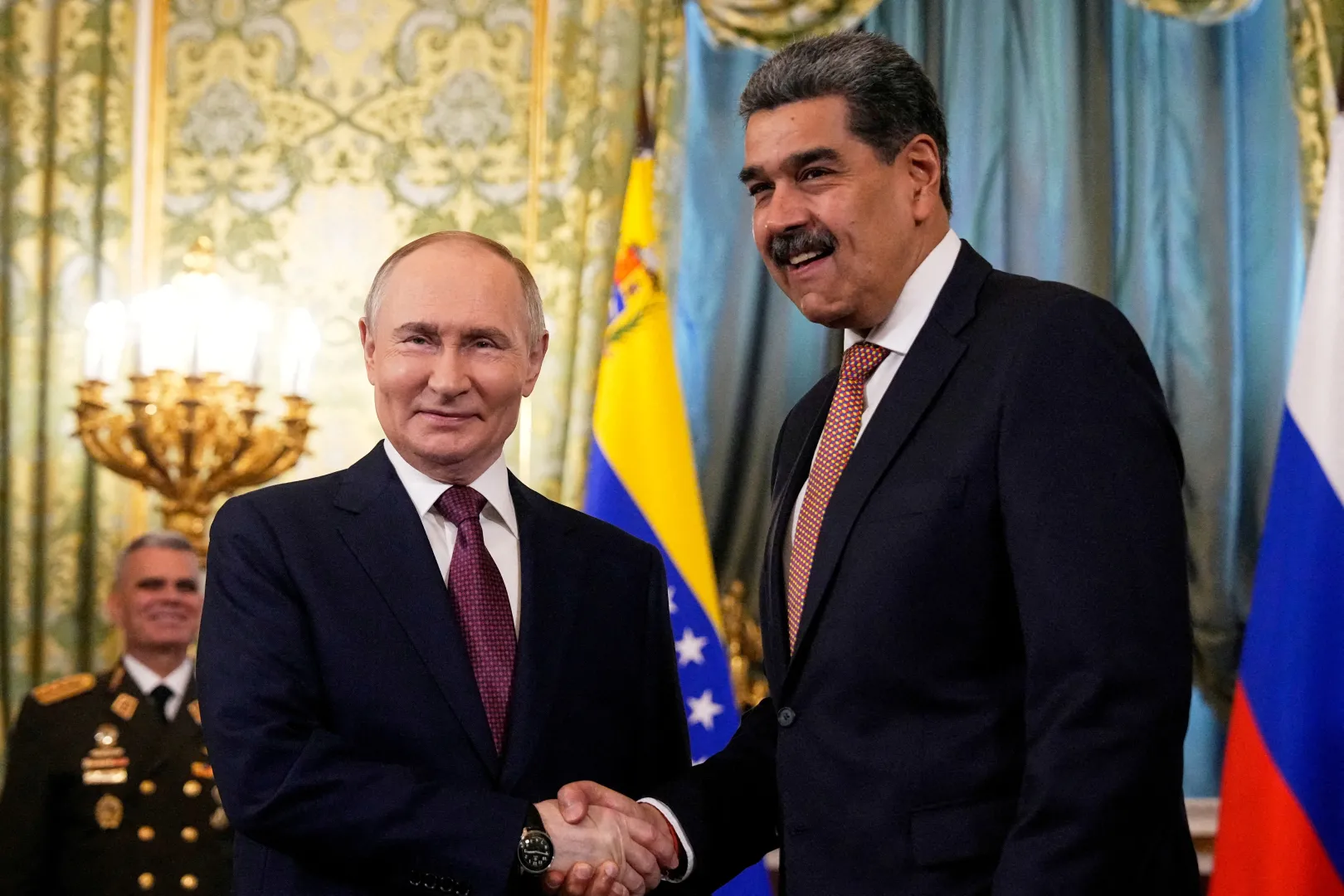
Russia’s reaction to the sudden ousting of Venezuelan President Nicolás Maduro has been notably restrained. While Maduro was a long-standing ally of Moscow, the Kremlin has avoided issuing a direct statement on his removal, and President Vladimir Putin has remained publicly silent. The careful posture reflects a complex calculation as Russia balances the strategic loss of an ally in Latin America against potential geopolitical opportunities created by the U.S. intervention.
Initially, Russia’s Foreign Ministry condemned U.S. military strikes in Venezuela, calling them an unacceptable violation of national sovereignty. That criticism followed the capture of Maduro and his wife, Cilia Flores, during a surprise U.S. operation that reverberated across global markets and diplomatic circles. Since then, however, Moscow’s tone has softened into cautious observation rather than escalation.
Deep Ties, Abrupt Disruption
Venezuela under Maduro was one of Russia’s closest partners in the Western Hemisphere. The two countries shared energy projects, military cooperation, and a common interest in countering U.S. influence. Caracas also openly supported Russia’s invasion of Ukraine, reinforcing its value to Moscow as a diplomatic and ideological ally.
Over the past decade, Russian companies invested billions of dollars in Venezuelan oil, gas, and infrastructure, while Moscow supplied military hardware, including advanced air defense systems. Maduro’s fall therefore represents a tangible loss of influence and raises questions about the durability of Russia’s global partnerships.
Ukraine Calculations and Strategic Timing
Despite the setback, the timing of the Venezuela crisis may offer Russia indirect benefits. The upheaval comes as Moscow seeks to manage relations with Washington amid fragile discussions around Ukraine. Analysts suggest Russia has little incentive to provoke the Trump administration at a moment when it is attempting to extract more favorable terms from any potential ceasefire or peace framework.
At the same time, the Venezuela crisis diverts diplomatic attention and media focus away from Ukraine. With Russian forces continuing to make incremental gains on the battlefield and holding advantages in manpower, any slowdown in international pressure for a ceasefire could work in Moscow’s favor.
Security analysts note that Russia’s official response has been deliberately formulaic, designed to preserve its credibility with partners while avoiding a direct confrontation with the United States.
Concerns Over Precedent and Political Legitimacy
Beyond immediate strategy, the U.S. action in Venezuela has raised alarms in Moscow about precedent. Analysts worry that labeling Maduro a criminal and justifying his capture could normalize similar actions elsewhere. Russian officials have frequently accused Ukrainian President Volodymyr Zelenskyy of criminal behavior, and critics argue that Washington’s stance may weaken long-standing norms around political sovereignty.
From this perspective, the episode introduces uncertainty into global governance rules, something Russia may seek to exploit rhetorically while remaining cautious in practice.
Ideological Signals and Spheres of Influence
Ideologically, Washington’s assertive move in Venezuela aligns in some ways with Moscow’s own worldview. President Putin has repeatedly argued for restoring Russia’s sphere of influence lost after the collapse of the Soviet Union, calling that moment one of the greatest geopolitical disasters of the 20th century.
Some observers suggest that the U.S. emphasis on reasserting dominance in its own hemisphere could be interpreted by Moscow as tacit acceptance of great-power spheres of influence. Others counter that the speed and decisiveness of the U.S. operation may instead serve as a warning that Washington is willing to act unilaterally when it sees its interests at stake.
Limited Leverage for Moscow
Strategists broadly agree that Russia had little practical leverage to prevent events in Venezuela. Unlike regions closer to its borders, Latin America lies firmly within the U.S. strategic orbit. As a result, there was little Moscow could offer or threaten that would materially alter Washington’s calculus.
This reality underscores a broader challenge for Russia: maintaining global influence without the economic or military reach to defend distant allies against decisive U.S. action.
The Cost of Losing an Ally
Despite any indirect advantages, the loss of Maduro is a blow to Moscow’s international standing. Venezuela served as a symbol of Russia’s ability to project power and protect aligned regimes beyond its immediate neighborhood. Its collapse weakens the perceived value of Russian security guarantees and highlights the limits of its influence when confronted by U.S. force.
Analysts also point to reputational damage from the failure of Russian-supplied air defense systems to prevent the operation, adding to similar questions raised after conflicts in Syria and Iran.
A Cautious Path Forward
For now, Russia appears content to watch, assess, and adapt. The Kremlin is unlikely to escalate rhetorically or militarily, focusing instead on preserving flexibility in its dealings with Washington and extracting whatever strategic advantage it can from a rapidly changing global landscape. The fall of Maduro may not be welcomed in Moscow, but it is being treated less as a crisis and more as another data point in an increasingly volatile international order.

Popular articles


Subscribe to unlock premium content
The New Wave of Superyacht Ownership

Micro-Experience Convenience Stores Are Reinventing Quick Stops

Custom Vans for Digital Nomads Redefine Mobility

The New Wave of Superyacht Ownership
Micro-Experience Convenience Stores Are Reinventing Quick Stops
The New Wave of Superyacht Ownership