White House Revives Greenland Push as Trump Signals Strategic Takeover Talks

White House Revives Greenland Push as Trump Signals Strategic Takeover Talks
By
Leah Rosenfeld
Last updated:
January 9, 2026
First Published:
January 9, 2026

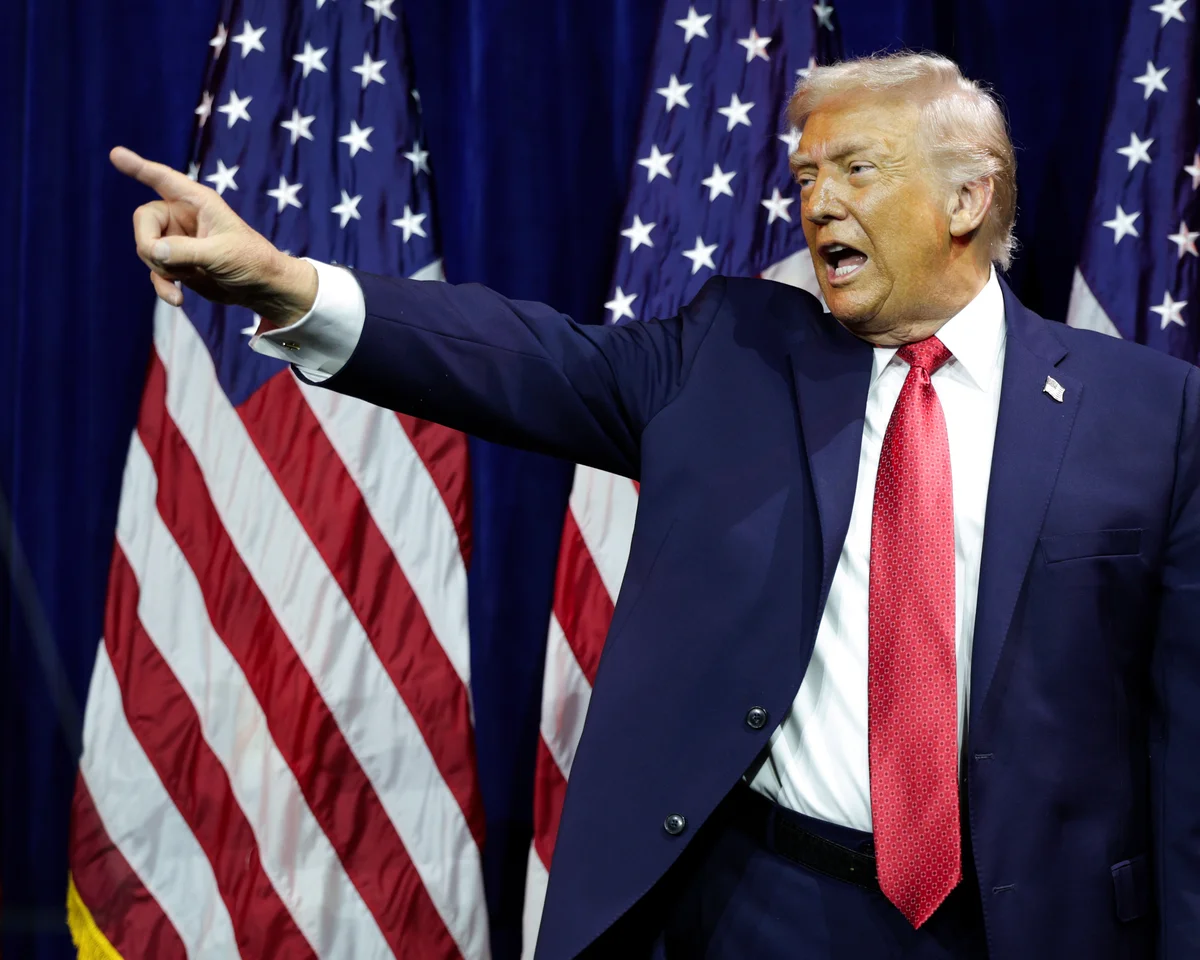
Photo: The Guardian
A High-Stakes Diplomatic Meeting Ahead
The Trump administration is preparing for a critical meeting with Danish and Greenlandic officials next week as Washington revisits the idea of bringing Greenland under U.S. control. The discussions follow renewed rhetoric from President Donald Trump, who has publicly emphasized the island’s strategic importance to U.S. national security and economic interests.
The timing has raised eyebrows across Europe. The renewed focus on Greenland comes shortly after a U.S. military operation targeting Venezuelan leadership, prompting concern among European allies about Washington’s broader territorial ambitions and its willingness to test diplomatic norms.
U.S. Secretary of State Marco Rubio confirmed plans to meet senior officials after a formal request from Denmark’s foreign minister, Lars Løkke Rasmussen, and Greenland’s foreign affairs minister, Vivian Motzfeldt. The talks are expected to address security cooperation, sovereignty concerns, and the limits of U.S. involvement in the Arctic.
Purchase Talks Versus the Use of Force
President Trump has made it clear that he is serious about acquiring Greenland, describing the mineral-rich island as essential to U.S. national defense and long-term strategic positioning. The White House has acknowledged that Trump and his national security team are actively evaluating a potential offer to purchase the territory, while maintaining that diplomacy remains the preferred path.
However, administration officials have stopped short of ruling out military options. When asked whether the U.S. would categorically exclude the use of force, Rubio declined to comment, reinforcing that all discussions would take place behind closed doors.
Trump first floated the idea of buying Greenland in 2019 during his first term, a proposal that was swiftly rejected by Denmark. The revival of the idea has triggered strong reactions in Copenhagen. Danish Prime Minister Mette Frederiksen warned that any military action against Greenland would represent an attack on a NATO ally, stating that such a move would fundamentally undermine the alliance’s postwar security framework.
Lawmakers from both major U.S. political parties have also voiced opposition to the notion of seizing Greenland by force, signaling potential resistance on Capitol Hill should the administration escalate its approach.
Europe Pushes Back More Forcefully
European leaders have shifted to a more assertive stance in recent days, publicly reinforcing Greenland’s status within the Kingdom of Denmark and NATO. In a joint statement, several European officials stressed that Greenland’s future can only be decided by Denmark and the people of Greenland themselves.
Policy experts argue that Europe’s primary response will likely be diplomatic engagement, combined with coordinated political pressure on Washington. Some analysts suggest that economic or trade-based countermeasures could be discussed if tensions escalate, though Europe’s options may be constrained by broader security concerns, particularly Russia’s ongoing war in Ukraine.
Security specialists also note the practical challenges of defending Greenland militarily. The island spans more than 2.1 million square kilometers, has minimal infrastructure, and a small population, making traditional defense strategies difficult to implement.
Greenland’s Independence Question
Lost in much of the international debate is Greenland’s own political trajectory. Opinion polls consistently show that most Greenlanders oppose becoming part of the United States, while a strong majority favor eventual independence from Denmark.
Greenland, home to roughly 57,000 people, gained expanded self-rule in 2009 through a self-government act that granted greater control over domestic affairs and natural resources. Denmark retains authority over foreign and defense policy, but the legislation also gives Greenland the legal right to hold an independence referendum.
Most political parties on the island support independence in principle, though they differ on how quickly it should be pursued. Industry leaders working in Greenland’s mining sector argue that independence is a realistic outcome within the next decade, particularly as interest grows in the island’s rare earth elements and critical minerals.
The key question, analysts say, is who would benefit most if Greenland ultimately chooses independence, and how Denmark and the United States would adapt to that shift.
Arctic Security and Global Competition
President Trump has repeatedly framed Greenland as a frontline asset in an increasingly contested Arctic region, citing growing Russian and Chinese activity. He has argued that the island’s location makes it central to missile defense, early warning systems, and control over emerging Arctic shipping routes.
While experts acknowledge that Russia and China have expanded their Arctic presence, many question whether U.S. ownership of Greenland is necessary to address those risks. The United States already operates the Pituffik Space Base, a key military installation that supports missile warning and space surveillance, under a long-standing defense agreement with Denmark.
Security analysts note that existing arrangements already provide Washington with substantial strategic access, raising doubts about the need for full territorial control. European officials have also emphasized that Arctic security should be managed collectively through NATO and allied frameworks, rather than unilateral actions.
What Comes Next
The upcoming talks between U.S., Danish, and Greenlandic officials are expected to be tense but pivotal. While an outright takeover remains highly unlikely, the renewed focus on Greenland underscores how competition for resources, strategic geography, and influence in the Arctic is intensifying.
For now, Greenland remains a self-governing territory with growing leverage over its future. How Washington balances its strategic ambitions with alliance politics, international law, and local sentiment may shape not only Arctic security, but also the credibility of U.S. leadership among its closest allies.
.webp)
Popular articles



Subscribe to unlock premium content
Colombia’s Coffee Regions Are Becoming Luxury Travel Destinations Hidden in the Highlands

Chile’s Desert Skies Are Becoming the World’s Most Exclusive Destination

The Rise of Heritage Manor Stays in the United Kingdom Countryside

Colombia’s Coffee Regions Are Becoming Luxury Travel Destinations Hidden in the Highlands
Chile’s Desert Skies Are Becoming the World’s Most Exclusive Destination
Colombia’s Coffee Regions Are Becoming Luxury Travel Destinations Hidden in the Highlands