
Volkswagen Accelerates Smart EV Strategy in China Without Relying on Nvidia Chips

Volkswagen Accelerates Smart EV Strategy in China Without Relying on Nvidia Chips
By
Rachel Steinberg
Last updated:
March 17, 2026
First Published:
April 25, 2026

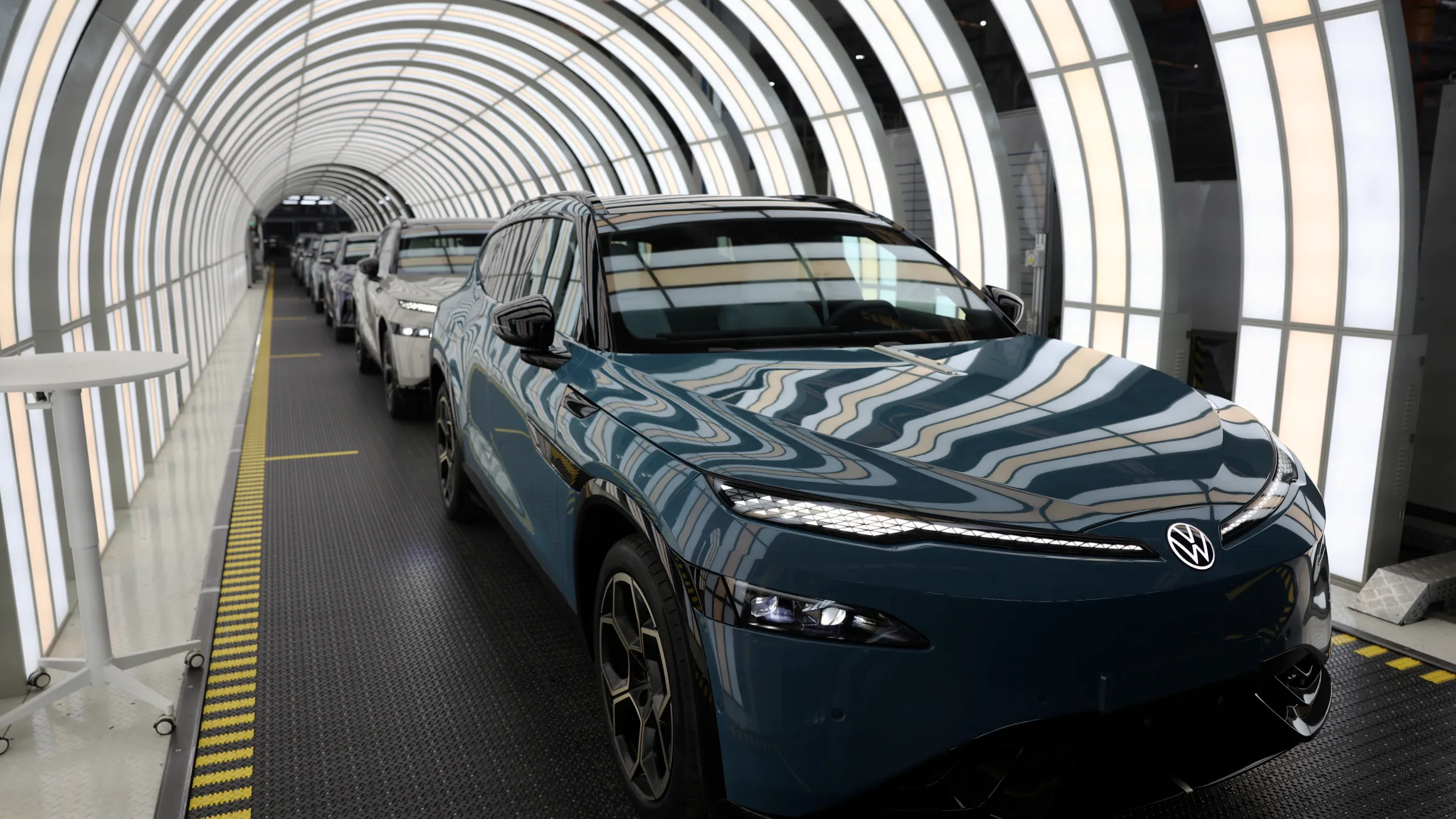
Photo: The Times
Volkswagen is reshaping its electric vehicle strategy in China by doubling down on local technology partnerships and moving away from reliance on global chipmakers like Nvidia. The shift underscores how rapidly the automotive landscape is evolving, particularly in China, where software, semiconductors, and intelligent driving features are becoming the primary battleground for competition.
At the center of this transformation is Volkswagen’s push into advanced driver-assist systems, powered by domestically developed chips and software. The company has already begun production of a new electric SUV equipped with next-generation technology, signaling a major pivot in how it approaches innovation in its most critical growth market.
Local Partnerships Drive Technological Shift
Volkswagen’s strategy in China is increasingly built around collaboration with local tech firms. The company has partnered with Xpeng to integrate its proprietary “Turing” chip into Volkswagen’s latest electric SUV, the ID. UNYX 08. Production has already started at the company’s Hefei facility, with deliveries expected to begin by mid-2026.
The Turing chip enables Level 2 driver-assist capabilities, allowing vehicles to support automated functions such as highway navigation and urban driving assistance. These features are already gaining traction among Chinese consumers, who are placing growing importance on in-car intelligence rather than traditional brand prestige.
In parallel, Volkswagen has formed a joint venture with Horizon Robotics, known as Carizon, to develop its own automotive semiconductors. The first chips from this collaboration are expected to be ready within three to five years, further reducing dependence on external suppliers.
Why Nvidia Is No Longer Central to the Plan
Volkswagen’s decision to deprioritize Nvidia in China reflects broader shifts in the global automotive chip ecosystem. While Nvidia has positioned itself as a leader in AI-powered automotive platforms, many Chinese EV manufacturers are now developing in-house chips tailored specifically to their needs.
For Volkswagen, the advantage of working with local partners lies in speed, cost efficiency, and customization. Chinese companies are able to iterate faster and align more closely with local consumer preferences, particularly in areas like driver-assist software and connected vehicle ecosystems.
This localized approach also helps Volkswagen stay competitive in a market where domestic players like BYD and Xpeng are setting the pace in innovation and time-to-market.
The Race Toward Autonomous Capabilities
Volkswagen is not stopping at Level 2 automation. The company expects to introduce Level 3 capabilities within the next two years in China, allowing drivers to take their hands off the wheel under specific conditions. This marks a significant leap in functionality, as Level 3 systems shift liability for accidents from the driver to the manufacturer when engaged.
Regulatory approval will be a key factor in determining how quickly these features can be rolled out. However, China has been moving relatively quickly in setting frameworks for advanced driver-assist technologies, giving companies operating there a potential advantage over other markets.
China as a Testing Ground for Global Innovation
Volkswagen’s aggressive push in China reflects the country’s role as both a critical market and a proving ground for next-generation automotive technologies. The company has significantly expanded its research and development footprint in Hefei, which now serves as its largest R&D hub outside Germany.
This facility is central to Volkswagen’s efforts to accelerate development timelines. In contrast to its slower pre-pandemic rollout cycles, the company has streamlined production processes and reduced costs, allowing it to compete more effectively with fast-moving Chinese rivals.
The scale of Volkswagen’s ambition is evident in its product roadmap. In 2026 alone, the automaker plans to launch around 20 new battery-electric and hybrid models in China. By 2030, that number is expected to grow to 50 models, including 30 fully electric vehicles, many of which will also be exported to international markets.
Adapting to a New Consumer Mindset
The shift in strategy is also driven by changing consumer behavior. In China, car buyers are increasingly prioritizing digital integration, smart features, and seamless connectivity over traditional brand loyalty. Vehicles are now expected to function as extensions of the smartphone ecosystem, offering advanced software capabilities and personalized user experiences.
This trend is forcing global automakers to rethink their value proposition. For Volkswagen, success in China will depend less on legacy brand strength and more on its ability to deliver cutting-edge technology at competitive speeds.
AI Integration Beyond the Vehicle
While intelligent driving systems are a key focus, Volkswagen is also investing heavily in artificial intelligence within its manufacturing operations. AI-powered tools are already being deployed in factories to optimize production efficiency, reduce defects, and streamline supply chains.
The company believes that AI adoption will progress faster in manufacturing than in consumer-facing vehicle features, providing immediate gains in productivity while laying the groundwork for more advanced automotive applications.
Rebuilding Momentum in a Competitive Market
Volkswagen’s renewed focus on China comes after a challenging period marked by declining sales and intensifying competition from domestic EV manufacturers. The company’s passenger car sales in China recently fell by 8%, while profits dropped by more than 50%, highlighting the urgency of its transformation.
However, the current strategy signals a clear turnaround effort. By localizing innovation, accelerating development cycles, and aligning more closely with consumer expectations, Volkswagen aims to regain its position in the world’s largest electric vehicle market.
As the automotive industry continues to evolve, the company’s ability to integrate software, hardware, and user experience into a cohesive offering will determine whether it can successfully compete in an increasingly tech-driven future.
.webp)
Popular articles



Subscribe to unlock premium content
How Finland Uses Ice Swimming Festivals to Boost Winter Tourism and Local Economies

The Boom of Luxury Personal Libraries Renting Rare Books to the Ultra-Wealthy

Why Bhutan’s Hand-Woven Textiles Are Gaining Global Collector Value

How Finland Uses Ice Swimming Festivals to Boost Winter Tourism and Local Economies
The Boom of Luxury Personal Libraries Renting Rare Books to the Ultra-Wealthy
How Finland Uses Ice Swimming Festivals to Boost Winter Tourism and Local Economies


