USA Rare Earth Secures $1.6 Billion U.S. Government Backing to Strengthen Domestic Rare Earth Supply Chain

USA Rare Earth Secures $1.6 Billion U.S. Government Backing to Strengthen Domestic Rare Earth Supply Chain
By
Rachel Steinberg
Last updated:
January 27, 2026
First Published:
January 27, 2026

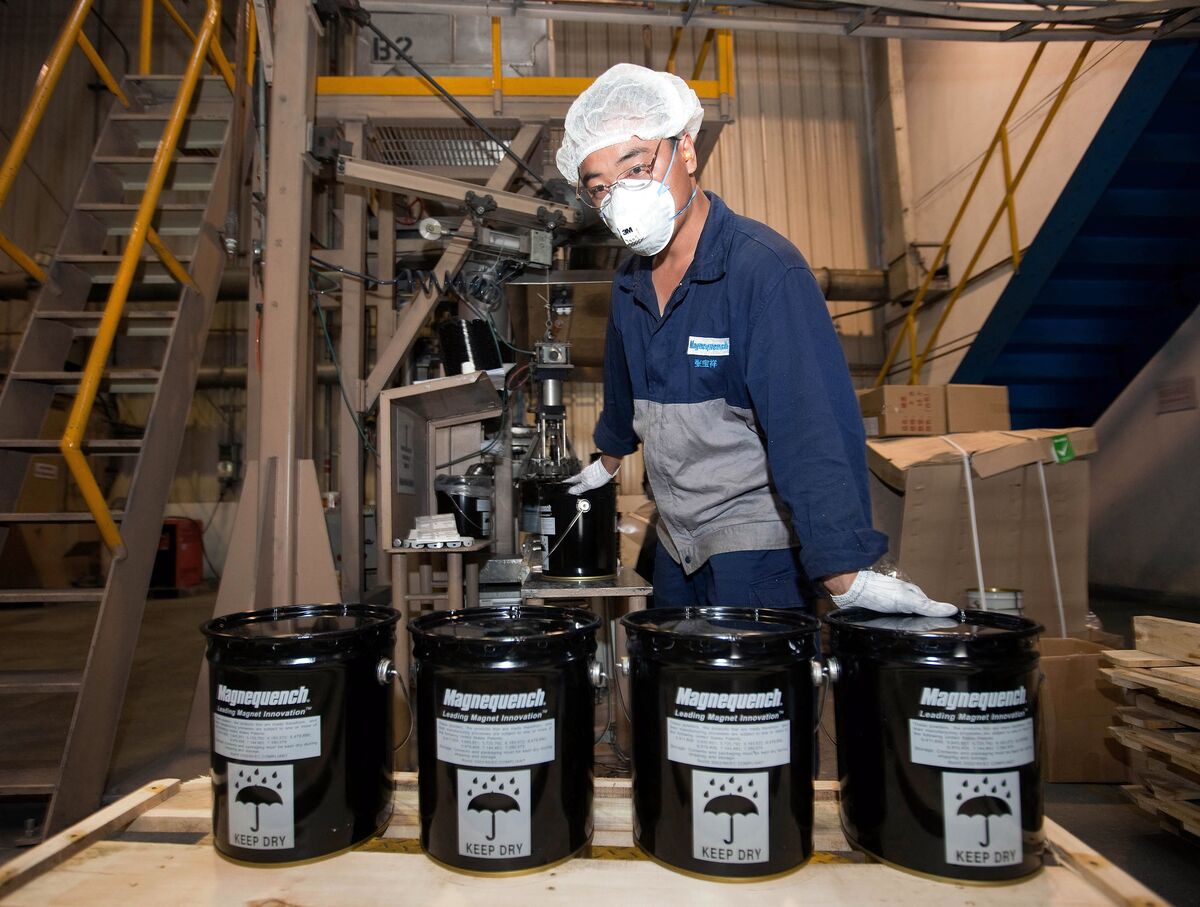
Photo: Bloomberg.com
USA Rare Earth is set to play a pivotal role in the U.S. rare earth supply chain after securing a proposed $1.6 billion deal with the federal government, which will also take an equity stake in the company. The agreement, contingent on the company meeting key milestones, is part of a broader effort to reduce America’s dependence on foreign suppliers for critical minerals used in defense, renewable energy, and high-tech manufacturing.
The deal was catalyzed by CEO Barbara Humpton shortly after she took the helm in October 2025. Within a month, she met with Secretary of Commerce Howard Lutnick to present USA Rare Earth’s assets and capabilities. That meeting set in motion a high-level interagency effort led by the Commerce Department, involving the Pentagon and Department of Energy, to assess and accelerate the company’s expansion plans.
Strategic Goals and Funding Structure
The $1.6 billion funding package from the U.S. government is tied to USA Rare Earth achieving measurable milestones. Initial conditions required the company to secure at least $500 million from private investors, a goal it surpassed by raising $1.5 billion in private investment in public equity (PIPE) funding. The federal government will disburse its investment in stages, closely monitoring progress on mining, processing, and manufacturing activities.
“The government is taking an economic interest in the business, not a governance interest,” Humpton told CNBC. She emphasized that this support is designed to ensure rapid development of assets crucial for national economic security, while still keeping operational control in the hands of USA Rare Earth.
Planned Facilities and Mining Operations
USA Rare Earth is advancing two major projects. A magnet manufacturing facility in Stillwater, Oklahoma, is scheduled to begin operations in the first quarter of 2026. Meanwhile, commercial mining at the Round Top rare earth deposit in Sierra Blanca, Texas, is targeted for late 2028. Round Top has long been viewed as a high-potential site but has historically faced technical and financial challenges that prevented commercial development.
Humpton highlighted significant progress on extraction technology. Laboratory simulations have transitioned to bench testing and pilot-scale operations, and the demonstration facility is currently processing actual samples from the Round Top site. She expressed confidence that these developments will validate the feasibility of large-scale production.
Market Impact and Stock Performance
The announcement of the federal partnership briefly sent USA Rare Earth’s stock soaring nearly 29% before it settled around a 7% gain. Investors view the government backing as a potential second pillar for the U.S. rare earth strategy, following the Pentagon’s landmark agreement with MP Materials, which included an equity stake, long-term purchase commitments, and a price floor. Unlike MP Materials, the USA Rare Earth deal does not include a price floor or offtake guarantees.
Analysts note that while the financial support significantly de-risks initial capital expenditure, the company will face operational and regulatory hurdles in scaling mining and manufacturing operations, particularly given the complexity of processing rare earth minerals.
National Security and Supply Chain Implications
The U.S. government’s involvement in USA Rare Earth underscores the strategic importance of domestic rare earth production for technology and defense sectors. By providing financial and equity support, federal agencies aim to strengthen supply chain resilience and reduce reliance on China, which currently dominates global rare earth production.
Humpton described the process as a “first-of-its-kind” collaboration, with interagency coordination accelerating decision-making and resource allocation. She noted that the initiative could serve as a blueprint for future public-private partnerships in critical mineral sectors.
Outlook
As USA Rare Earth moves forward, key milestones this year will include commissioning the Oklahoma magnet facility and scaling demonstration operations at Round Top. Successful execution could position the company as a major domestic supplier for electric vehicles, renewable energy systems, and defense applications, while signaling broader U.S. intent to secure strategic mineral independence.
Humpton remains optimistic: “We know that the chemistry works, and through early 2026, you’ll see results as we process real samples from Round Top. This is the start of transforming the U.S. rare earth supply chain from concept to reality.”

Popular articles


Subscribe to unlock premium content
Wings of Wealth

Frozen Luxury in the World’s Last Frontier

The Hidden World of Ultra-Rare Seaweed Farming

Wings of Wealth
Frozen Luxury in the World’s Last Frontier
Wings of Wealth