
Hyundai Shares Slide After Trump Signals 25% Tariffs on South Korean Cars and Pharmaceuticals

Hyundai Shares Slide After Trump Signals 25% Tariffs on South Korean Cars and Pharmaceuticals
By
Rachel Steinberg
Last updated:
January 27, 2026
First Published:
April 25, 2026

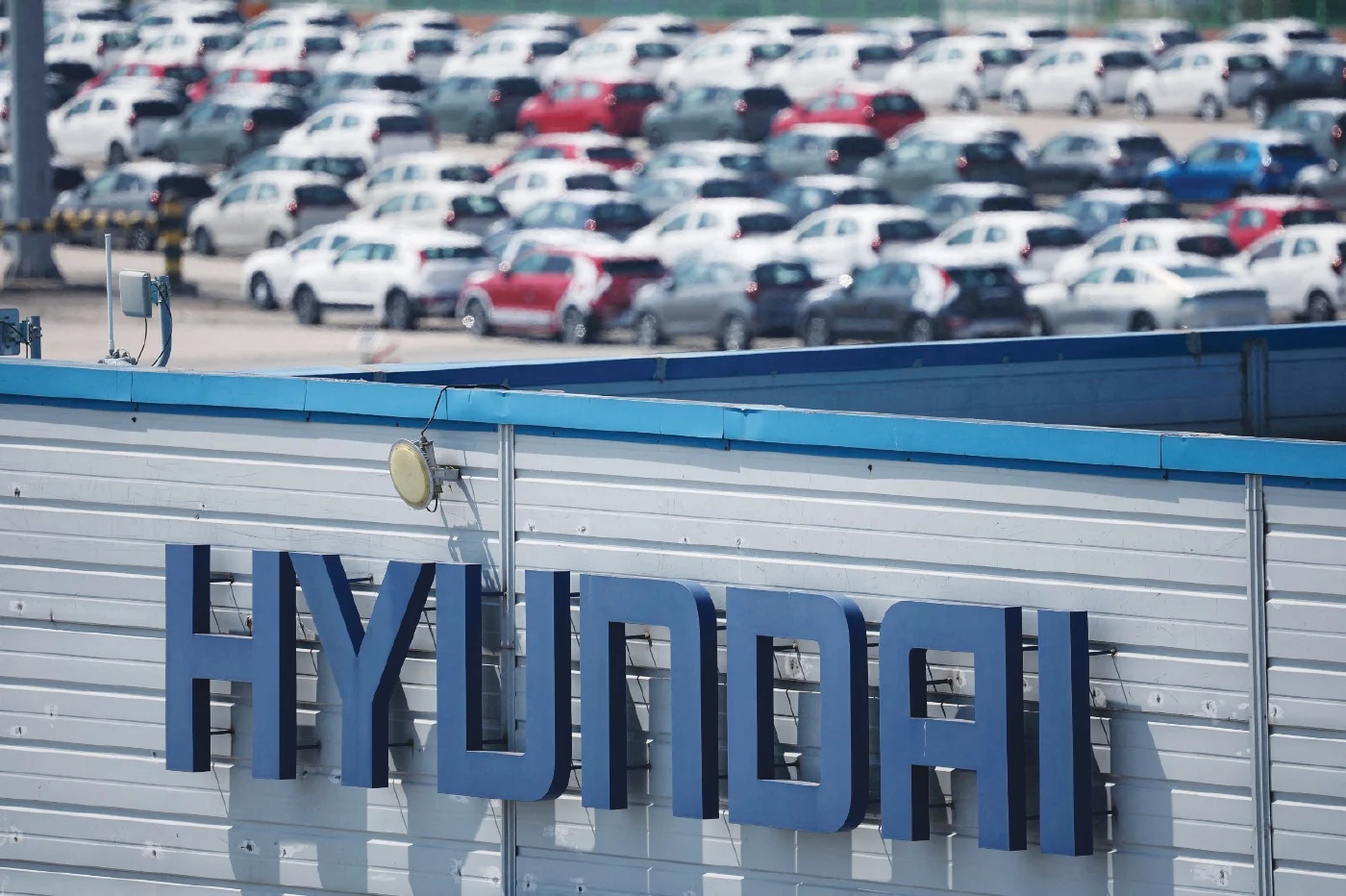
Hyundai Motor shares came under pressure on Monday after U.S. President Donald Trump announced plans to raise tariffs on key South Korean exports, including automobiles, pharmaceuticals, and lumber, reviving trade tensions between Washington and Seoul.
Trump said the tariffs would increase to 25%, up from the current 15%, blaming delays in South Korea’s legislature approving a trade agreement reached with the United States last summer.
The announcement immediately rattled South Korea’s auto sector, which depends heavily on U.S. demand and remains one of the country’s most important export engines.
Auto stocks react to tariff threat
Hyundai Motor shares fell as much as 4.77% shortly after Trump’s comments before recovering some ground in volatile trading. The stock was last down around 0.8%.
Kia, Hyundai’s subsidiary and another major exporter to the U.S., dropped nearly 3.5%, while Hyundai Mobis, a key parts supplier within the Hyundai Motor Group, slid about 5%, reflecting broader investor concerns about supply chains and profitability.
Hyundai is currently the largest exporter of South Korean-built passenger vehicles to the United States, shipping hundreds of thousands of cars annually. Any increase in tariffs would directly affect pricing, margins, and competitiveness in one of its most critical markets.
The U.S. is also South Korea’s second-largest export destination overall, making the proposed tariff hike a significant macroeconomic risk for the country.
Trump points to stalled legislative approval
In a post on Truth Social, Trump said South Korea’s National Assembly had failed to ratify the trade agreement he said was finalized with President Lee Jae Myung on July 30, 2025, and reaffirmed during his visit to Korea on Oct. 29, 2025.
He argued that the lack of legislative action justified raising tariffs across several categories.
“Because the Korean Legislature hasn’t enacted our Historic Trade Agreement, which is their prerogative, I am hereby increasing South Korean tariffs on autos, lumber, pharma, and all other reciprocal tariffs from 15% to 25%,” Trump wrote.
South Korea’s presidential office said that Washington had not yet formally notified Seoul of the tariff increase. Local media also reported that a senior presidential adviser would convene an emergency meeting with relevant ministries to assess the situation and discuss possible countermeasures.
South Korea’s embassy in Washington has been asked to comment on the announcement.
What’s at stake for trade between the U.S. and South Korea
South Korea ranks among America’s largest trading partners. In 2024 alone, the United States imported approximately $131.6 billion worth of goods from South Korea, spanning automobiles, electronics, machinery, chemicals, and pharmaceuticals.
Under the trade framework announced in July, Trump had previously said the U.S. would impose a blanket 15% tariff on South Korean imports, notably lower than the 25% level he had threatened earlier in the summer. At the same time, he claimed Seoul had agreed to commit $350 billion toward U.S.-controlled investments, covering areas such as manufacturing, energy, and advanced technologies.
Automobiles remain at the center of the relationship. Hyundai and Kia have spent the past several years expanding their U.S. footprint, including multi-billion-dollar investments in electric vehicle plants and battery facilities in states such as Georgia. These projects were designed in part to reduce exposure to trade barriers and qualify for U.S. incentives tied to domestic production.
Pharmaceuticals are another sensitive area, as South Korea has been building its profile as a global drug manufacturing and biotech hub, exporting increasing volumes of active ingredients and finished medicines to the U.S. market.
A jump to 25% tariffs would raise costs across these industries and could accelerate shifts in production strategy, pricing, and investment planning.
Legal uncertainty adds another layer
The tariff move also comes against the backdrop of an ongoing legal battle in the United States. In November, the U.S. Supreme Court heard arguments challenging Trump’s authority to impose sweeping tariffs without congressional approval. Several justices reportedly questioned whether such unilateral action falls within presidential powers.
The court has not yet issued a ruling, leaving uncertainty over the long-term legal foundation of the tariff regime.
For now, markets are left balancing political risk with economic fundamentals. While Hyundai and its affiliates managed to recover part of their early losses, the episode underscores how quickly trade headlines can ripple through global markets.
Investors will be watching closely for formal notification from Washington, Seoul’s response, and any signs that negotiations could resume. Until then, South Korea’s export-driven industries, particularly autos and pharmaceuticals, remain squarely in the spotlight as trade tensions re-emerge.
.webp)
Popular articles



Subscribe to unlock premium content
Crypto in the Arctic

Iceland’s Seaweed Revolution

Private Island Rentals for Corporate Retreats Hit $1 Billion

Crypto in the Arctic
Iceland’s Seaweed Revolution
Crypto in the Arctic


