
U.S. Temporarily Clears Stranded Russian Oil Shipments to Ease Global Supply Pressures

U.S. Temporarily Clears Stranded Russian Oil Shipments to Ease Global Supply Pressures
By
David Goldfarb
Last updated:
March 13, 2026
First Published:
April 25, 2026

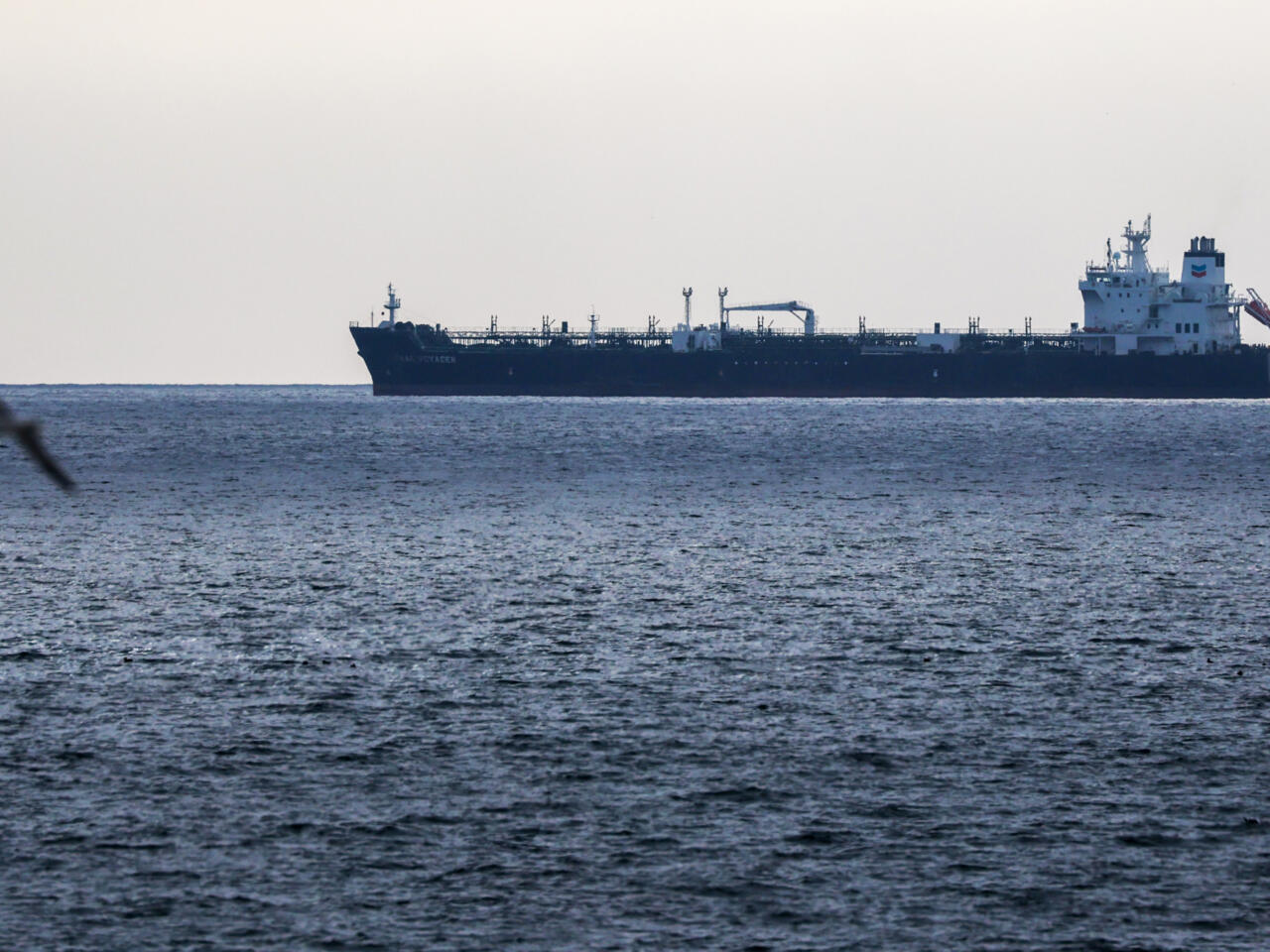
Photo: France 24
The United States has temporarily allowed the purchase of Russian oil cargoes that are already traveling across global shipping routes, a move aimed at calming volatile energy markets after crude prices surged amid geopolitical tensions in the Middle East.
U.S. Treasury Secretary Scott Bessent described the decision as a tightly limited and short-term authorization that applies only to oil shipments already loaded onto tankers and currently at sea. The measure is designed to prevent sudden supply disruptions that could further push oil prices higher during a period of heightened market uncertainty.
Officials emphasized that the authorization does not change the broader sanctions framework targeting Russia’s energy sector and is intended only to address an immediate market imbalance.
Millions of Barrels Stranded Across Global Shipping Routes
Energy market data suggests that a large volume of Russian oil has been stranded across international waters due to sanctions compliance issues and shifting trade flows.
As of March 12, roughly 124 million barrels of Russian-origin crude and petroleum products were reported to be sitting aboard tankers at more than 30 locations worldwide. That amount represents approximately five to six days of global crude consumption supply, highlighting the scale of oil that could suddenly reenter the market.
Allowing those cargoes to be purchased and delivered helps prevent a scenario where large quantities of crude remain idle while energy prices climb. The U.S. Treasury believes that releasing this supply could ease pressure on refiners and traders who are already navigating tight inventories.
Because the measure applies only to oil that has already been loaded and shipped, officials argue it does not meaningfully expand Russian production or encourage new exports.
Oil Prices Spike Amid Middle East Tensions
The policy adjustment comes as global energy markets experience extreme volatility driven by geopolitical conflict and supply risks.
Crude oil prices surged sharply earlier this week, briefly approaching $120 per barrel before pulling back. The rally was triggered by escalating tensions surrounding Iran and threats to shipping routes in the Strait of Hormuz, one of the most critical oil chokepoints in the world.
Roughly 20 percent of the world’s daily oil supply passes through the narrow waterway between the Persian Gulf and the Gulf of Oman. Any disruption there can send shockwaves across global energy markets.
After the initial surge, the international benchmark Brent crude settled slightly above $100 per barrel, still significantly higher than earlier in the month.
Energy traders remain concerned that prolonged disruptions could tighten global supply, especially as several major producers face production constraints or logistical challenges.
Treasury Calls Price Surge a Temporary Market Shock
According to Treasury Secretary Bessent, the government views the recent spike in oil prices as a short-term market disruption rather than a structural shortage.
He explained that allowing transactions involving oil already at sea would help stabilize the market without undermining long-term sanctions aimed at limiting Russia’s revenue from energy exports.
Because Russia collects most of its energy income through taxes at the point of oil extraction rather than at the point of sale, officials argue that permitting these transactions will have minimal financial impact on the Kremlin.
The Treasury Department therefore framed the policy as a limited step designed to prevent unnecessary supply shortages while broader geopolitical tensions play out.
Strict Deadline Limits the Scope of the Policy
The authorization includes strict timing rules intended to ensure that the measure remains temporary.
According to guidance published by the U.S. Treasury, the waiver only applies to Russian crude and petroleum products that were loaded onto tankers on or before 12:01 a.m. Eastern Time on the designated date. Any transactions involving those cargoes must be completed by April 11 at 12:01 a.m. Eastern Time.
After that deadline, the exemption will expire unless the U.S. government decides to extend it.
By imposing a firm cutoff, policymakers aim to prevent companies from using the authorization to initiate new purchases of Russian oil.
Separate Waiver Granted to India’s Refining Sector
The latest decision follows another temporary exemption issued by Washington allowing India to continue purchasing certain Russian crude shipments for 30 days.
India has emerged as one of the largest buyers of Russian oil since Western sanctions were imposed following Russia’s 2022 invasion of Ukraine. Indian refiners have increasingly relied on discounted Russian crude to supply their domestic fuel markets.
Bessent explained that the waiver for India was granted largely for logistical reasons, noting that the oil cargoes were already moving across shipping routes and could quickly reach Indian refineries.
Because those shipments were already in transit, allowing them to be delivered was considered a practical way to prevent additional supply disruptions.
Still, U.S. officials acknowledged that Russia could receive some financial benefit from the transactions, though they expect the impact to be limited and temporary.
Western Sanctions Continue to Target Russian Energy
Despite the temporary allowances, the broader sanctions regime against Russian energy exports remains firmly in place.
Following the invasion of Ukraine in February 2022, the United States, the Group of Seven nations, and the European Union introduced sweeping restrictions aimed at limiting Moscow’s ability to finance the war through oil revenues.
One of the most significant measures was the introduction of a price cap on Russian crude, currently set at roughly $44.10 per barrel. The policy allows Russian oil to continue flowing to global markets but prohibits Western shipping, insurance, and financial services from supporting transactions above the capped price.
Meanwhile, the European Union has pledged to completely phase out all remaining Russian oil imports by the end of 2027, part of a broader strategy to reduce reliance on Russian energy supplies.
Legacy of Earlier U.S. Energy Sanctions
The United States took some of the earliest and most aggressive steps against Russian energy exports.
In March 2022, then-President Joe Biden announced a sweeping ban on imports of Russian oil, liquefied natural gas, and coal into the United States. Although Russian oil represented a relatively small portion of U.S. imports, the move was intended to send a strong signal and encourage allies to adopt similar restrictions.
Since then, global oil flows have shifted dramatically. Russian crude that once flowed primarily to Europe has increasingly been redirected toward Asia, the Middle East, and parts of Africa, often transported by a growing fleet of tankers operating outside traditional Western shipping networks.
Markets Watching for Further Policy Moves
Energy traders and analysts are closely monitoring whether the temporary authorization will meaningfully stabilize oil prices in the short term.
If the release of stranded shipments helps increase available supply, it could reduce upward pressure on prices and ease concerns about shortages. However, analysts warn that continued geopolitical tensions—particularly in the Middle East—could quickly outweigh the impact of the measure.
For now, the policy highlights the delicate balancing act facing governments: enforcing sanctions designed to pressure Russia while ensuring that global energy markets remain adequately supplied.
With oil demand still exceeding 100 million barrels per day worldwide, even small supply disruptions can send prices soaring. The coming weeks will reveal whether the temporary release of stranded Russian cargoes provides the relief policymakers hope for.
.webp)
Popular articles



Subscribe to unlock premium content
How Finland Uses Ice Swimming Festivals to Boost Winter Tourism and Local Economies

The Boom of Luxury Personal Libraries Renting Rare Books to the Ultra-Wealthy

Why Bhutan’s Hand-Woven Textiles Are Gaining Global Collector Value

How Finland Uses Ice Swimming Festivals to Boost Winter Tourism and Local Economies
The Boom of Luxury Personal Libraries Renting Rare Books to the Ultra-Wealthy
How Finland Uses Ice Swimming Festivals to Boost Winter Tourism and Local Economies


