
U.S. Opens Sweeping Forced-Labor Trade Investigations Across 60 Economies

U.S. Opens Sweeping Forced-Labor Trade Investigations Across 60 Economies
By
Alina Sinclair
Last updated:
March 13, 2026
First Published:
April 25, 2026

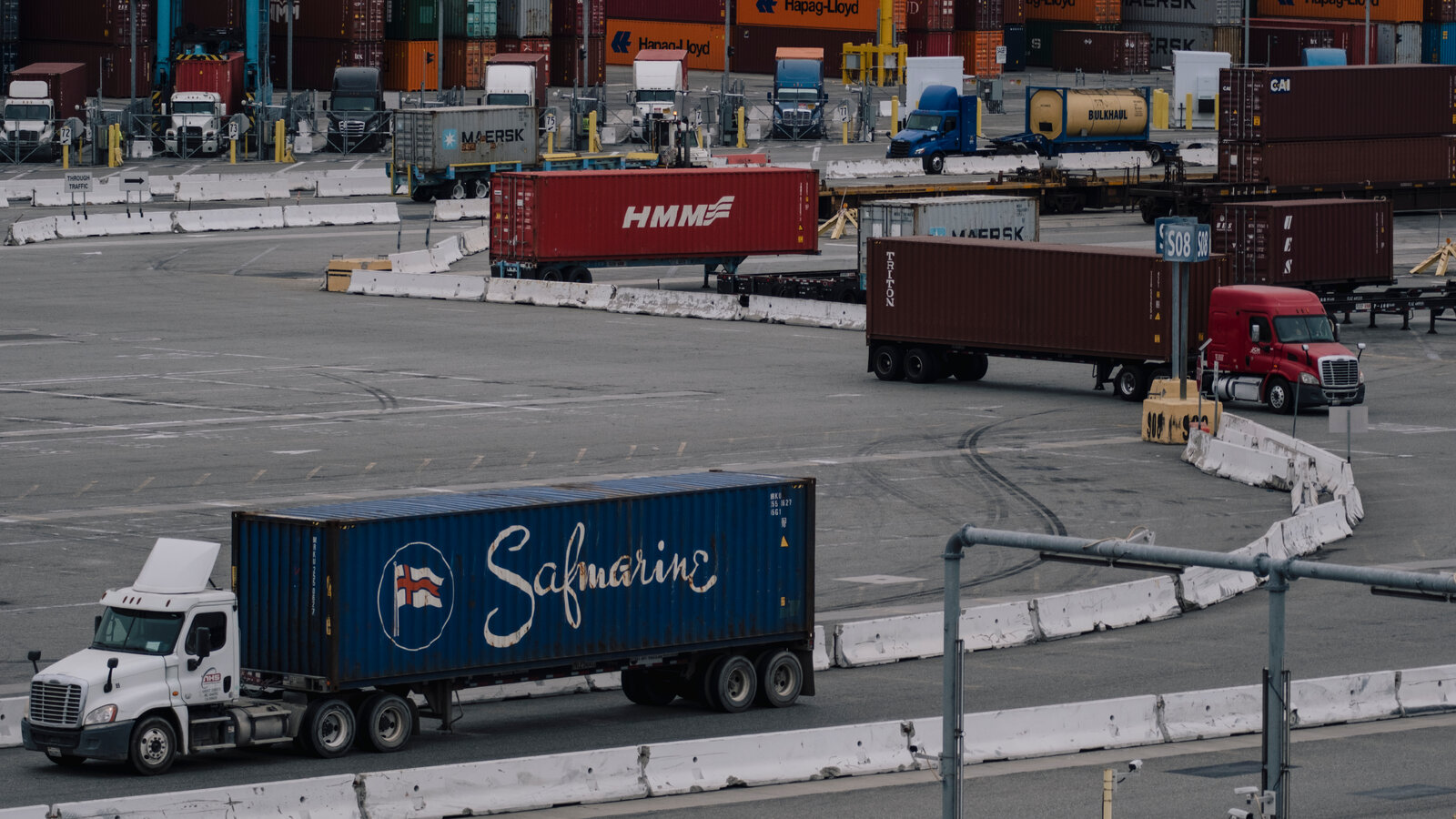
Photo: The New York Times
The United States has launched a massive new wave of trade investigations targeting 60 economies worldwide, examining whether foreign governments have failed to stop the import of goods produced with forced labor. The move significantly expands Washington’s use of Section 301 of the Trade Act of 1974, a powerful trade enforcement mechanism that allows the U.S. government to impose tariffs on countries deemed to engage in unfair trade practices.
The investigations, announced by the Office of the United States Trade Representative (USTR), will evaluate whether governments have taken adequate steps to block forced-labor products from entering their markets. Among the major economies included in the probe are China, the European Union, India, and Mexico, along with dozens of other trading partners spanning Asia, Europe, and Latin America.
The sweeping scope of the investigations marks one of the largest trade enforcement efforts launched by Washington in recent years and signals an aggressive shift in U.S. trade strategy.
A Global Investigation into Forced Labor in Supply Chains
The newly opened investigations fall under Section 301(b), which authorizes the U.S. government to examine whether foreign governments maintain policies or practices that are unjustifiable, discriminatory, or harmful to U.S. commerce.
According to the USTR, the probe will determine whether foreign governments have implemented and enforced laws designed to prevent goods produced with forced labor from entering global markets. If Washington determines that countries have failed to take meaningful action, the U.S. could respond with new tariffs, trade restrictions, or other economic penalties.
U.S. Trade Representative Jamieson Greer said the investigations aim to address a longstanding gap between international commitments and real-world enforcement.
Despite widespread global agreement that forced labor must be eliminated from supply chains, many governments have failed to enforce bans effectively or ensure that goods produced under coercive conditions are kept out of international trade, Greer said.
The U.S. believes these failures distort competition and harm American businesses and workers by allowing products made with artificially cheap labor to undercut fair-market prices.
Section 301 Returns as a Key Trade Weapon
Section 301 has long been one of the most powerful instruments in U.S. trade policy. The provision allows the president to impose tariffs or other restrictions without requiring approval from Congress, making it a rapid response tool against unfair trade practices.
During his first administration, President Donald Trump relied heavily on Section 301 to impose tariffs on more than $360 billion worth of Chinese imports, triggering a major escalation in the U.S.-China trade conflict. The policy reshaped global supply chains and remains one of the most consequential trade actions in recent decades.
The new investigations suggest Washington may once again rely on Section 301 to pressure trading partners, particularly as legal and political challenges have complicated other tariff strategies.
Investigations Follow Separate Probe into Industrial Overcapacity
The forced-labor investigation was announced just one day after the U.S. launched another set of Section 301 probes targeting excess industrial capacity in global markets.
That earlier investigation focused on 16 economies, including China, Australia, Indonesia, Japan, Malaysia, Singapore, South Korea, Switzerland, and Thailand. U.S. officials argue that excessive industrial capacity—especially in sectors such as steel, electric vehicles, batteries, and renewable energy components—can flood global markets with artificially cheap goods.
Together, the two investigations dramatically expand the number of countries currently under U.S. trade scrutiny. The broader list now includes major partners such as the United Kingdom, Brazil, Russia, and several emerging economies.
The parallel probes suggest the administration is attempting to address both labor practices and structural industrial distortions that it believes threaten fair global competition.
A Possible Alternative to Reciprocal Tariffs
Trade analysts say the new investigations may also serve as a strategic workaround following a recent legal setback for the administration’s tariff policy.
Last month, the U.S. Supreme Court struck down the administration’s “reciprocal tariffs,” ruling that the president had exceeded his authority in imposing them. The decision forced the White House to search for alternative legal pathways to maintain pressure on foreign trading partners.
Shortly after the ruling, the administration imposed a 10 percent blanket tariff on global imports under Section 122 of the Trade Act of 1974, while signaling that additional measures could follow.
Some trade experts believe the new Section 301 investigations represent the administration’s “Plan B” strategy, allowing Washington to justify targeted tariffs through formal investigations rather than broad unilateral measures.
Experts Question the Scope of the Probes
While the initiative signals a tougher stance on trade enforcement, several experts have questioned whether investigating 60 different economies simultaneously is realistic.
The USTR has scheduled public hearings on the investigations from April 28 to May 1, giving governments, businesses, and trade groups only a narrow window to submit evidence or testimony.
Trade policy specialists say the timeline may be too compressed for such a wide-ranging review of global supply chains and regulatory systems.
Deborah Elms, head of trade policy at the Hinrich Foundation, noted that some regions under scrutiny—such as the European Union—already have detailed legislation aimed at eliminating forced labor from supply chains. Meanwhile, other countries with weaker enforcement frameworks appear to face less scrutiny.
This uneven focus, she argued, raises questions about the strategic logic behind the probe.
Risk of Straining Relations with Key Allies
Beyond feasibility concerns, some analysts warn that the sweeping investigations could strain relationships with important U.S. allies.
Many of the economies included in the probe are long-standing partners that Washington often relies on when coordinating trade policies toward China.
By placing these allies under investigation alongside China, the U.S. risks undermining cooperation on broader trade priorities, including efforts to address China’s massive industrial output and export capacity.
Former U.S. trade negotiator Wendy Cutler said expanding the investigation to so many countries could weaken the goodwill needed to build coordinated responses to global market distortions.
Instead of focusing narrowly on the most serious sources of overcapacity, the probe could create friction with partners whose cooperation Washington may need in the future.
China Remains a Central Focus
Although the investigations cover dozens of countries, analysts widely believe China remains the primary target of Washington’s broader trade strategy.
The announcement comes just days before U.S. Treasury Secretary Scott Bessent is scheduled to meet Chinese Vice Premier He Lifeng in Paris for a new round of economic discussions. The talks, scheduled between March 14 and March 17, are expected to help prepare the ground for a potential summit between President Trump and Chinese President Xi Jinping later this year.
Some observers say launching new trade probes immediately before the meeting could complicate the diplomatic atmosphere.
Wang Huiyao, founder of the Beijing-based Center for China and Globalization, said the timing risks sending a confrontational signal during a period when both sides are attempting to stabilize economic relations.
However, Beijing’s initial response has been relatively restrained. China’s foreign ministry has reiterated its opposition to unilateral tariffs but has avoided the sharp rhetoric that characterized previous trade disputes.
Diplomatic Tensions but Talks Continue
Despite the new investigations, analysts believe both Washington and Beijing remain committed to continuing dialogue.
Stephen Olson, a former U.S. trade negotiator and senior fellow at the ISEAS-Yusof Ishak Institute, said the trade probes are unlikely to derail preparations for a potential Trump-Xi meeting.
China will likely express its dissatisfaction during upcoming negotiations, Olson said, but both governments appear motivated to maintain diplomatic momentum.
For now, the investigations will move into the evidence-gathering stage, with hearings and industry consultations expected in the coming weeks. The process could eventually lead to new tariffs, trade restrictions, or negotiated settlements, depending on the findings.
If tariffs are imposed, the impact could extend across global supply chains affecting industries from manufacturing and agriculture to technology and consumer goods.
With dozens of economies under scrutiny and the possibility of significant new trade penalties, the latest move underscores how trade policy is once again becoming a central battleground in global economic competition.
.webp)
Popular articles



Subscribe to unlock premium content
How Finland Uses Ice Swimming Festivals to Boost Winter Tourism and Local Economies

The Boom of Luxury Personal Libraries Renting Rare Books to the Ultra-Wealthy

Why Bhutan’s Hand-Woven Textiles Are Gaining Global Collector Value

How Finland Uses Ice Swimming Festivals to Boost Winter Tourism and Local Economies
The Boom of Luxury Personal Libraries Renting Rare Books to the Ultra-Wealthy
How Finland Uses Ice Swimming Festivals to Boost Winter Tourism and Local Economies


