
U.S. Navy Destroys Iranian Minelayer Fleet as Tensions Escalate in Strait of Hormuz

U.S. Navy Destroys Iranian Minelayer Fleet as Tensions Escalate in Strait of Hormuz
By
Augusta Parker
Last updated:
March 11, 2026
First Published:
April 25, 2026

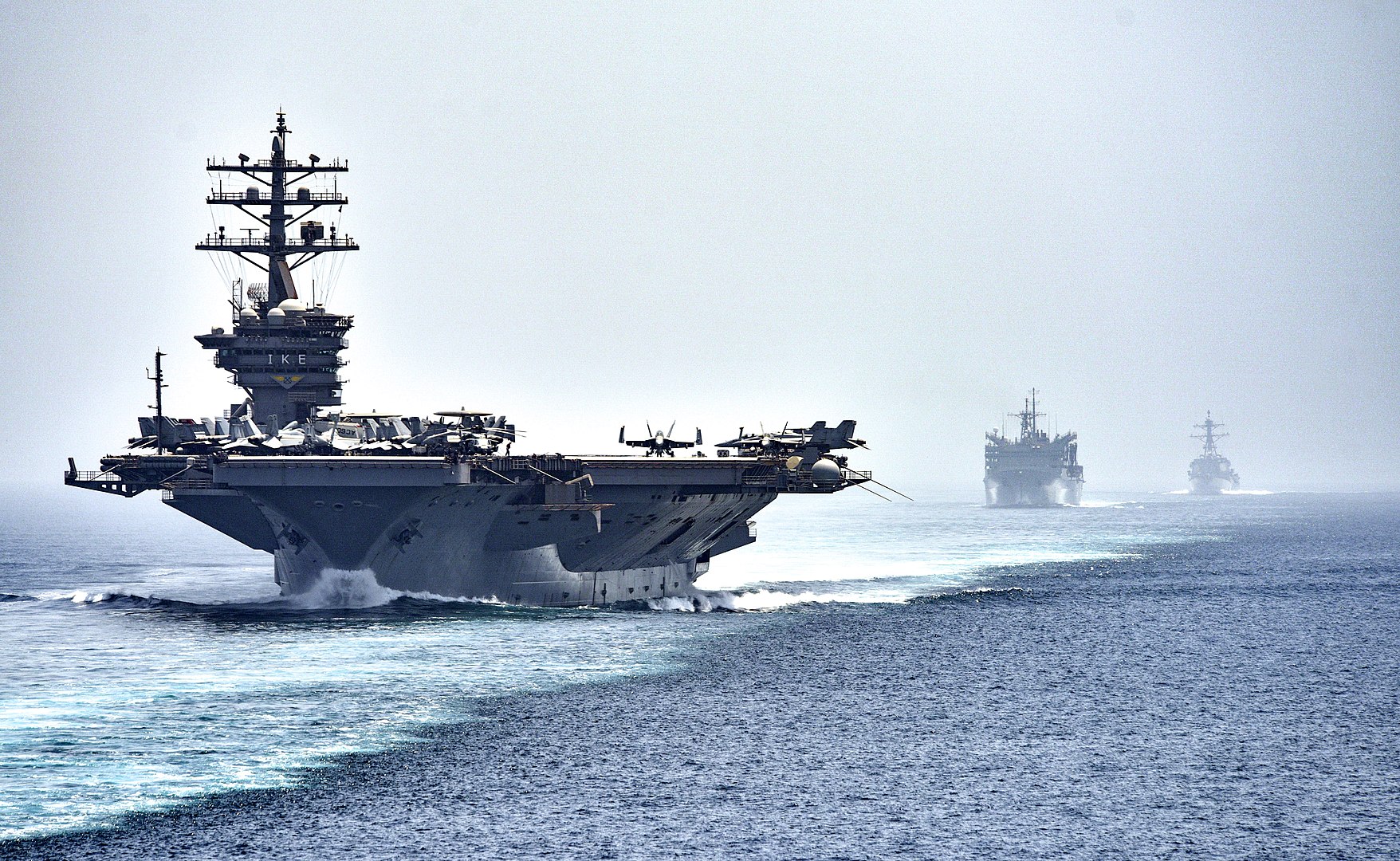
Photo: The National Interest
U.S. Forces Target Iranian Minelayers Near Strategic Waterway
U.S. military forces have sunk several Iranian vessels near the Strait of Hormuz, including 16 ships identified as minelayers, according to a statement from U.S. Central Command. The operation comes as intelligence reports suggest Iran has begun deploying naval mines in the critical maritime corridor that connects the Persian Gulf with the Gulf of Oman.
The strike represents a significant escalation in the ongoing confrontation between Washington and Tehran, as the narrow waterway remains one of the most strategically important oil transit routes in the world.
The Pentagon indicated that the targeted vessels were capable of deploying naval mines that could threaten commercial shipping and disrupt energy flows through the region.
The U.S. operation follows mounting concerns that Iran may attempt to partially block or destabilize shipping traffic in the strait, a move that could have severe consequences for global energy markets.
Trump Issues Stark Warning to Tehran
U.S. President Donald Trump issued a public warning shortly before the military action was announced, demanding that any mines placed in the waterway be removed immediately.
In a statement posted on social media, Trump warned that Iran would face severe military retaliation if the mines were not cleared.
He stated that if Iran had deployed mines in the Strait of Hormuz and failed to remove them quickly, the military response from the United States would reach levels “never seen before.” At the same time, he indicated that removing any deployed mines could ease tensions and serve as a positive step toward de-escalation.
Later comments from the president suggested that at least 10 inactive Iranian minelaying ships had already been destroyed, with additional operations potentially underway.
Reports Suggest Iran Has Begun Deploying Naval Mines
Intelligence reports from Western media outlets indicate that Iran has begun placing a limited number of naval mines in the region, although the deployment appears to remain relatively small for now.
According to sources familiar with the situation, several dozen mines may have been placed in recent days, primarily using small, fast-moving boats capable of carrying two to three mines at a time.
These vessels can operate quickly and quietly, making them difficult to detect before mines are deployed.
Despite the limited number reportedly deployed so far, analysts warn that Iran retains significant mine warfare capability. Military estimates suggest the country could possess between 2,000 and 6,000 naval mines, accumulated over decades through domestic production and foreign acquisitions.
Even deploying a small portion of this arsenal could dramatically increase risks for commercial vessels passing through the strait.
Why the Strait of Hormuz Matters to Global Energy
The Strait of Hormuz is widely regarded as one of the most critical chokepoints in global energy supply chains.
Located between Iran and Oman, the narrow passage is only about 21 miles wide at its narrowest point, with designated shipping lanes in each direction just a few miles across.
Despite its limited size, the corridor carries enormous volumes of oil and gas shipments every day.
Energy market data indicates that roughly 13 million barrels of crude oil per day moved through the strait in 2025. That represents approximately 31% of all seaborne crude oil trade worldwide.
Major oil exporters including Saudi Arabia, Iraq, Kuwait, the United Arab Emirates and Qatar rely heavily on the route to deliver energy supplies to global markets.
Any disruption to shipping in the region could therefore ripple through international energy markets and quickly affect fuel prices worldwide.
Mining the Waterway Could Disrupt Global Shipping
Military analysts say naval mines are one of the most effective tools Iran could use to disrupt shipping traffic without directly engaging larger naval forces.
Unlike large naval battles, mine warfare allows smaller forces to create major disruptions with relatively limited resources.
Even a small number of mines placed in strategic shipping lanes could force tanker operators to slow down, reroute or halt operations entirely until the area is cleared.
Experts note that the psychological impact of mines can be just as powerful as their physical damage. Shipping companies and insurers tend to respond quickly to the threat of mine warfare, often suspending coverage or raising insurance premiums dramatically.
In some cases, vessels may refuse to enter high-risk areas altogether.
Security analysts say even a limited mine deployment could effectively function as a blockade by making commercial shipping too risky.
Insurance and Shipping Costs Surge
The growing security risks in the Persian Gulf have already triggered a sharp increase in shipping costs.
In recent weeks, super-tanker freight rates in the Middle East surged to record levels, reflecting the growing danger of operating in the region.
At the same time, several major marine war-risk insurance providers have begun withdrawing coverage for vessels traveling through parts of the Persian Gulf.
Without insurance coverage, many tanker operators cannot legally transport oil shipments, meaning that shipping activity could decline rapidly if the security situation worsens.
U.S. Considers Naval Escort Operations
In response to the rising threat to commercial shipping, President Trump recently announced that the U.S. government had directed the U.S. Development Finance Corporation to provide political risk insurance and financial guarantees to help protect maritime trade moving through the region.
The proposal aims to reassure shipping companies and energy traders that the United States will support global energy transportation despite the security risks.
Trump also suggested that the U.S. Navy could begin escorting oil tankers through the Strait of Hormuz if necessary.
Naval escorts have been used in previous conflicts in the Persian Gulf, particularly during the late 1980s “Tanker War,” when U.S. forces protected commercial shipping from attacks during the Iran-Iraq conflict.
However, implementing such operations carries significant logistical and security challenges.
Navy Faces Operational Limitations
Despite growing calls from the shipping industry, reports indicate that the U.S. Navy has been declining frequent requests to escort commercial vessels through the strait.
According to industry sources, some tanker operators have requested naval protection almost daily as security risks increase.
Military officials, however, appear cautious about deploying escorts too quickly, citing the complex threat environment in the region.
Part of the challenge involves the U.S. Navy’s current mine-clearing capabilities.
In late 2025, the U.S. decommissioned four Avenger-class minesweepers that had previously been stationed in Bahrain to help counter mine threats in the Persian Gulf.
These ships were originally designed specifically to detect and neutralize naval mines.
Their intended replacements, Independence-class littoral combat ships, have encountered difficulties adapting to mine countermeasure missions and have not fully replaced the operational capabilities of the older vessels.
Rising Tensions Keep Oil Markets on Edge
The escalating confrontation around the Strait of Hormuz has already triggered volatility in global oil markets.
Earlier this week, crude prices surged close to $120 per barrel, the highest level in several years, as traders feared the possibility of major supply disruptions.
Prices later pulled back slightly as markets assessed the scale of the threat.
Recent trading placed U.S. West Texas Intermediate crude near $83.8 per barrel, while Brent crude, the global benchmark, hovered around $87.9 per barrel.
Even with the partial retreat in prices, analysts warn that the situation remains fragile.
Any large-scale mining operation or direct military clash in the strait could quickly send energy prices sharply higher and disrupt oil flows to major economies across Asia, Europe and North America.
.webp)
Popular articles



Subscribe to unlock premium content
How Finland Uses Ice Swimming Festivals to Boost Winter Tourism and Local Economies

The Boom of Luxury Personal Libraries Renting Rare Books to the Ultra-Wealthy

Why Bhutan’s Hand-Woven Textiles Are Gaining Global Collector Value

How Finland Uses Ice Swimming Festivals to Boost Winter Tourism and Local Economies
The Boom of Luxury Personal Libraries Renting Rare Books to the Ultra-Wealthy
How Finland Uses Ice Swimming Festivals to Boost Winter Tourism and Local Economies


