U.S. Lawmakers Push New Ban on Chinese Smart Vehicles Ahead of Trump-Xi Summit

U.S. Lawmakers Push New Ban on Chinese Smart Vehicles Ahead of Trump-Xi Summit
By
David Goldfarb
Last updated:
May 13, 2026
First Published:
May 13, 2026

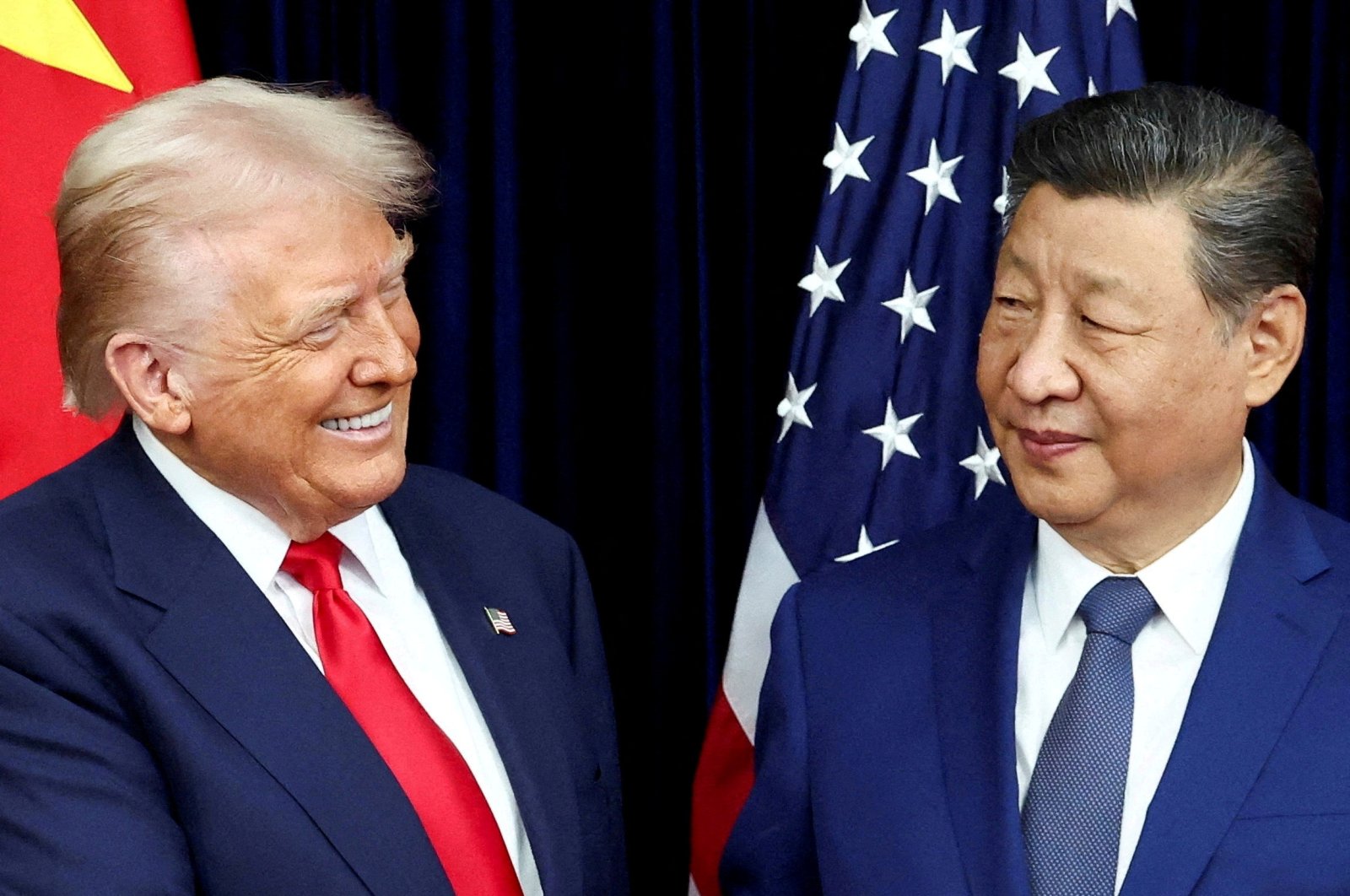
A new bipartisan push in Washington is intensifying pressure on Chinese automakers and technology firms as U.S. lawmakers move to block certain Chinese-made connected vehicles, automotive software, and hardware from entering the American market.
The proposed legislation arrives just days before U.S. President Donald Trump is expected to meet Chinese President Xi Jinping in Beijing, raising concerns among lawmakers that trade negotiations could potentially soften existing restrictions on China’s fast-growing electric vehicle and automotive technology sector.
Lawmakers backing the bill argue that connected vehicles manufactured or controlled by Chinese companies could create serious national security risks by collecting sensitive data on American drivers, infrastructure, transportation systems, and government facilities.
New Bill Targets Chinese Vehicle Technology
The legislation, called the “Connected Vehicle Security Act,” was introduced by John Moolenaar and Debbie Dingell, reflecting growing bipartisan support for stricter controls on Chinese automotive technology.
The proposal closely mirrors earlier Senate legislation introduced by Elissa Slotkin and Bernie Moreno that sought to permanently codify restrictions originally developed during the administration of former President Joe Biden.
Under the proposal, restrictions on connected vehicle software linked to China would begin on January 1, 2027, while hardware-related restrictions would take effect on January 1, 2030.
The legislation would not only apply to China but also extend to companies connected to Russia, North Korea, and Iran.
Supporters say the phased rollout is designed to give automakers, suppliers, and technology companies enough time to adjust supply chains and develop alternative systems.
Why Connected Vehicles Are Raising Security Concerns
Modern connected vehicles rely heavily on internet connectivity, cloud computing, sensors, cameras, GPS systems, wireless communication, and real-time data sharing. These technologies improve navigation, safety features, traffic management, autonomous driving functions, and vehicle diagnostics.
However, lawmakers and national security experts increasingly warn that vehicles connected to foreign-controlled software systems could potentially collect large amounts of sensitive information.
That data may include driver locations, travel habits, voice recordings, biometric information, infrastructure mapping, and real-time surveillance capabilities.
U.S. officials have expressed concern that Chinese technology firms could be legally required under Chinese national security laws to share collected data with the Chinese government if requested.
Representative Debbie Dingell argued that the issue extends far beyond trade competition, saying lawmakers believe China is attempting to gain technological and strategic advantages through critical industries.
She also criticized Chinese industrial policies, claiming heavy government subsidies, currency manipulation, and unfair labor practices have created an uneven competitive environment for American manufacturers.
U.S. Auto Industry Pushes Back Against Chinese Expansion
The legislation comes as concerns continue growing within the American automotive sector over the rapid rise of Chinese electric vehicle manufacturers.
Chinese automakers such as BYD, NIO, and XPeng have expanded aggressively in global markets over the past several years, supported by large-scale government subsidies, low-cost manufacturing capabilities, and strong domestic supply chains.
Industry groups warn that if Chinese manufacturers gain significant access to the U.S. market, they could severely undercut American automakers on pricing, particularly in the electric vehicle segment.
Executives across the U.S. auto industry, including automakers, suppliers, steel producers, and dealership networks, have increasingly urged Washington to maintain strict protections against heavily subsidized foreign competition.
Last month, more than 120 bipartisan members of the U.S. House of Representatives sent a letter urging Trump not to allow Chinese automakers to establish deeper manufacturing operations inside the United States.
The warning followed comments made by Trump earlier this year suggesting he could potentially support Chinese companies building factories in America if they created jobs for American workers.
Political Pressure Builds Ahead of Beijing Talks
The timing of the bill is especially significant as Washington and Beijing prepare for another round of high-level discussions on trade, technology, tariffs, and industrial policy.
Although Trump administration officials including Commerce Secretary Howard Lutnick and U.S. Trade Representative Jamieson Greer have publicly stated there are currently no plans to roll back existing restrictions on Chinese vehicles or technology, lawmakers remain cautious.
Many in Congress fear that economic negotiations with Beijing could eventually lead to concessions involving the automotive industry.
Dingell acknowledged uncertainty surrounding Trump’s negotiating style, noting that policymakers often do not know the president’s final position until agreements are formally announced.
She emphasized that lawmakers are attempting to send a clear signal that protecting American auto workers and preserving the domestic manufacturing base should remain a top priority during discussions with China.
America’s Auto Industry Faces a Defining Moment
The debate surrounding connected vehicles highlights a broader shift occurring across the global automotive industry as vehicles become increasingly software-driven and digitally connected.
Cars are no longer viewed solely as transportation products. They are now data platforms capable of collecting, transmitting, and processing massive amounts of information.
As electric vehicles, autonomous driving systems, and AI-powered transportation technologies continue evolving, governments worldwide are beginning to treat automotive technology as both an economic and national security issue.
For the United States, the challenge is becoming increasingly complex: balancing the need for technological innovation and global competition while protecting domestic manufacturing, supply chains, cybersecurity, and sensitive consumer data.
The outcome of the latest legislative push — along with the Trump-Xi discussions in Beijing — could significantly shape the future relationship between the U.S. and Chinese automotive industries for years to come.
.webp)
Popular articles



Subscribe to unlock premium content
Living History Like Never Before

Capturing the Night Like Never Before

Transforming Small Spaces Into Personal Sanctuaries

Living History Like Never Before
Capturing the Night Like Never Before
Living History Like Never Before