

Trump Signals Greenland Deal Framework With NATO
By
Leah Rosenfeld
Last updated:
January 22, 2026
First Published:
April 25, 2026

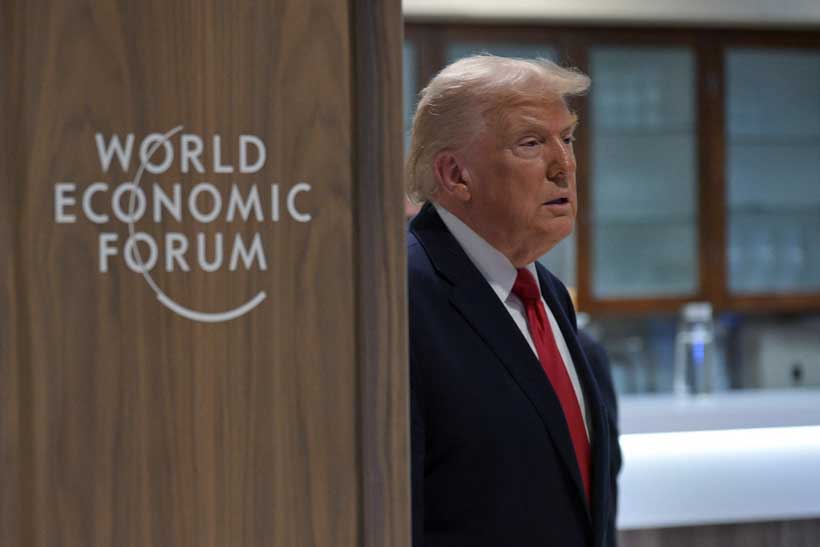
President Donald Trump said Wednesday that the United States and NATO have agreed on what he described as a preliminary framework for a future deal involving Greenland, a move that immediately eased trade tensions with Europe and sent financial markets sharply higher.
Speaking publicly after discussions with NATO Secretary General Mark Rutte, Trump said the talks produced what he called the “concept of a deal” covering Greenland and, more broadly, the Arctic region. As a direct result, the White House has withdrawn plans to impose new tariffs on several European countries that were scheduled to take effect on February 1.
Tariffs Pulled Back, Markets React Instantly
The tariff package, which Trump had floated over the weekend, would have introduced duties starting at 10 percent and rising to as much as 25 percent by June on a range of European exports. The threat had unsettled investors and added fresh strain to already fragile transatlantic trade relations.
Once Trump announced that the tariffs were off the table, U.S. equity markets responded within minutes. Major indexes rebounded from the previous day’s losses, with defense, mining, and industrial stocks leading gains as investors bet on reduced trade friction and new Arctic-related investment opportunities.
Asked directly in a televised interview whether the tariffs were now canceled, Trump replied, “Yes. We took that off because it looks like we have, pretty much, the concept of a deal.”
What the Greenland Framework Appears to Include
While Trump emphasized that negotiations are ongoing and complex, he offered several clues about what the framework involves. According to the president, the arrangement touches on U.S. access to mineral resources in Greenland and cooperation on the administration’s proposed “Golden Dome” missile defense system.
“They’re going to be involved in the Golden Dome, and they’re going to be involved in mineral rights, and so are we,” Trump said, suggesting joint participation between the U.S. and NATO allies.
Greenland is believed to hold significant deposits of rare earth elements, uranium, and other strategic minerals critical for defense technology, renewable energy, and advanced manufacturing. Analysts estimate that the Arctic region could contain up to 13 percent of the world’s undiscovered oil and 30 percent of its undiscovered natural gas, adding to its strategic appeal.
Broader Arctic Strategy and NATO’s Role
In a statement posted on Truth Social, Trump said the discussions go beyond Greenland alone and could shape the future security and economic architecture of the Arctic. He framed the framework as beneficial not just for the U.S., but for all NATO members, particularly as geopolitical competition in the region intensifies.
Trump confirmed that Vice President JD Vance, Secretary of State Marco Rubio, Special Envoy Steve Witkoff, and other senior officials will lead negotiations and report directly to him as talks progress.
Additional discussions are underway specifically focused on how the Golden Dome defense initiative could be deployed or supported in Greenland, which occupies a critical geographic position between North America and Europe.
Davos Talks and Reports of Limited Sovereignty Proposals
The announcement followed high-level meetings at the World Economic Forum in Davos, Switzerland. According to reports from officials familiar with the discussions, some NATO members explored proposals that could grant the United States sovereignty or control over limited areas of Greenland, primarily for security and defense purposes.
While no formal agreement has been confirmed, the mere possibility marked a dramatic shift in how U.S. allies are engaging with Washington on the issue after months of firm resistance.
The White House declined to provide further specifics, with a spokesperson reiterating that more details will be shared as negotiations advance.
A Shift From Escalation to Dialogue
The framework represents a notable turn in what has been a contentious standoff. In recent weeks, the Trump administration had openly discussed buying Greenland or asserting control through other means, including military options, despite Denmark’s clear stance that the territory is not for sale.
Those comments prompted Denmark and several European NATO members to reinforce their military presence in and around Greenland. Trump responded by threatening trade penalties, raising fears of both economic and diplomatic fallout.
At Davos earlier on Wednesday, Trump again argued that U.S. involvement in Greenland is essential for national security, but he also stated that he would not pursue the territory through military force, signaling a softer tone than in previous remarks.
European Responses: Cautious Optimism
Reaction across Europe was mixed but noticeably calmer by the end of the day. Danish Foreign Minister Lars Løkke Rasmussen said discussions had ended “on a better note than they began” and called for serious dialogue that addresses U.S. security concerns while respecting Denmark’s firm boundaries.
Germany’s finance minister also welcomed the renewed talks but urged restraint. He noted that dialogue is positive, but warned against assuming a final deal is close without seeing concrete terms.
What Comes Next
Trump later declined to clarify whether the framework ultimately involves U.S. ownership of Greenland, a concept he has previously described as non-negotiable. Instead, he characterized the arrangement as a long-term strategic deal designed to benefit all parties.
“It’s the ultimate long-term deal,” he said. “And I think it puts everybody in a really good position.”
For now, markets appear relieved, European leaders are cautiously engaged, and the Arctic has moved firmly to the center of global trade and security discussions.
.webp)
Popular articles



Subscribe to unlock premium content
Crypto in the Arctic
Iceland’s Seaweed Revolution
Private Island Rentals for Corporate Retreats Hit $1 Billion
Crypto in the Arctic
Iceland’s Seaweed Revolution
Crypto in the Arctic


