Chipotle Shares Slide as Customer Visits Drop Again and 2026 Outlook Disappoints

Chipotle Shares Slide as Customer Visits Drop Again and 2026 Outlook Disappoints
By
Rachel Steinberg
Last updated:
February 4, 2026
First Published:
February 4, 2026

Getty Images
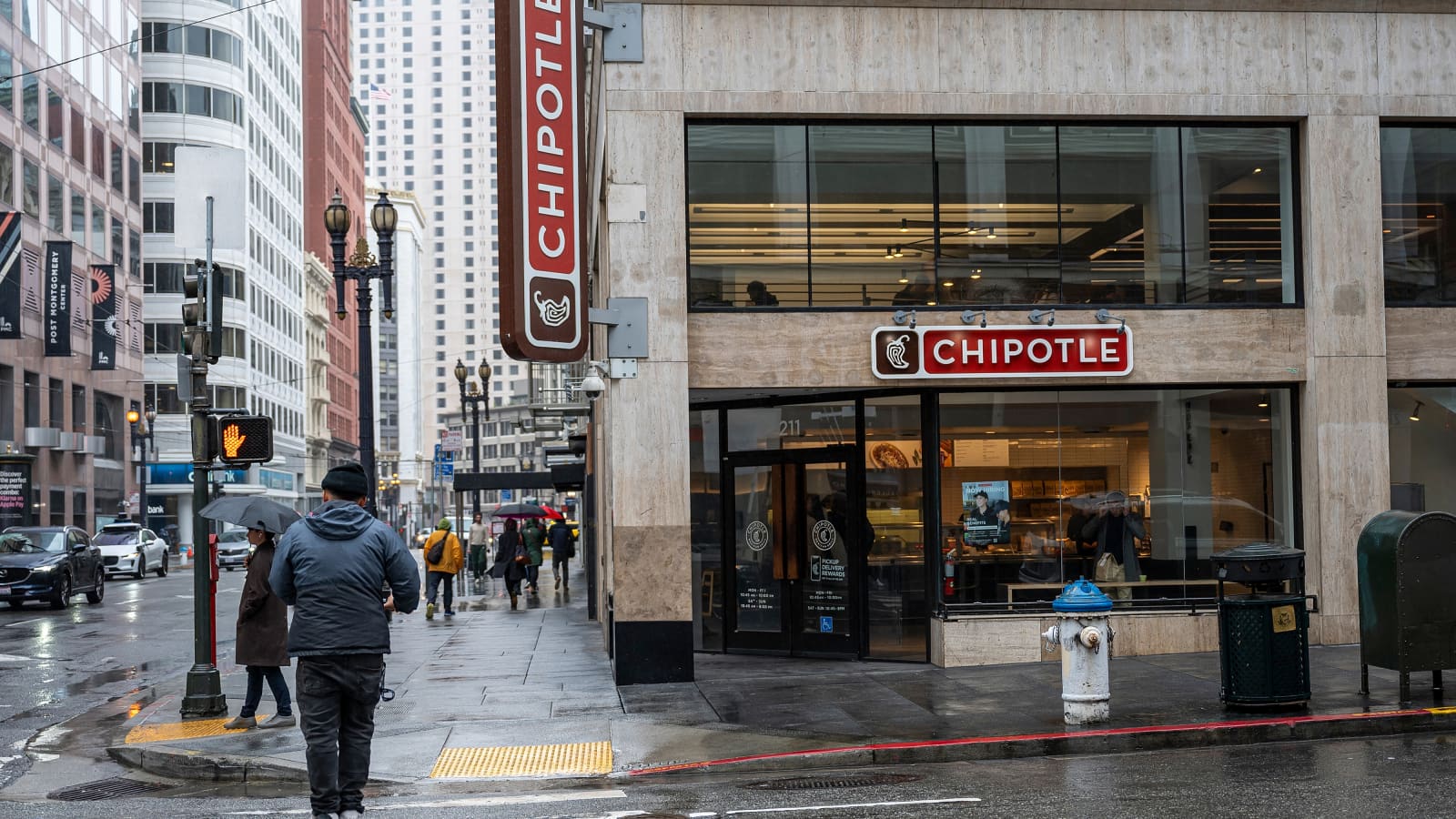
Chipotle Mexican Grill rattled investors after reporting another quarter of declining restaurant traffic and offering cautious guidance for 2026, sending its shares sharply lower despite topping Wall Street’s earnings and revenue expectations.
The fast-casual giant said customer visits fell for the fourth consecutive quarter, underscoring mounting pressure on discretionary spending and shifting dining habits across the U.S. restaurant industry. Management now expects flat same-store sales growth in 2026, signaling that the company’s recovery may take longer than investors had hoped.
Shares dropped as much as 11% in extended trading following the earnings release. Over the past 12 months, Chipotle stock has fallen roughly 33%, cutting the company’s market capitalization to about $51 billion as of Tuesday’s close.
Earnings Beat Fails to Calm Investors
For the fourth quarter, Chipotle delivered results slightly ahead of analyst forecasts, according to LSEG data:
Adjusted earnings per share came in at 25 cents, above expectations of 24 cents.
Revenue reached $2.98 billion, edging past estimates of $2.96 billion.
Net income totaled $330.9 million, or 25 cents per share, compared with $331.8 million, or 24 cents per share, a year earlier. Excluding impairment charges, gains from terminated restaurant leases, and other one-time items, adjusted earnings were also 25 cents per share.
Quarterly net sales increased 4.9% year over year to $2.98 billion, reflecting menu price increases and new restaurant openings. However, those gains were not enough to offset weaker foot traffic.
Same-store sales declined 2.5% during the quarter. While that was slightly better than Wall Street’s projected 3% drop, it still marked the third quarter in 2025 with negative comparable sales.
Traffic across Chipotle locations fell 3.2%, highlighting continued pressure on visit frequency.
A Tough 2025 Caps Off With First Annual Sales Decline Since 2016
Chipotle closed out a challenging 2025 with a full-year same-store sales decline of 1.7, the company’s first annual contraction in nearly a decade.
Executives described their 2026 outlook as “conservative,” pointing to unpredictable consumer behavior. Throughout last year, Chipotle revised its full-year same-store sales forecast downward three separate times as spending patterns shifted from quarter to quarter.
Management said customers across all income levels have pulled back, though lower-income diners have reduced visits the most. That trend mirrors broader industry data showing consumers becoming more selective about dining out as higher interest rates and lingering inflation squeeze household budgets.
Investor confidence in Chipotle has faded since the company first began reporting declining traffic, reversing years of steady growth that had positioned the brand as one of Wall Street’s restaurant favorites.
Strategy Shift Focuses on Operations and Menu Innovation
Rather than leaning heavily on discounts, Chipotle is betting on operational improvements and product innovation to bring customers back.
Late in the quarter, the company introduced “protein cups,” a snack-sized offering aimed at attracting health-conscious consumers and expanding visits beyond traditional lunch and dinner occasions.
CEO Scott Boatwright said the new items are designed to provide accessible entry points to the brand.
“I think having a taco at about $3.50 and a protein cup around $3.80 across the country is a really approachable price point,” Boatwright told analysts. “It gives consumers a meaningful way into the brand while also serving people looking for high-protein, high-fiber options, including GLP-1 users and those with specific dietary preferences.”
Chipotle is also moderating menu price increases, aiming to raise prices more slowly than inflation in an effort to appeal to cost-conscious diners.
At the same time, the company plans to lean more heavily into its higher-income customer base. Boatwright noted that internal data shows roughly 60% of Chipotle’s core users come from households earning more than $100,000 annually, making that demographic a key focus for marketing efforts in 2026.
Expansion Continues Despite Near-Term Headwinds
Even as sales growth slows, Chipotle is pressing ahead with expansion.
During the fourth quarter, the company opened 132 company-owned restaurants and seven international locations operated by licensees. For the full year, Chipotle added 334 company-owned restaurants and 11 partner-run international locations.
Looking ahead to 2026, management expects to open between 350 and 370 new restaurants, including 10 to 15 international units operated by licensees. The company continues to see long-term opportunity in both domestic and global markets, even as near-term demand remains uneven.
Investors Weigh Growth Prospects
While Chipotle’s brand strength and expansion pipeline remain intact, investors are increasingly focused on whether the company can reignite traffic and stabilize same-store sales in a tougher consumer environment.
With flat comparable sales projected for 2026 and customer visits still trending lower, the burrito chain faces mounting pressure to prove that recent declines are cyclical rather than structural.
For now, Wall Street appears unconvinced, as Chipotle works to balance pricing discipline, menu innovation, and aggressive store growth in an increasingly competitive fast-casual landscape.
.webp)
Popular articles



Subscribe to unlock premium content
Zara’s Hyper-Fast Fashion Supply Chain Is Changing Global Retail

The Rise of Apple Stores as Experiential Brand Centers Worldwide

Boutique Eco-Lodges in Costa Rica Redefining Ultra-Luxury Travel

Zara’s Hyper-Fast Fashion Supply Chain Is Changing Global Retail
The Rise of Apple Stores as Experiential Brand Centers Worldwide
Zara’s Hyper-Fast Fashion Supply Chain Is Changing Global Retail