Trump Says Inflation Is Cooling, but Iran War Could Ignite a New Wave of Price Pressures

Trump Says Inflation Is Cooling, but Iran War Could Ignite a New Wave of Price Pressures
By
Leah Rosenfeld
Last updated:
March 3, 2026
First Published:
March 3, 2026

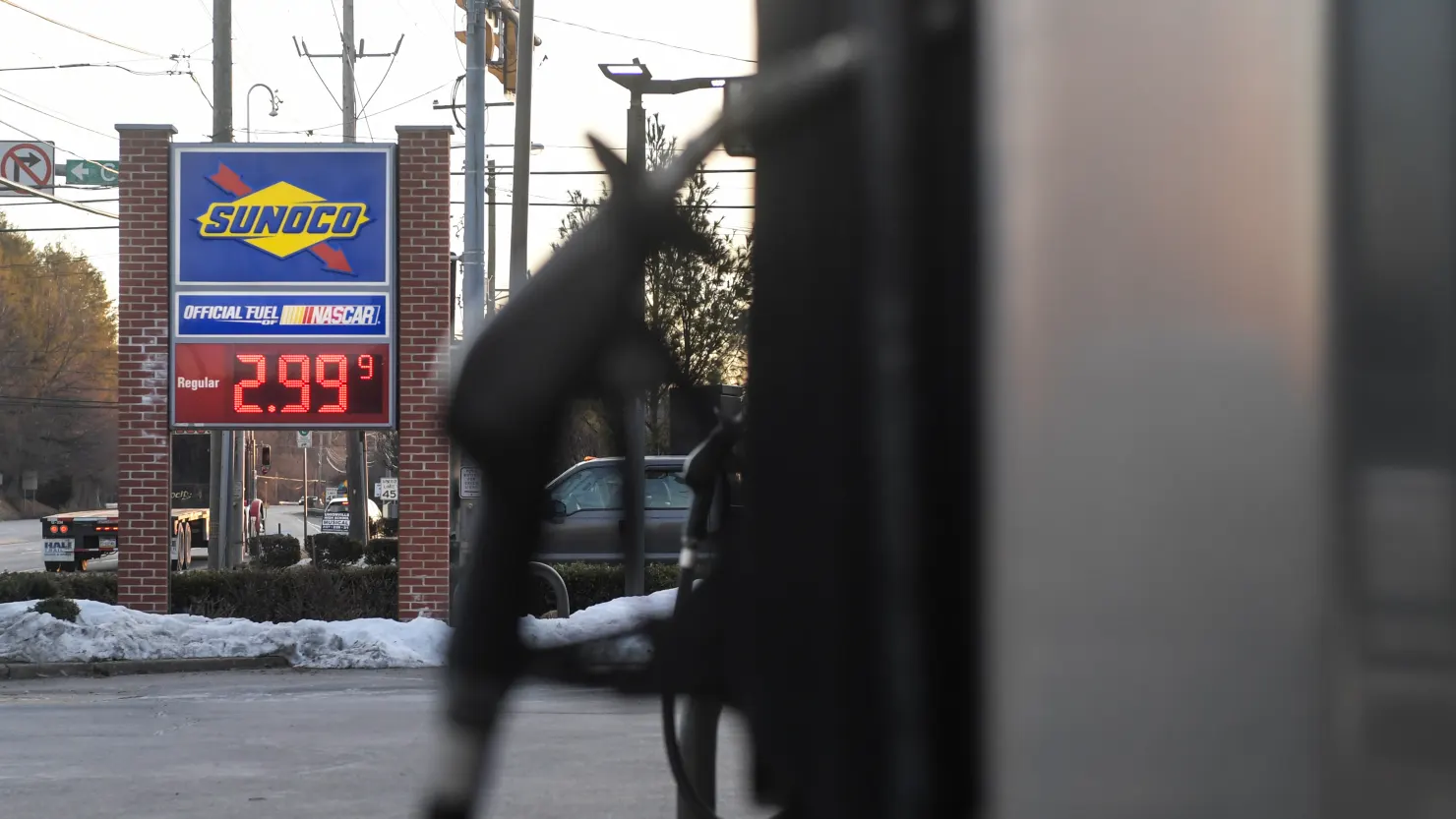
Gas prices at a Sunoco gas station in Media, Pennsylvania, US, on Monday, March 2, 2026. Oil surged the most in four years as the first impacts of the war in the Middle East began to be felt, with a near halt to traffic through the Strait of Hormuz and disruption at a big refinery in Saudi Arabia underscoring the threat to supplies in one of the world’s top producing regions. Photographer: Matthew Hatcher/Bloomberg via Getty Images
Matthew Hatcher | Bloomberg | Getty Images
Just as President Donald Trump has been arguing that inflation is finally under control, a fresh geopolitical shock is threatening to test that narrative.
The escalating conflict involving Iran has sent crude oil prices sharply higher, raising concerns that energy-driven price increases could spill into the broader economy. For a White House pressing the case for lower interest rates, renewed inflation pressures would complicate the message — and potentially the Federal Reserve’s policy timeline.
Oil prices jump as markets react
Energy markets moved quickly after the latest military escalation in the Middle East. West Texas Intermediate crude futures surged more than 5% overnight, while Brent crude — the global benchmark — climbed about 6% before paring some gains. Even after retreating from session highs, both benchmarks remain significantly elevated compared with last week’s levels.
Oil markets are highly sensitive to instability in the Middle East, which accounts for roughly one-third of global crude supply. Any perceived threat to production facilities, export terminals or critical shipping lanes such as the Strait of Hormuz — through which nearly 20% of the world’s oil flows — can trigger immediate price spikes.
Energy-driven inflation has a long history. Past oil shocks in the 1970s and during the Gulf War demonstrated how higher fuel costs can ripple through transportation, manufacturing and consumer goods. While today’s U.S. economy is more energy independent, oil still influences everything from airline tickets to grocery bills.
Inflation was cooling — but not gone
Inflation has fallen significantly from its peak above 9% in 2022, and recent headline readings have hovered closer to the Federal Reserve’s 2% target. However, underlying pressures have not fully disappeared.
January’s producer price index, which tracks wholesale costs and often signals pipeline inflation, rose 0.8% month over month excluding food and energy — well above expectations. That pushed the 12-month increase to 3.6%, still meaningfully higher than the Fed’s goal.
Meanwhile, the Institute for Supply Management reported that more than 70% of manufacturing managers saw higher input prices in February, an 11.5 percentage-point jump from the prior month. That suggests pricing pressures may be broadening beyond just energy.
Historically, energy price spikes can act as a catalyst for wider inflation, especially if businesses pass higher fuel and shipping costs onto consumers.
Why duration matters most
Economists stress that the key variable is time.
Short-lived geopolitical flare-ups often cause temporary commodity spikes that fade once tensions stabilize. But prolonged conflict can create structural disruptions. Extended shipping reroutes, elevated maritime insurance premiums and supply chain bottlenecks can compound inflationary effects well beyond gasoline prices.
If shipping lanes are disrupted for weeks or months, transportation costs for raw materials and finished goods could rise globally. Insurance premiums for cargo vessels have already moved higher in past regional conflicts, adding another layer of cost pressure.
Analysts estimate that every $10 sustained increase in crude oil prices adds roughly 0.2 percentage points to headline inflation and trims about 0.1 percentage point from U.S. GDP growth. So far, the current oil rally falls short of that threshold, implying a modest near-term impact — unless prices continue climbing.
The stagflation question resurfaces
The broader concern is stagflation — a combination of slower growth and rising prices.
The U.S. labor market has shown early signs of cooling, with hiring moderating compared with the post-pandemic surge. At the same time, uncertainty around tariffs, fiscal policy and global trade remains elevated.
If energy prices remain high while economic growth slows, policymakers could face a difficult balancing act. Raising rates to fight inflation risks further slowing growth. Cutting rates to support the economy risks fueling price pressures.
Markets have already adjusted expectations. Traders are increasingly betting that the Federal Reserve will hold rates steady at its upcoming meetings rather than move quickly toward cuts.
Why today’s economy is less oil-sensitive
There is an important structural difference compared with past decades: the United States is now one of the world’s largest oil producers. Domestic production regularly exceeds 13 million barrels per day, cushioning the impact of external supply shocks.
Additionally, the U.S. economy is roughly three times larger than it was in the 1970s, while energy intensity — the amount of energy used per dollar of GDP — has steadily declined. That means oil spikes do not carry the same automatic recessionary punch they once did.
Still, gasoline prices remain highly visible to consumers. A sharp rise at the pump can affect consumer sentiment quickly, even if the broader economic impact is limited.
What the Federal Reserve is likely to do
Federal Reserve officials typically “look through” short-term commodity price swings, especially when they are driven by geopolitical events rather than domestic demand.
However, sustained increases in energy prices that feed into wages and broader services inflation would demand closer attention. Policymakers will be watching measures of inflation expectations carefully, as rising expectations can become self-fulfilling.
For now, most economists view the current oil move as a risk factor rather than a guaranteed inflation surge. Much depends on whether the conflict escalates, stabilizes or de-escalates in the coming weeks.
The bottom line
President Trump’s argument that inflation is largely tamed rests on cooling price data and moderating supply chain pressures. But geopolitics rarely follows a predictable script.
If oil prices retreat, the latest spike could prove temporary — just another brief energy shock in a volatile world. If disruptions persist and costs ripple through global trade routes, inflation could reaccelerate, complicating both monetary policy and political messaging.
In the coming weeks, the trajectory of crude oil may matter as much as any economic data release.
.webp)
Popular articles



Subscribe to unlock premium content
Electric Dreams on Demand

Tokyo’s Futuristic Gardens of Prestige

Elevating Perspectives with Drone Photography

Electric Dreams on Demand
Tokyo’s Futuristic Gardens of Prestige
Electric Dreams on Demand