Trump Pushes to Rebuild America’s Shipbuilding Power as Global Rivals Pull Ahead

Trump Pushes to Rebuild America’s Shipbuilding Power as Global Rivals Pull Ahead
By
Leah Rosenfeld
Last updated:
December 15, 2025
First Published:
December 15, 2025

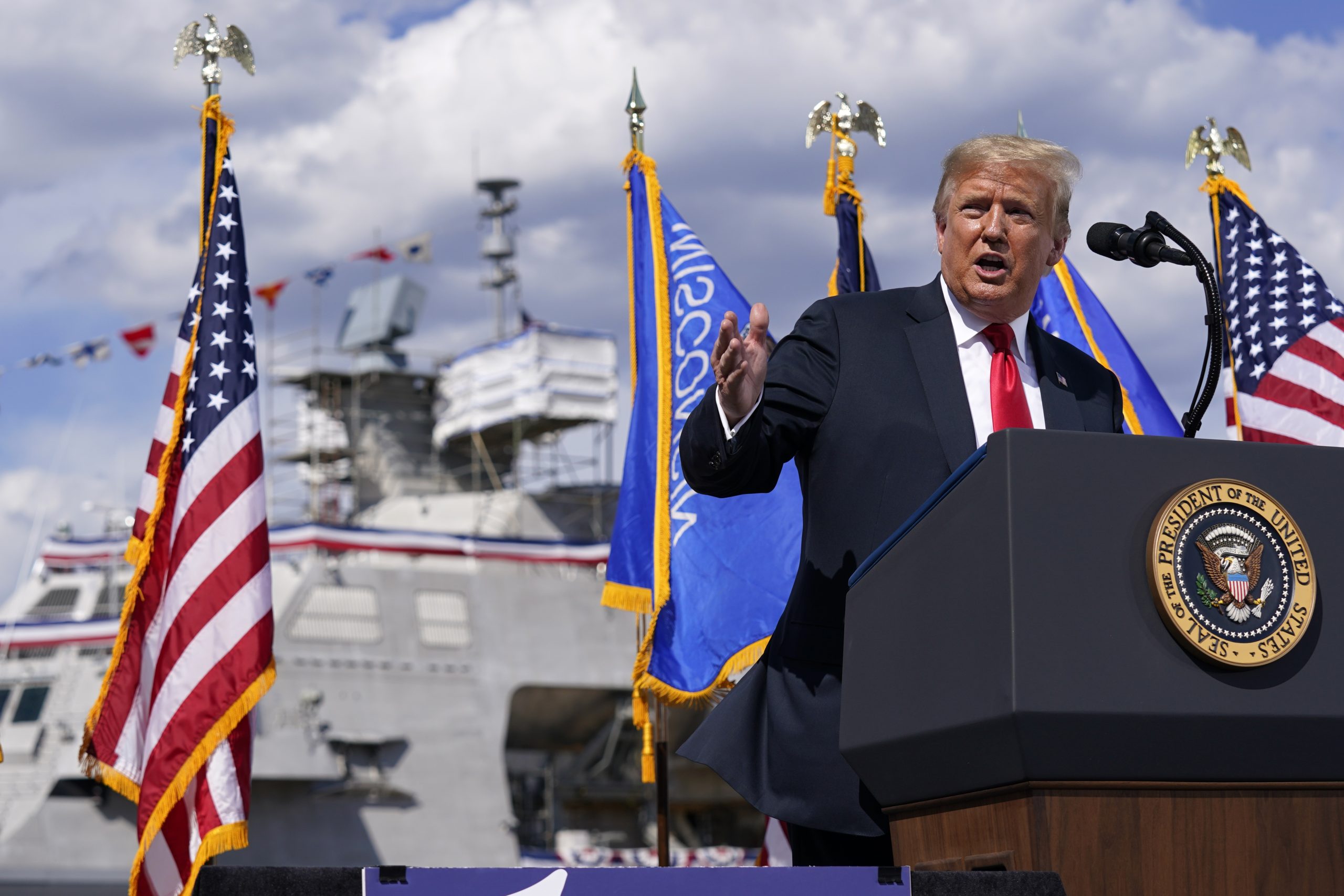
Photo: Washington Monthly
America’s shipbuilding gap in a global industry
The United States once dominated global shipbuilding, but that era effectively ended after World War II. Today, the country accounts for a fraction of global ship production, with an industry that has not experienced a sustained commercial boom in more than seven decades. President Donald Trump has made reviving U.S. shipbuilding a central industrial and national security objective, arguing that the country must regain the ability to build critical commercial and military vessels at scale.
The challenge is stark. The U.S. currently operates eight active commercial shipyards. China operates more than 300. While the U.S. focuses primarily on defense-related vessels, China controls more than half of the global shipbuilding market and as much as 75 percent of new ship orders, cementing its dominance across cargo ships, tankers, and specialized vessels.
Why shipbuilding matters for national security
Shipbuilding is increasingly viewed as a strategic industry rather than a purely commercial one. The U.S. Navy, Coast Guard, and energy sector all depend on domestic capacity to build and maintain vessels ranging from LNG carriers to submarines and icebreakers. Administration officials argue that reliance on foreign-built ships exposes the U.S. to supply chain risks during geopolitical crises.
Trump’s executive order signed in April is part of a broader “Make America Great Again” industrial agenda, with shipbuilding positioned as a cornerstone sector. The administration’s “Make American Shipyards Great Again” initiative targets LNG tankers, polar icebreakers, and advanced Navy vessels, but industry leaders caution that rebuilding capacity will take years, not months.
China’s scale advantage and trade pressure
China’s shipbuilding rise has been rapid and state-driven. After surpassing Japan in 2008 and South Korea in 2010, China steadily expanded its lead through subsidies, long-term industrial planning, and vertical integration. Today, China holds roughly 53 percent of global shipbuilding output, followed by South Korea and Japan.
A U.S. Trade Representative investigation launched under President Joe Biden and continued under Trump concluded that China’s shipbuilding dominance is the result of heavy state support and policies that distort global competition. In response, the U.S. imposed fees on Chinese-built ships entering American ports. China retaliated, though both sides later agreed to a one-year pause as part of a broader trade truce.
Even with policy pressure, the numbers highlight the gap. The 2025 global order book shows China capturing 75 percent of new vessel orders, South Korea 19 percent, and the U.S. just 0.2 percent.
Foreign expertise becomes unavoidable
Industry analysts say rebuilding U.S. shipbuilding without foreign collaboration is unrealistic. The administration has increasingly turned to allies with deep technical expertise, particularly South Korea.
Hanwha Group, the world’s third-largest shipbuilder, has emerged as a central partner. Through its shipbuilding affiliates, Hanwha is helping modernize U.S. yards and train American workers. As part of a broader U.S.–South Korea trade agreement finalized in November, $150 billion was allocated to maritime investment within a $350 billion bilateral package.
Hanwha’s $100 million acquisition of the former Philly Shipyard in 2024 marked a turning point. Renamed Hanwha Philly Shipyard, the site is now the focus of a $5 billion infrastructure upgrade aimed at increasing production capacity from roughly one vessel per year to as many as 20.
Workforce shortages and training bottlenecks
Infrastructure alone is not enough. The most significant constraint facing U.S. shipbuilding is labor. Hanwha Philly Shipyard currently employs about 1,700 workers, but reaching its production goals would require a workforce exceeding 10,000.
A lack of experienced U.S. instructors has slowed training. To address this, Hanwha is rotating American workers through its South Korean yards, where 50 to 60 vessels are built annually. Executives describe this hands-on transfer of expertise as the fastest way to close skill gaps while expanding apprenticeship programs at home.
LNG, oil tankers, and demand creation
The Philadelphia yard’s first LNG carrier order in nearly 50 years was placed in July by Hanwha Shipping, followed by a second order in August. Deliveries are expected around 2028 under a joint-build model that combines U.S. assembly with South Korean production support.
Hanwha has also ordered 10 medium-range oil and chemical tankers, the largest U.S. commercial vessel order in more than two decades, with the first delivery expected in 2029. Despite these developments, the U.S. still plays a negligible role in LNG tanker construction globally. Of roughly 750 LNG tankers worldwide, only one is U.S.-flagged, and it was built overseas.
Nuclear submarines and defense priorities
Beyond commercial shipping, defense considerations are accelerating investment. Trump recently announced plans for Hanwha to build a nuclear-powered submarine at the Philly Shipyard, pending regulatory and technology approvals. The move aligns with growing concerns about naval readiness and the ability to rapidly regenerate fleets during conflict.
The U.S. Navy is also investing in digital infrastructure, including new shipbuilding and maintenance software designed to improve submarine production efficiency, with potential expansion to aircraft carriers and other platforms.
Italian and Finnish partners expand the effort
South Korea is not the only ally involved. Italian shipbuilder Fincantieri, through its Wisconsin-based Marinette Marine operations, continues to play a role in U.S. naval and commercial shipbuilding. The company supports nearly 3,000 workers across multiple yards and relies on a supplier network spanning 40 states.
Finland, a global leader in icebreaker design, has become critical to U.S. Arctic ambitions. The U.S. Coast Guard currently operates just three icebreakers, compared with Russia’s fleet of more than 50 ice-capable vessels and China’s growing presence.
A $6.1 billion agreement with Finland calls for 11 new icebreakers, with four built in Finnish yards and seven in the U.S. The first delivery is targeted for 2028, reinforcing America’s strategic push into Arctic shipping routes that could dramatically shorten global transit times.
What’s at stake for the U.S.
Trump’s shipbuilding push is ultimately about more than jobs or trade balance. It reflects concerns over military readiness, supply chain resilience, and long-term competition with China. While foreign partnerships are accelerating progress, they also underscore how far the U.S. industry has fallen behind.
Rebuilding domestic shipbuilding capacity will require sustained investment, policy consistency, and workforce development over decades. The administration’s bet is that combining American demand with allied expertise can restart an industry critical to both economic strength and national security.

Popular articles


Subscribe to unlock premium content
Gilded Holidays in Fashion

How HBO Max Used the Power of Limited Series to Redefine Streaming Competition and Challenge Netflix’s Binge Culture

How Stranger Things Revolutionized Netflix and Redefined Streaming Entertainment

Gilded Holidays in Fashion
How HBO Max Used the Power of Limited Series to Redefine Streaming Competition and Challenge Netflix’s Binge Culture
Gilded Holidays in Fashion