
Trump Labels Venezuela a Terrorist State and Orders Naval Blockade on Sanctioned Oil Shipments

Trump Labels Venezuela a Terrorist State and Orders Naval Blockade on Sanctioned Oil Shipments
By
David Goldfarb
Last updated:
December 17, 2025
First Published:
April 25, 2026

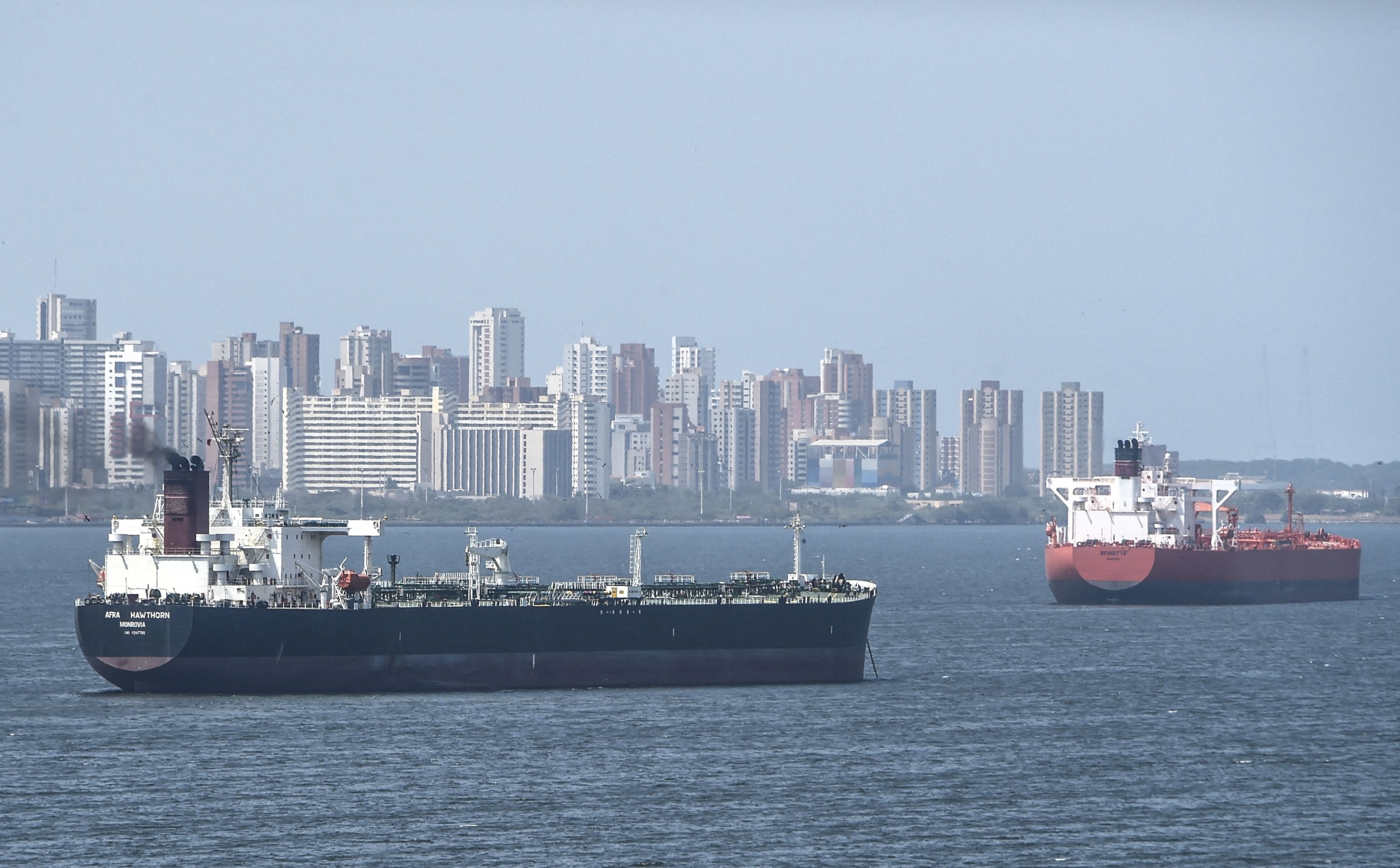
Photo: Daily Sabah
Sweeping Escalation in U.S. Policy Toward Venezuela
U.S. President Donald Trump has dramatically intensified Washington’s stance toward Venezuela by formally designating the country’s government as a foreign terrorist organization and ordering what he described as a “complete and total” blockade of sanctioned oil tankers entering and leaving the country.
The announcement, made Tuesday in the United States, marks one of the most aggressive steps yet taken against Venezuelan President Nicolás Maduro and sharply raises geopolitical tensions in the Caribbean and broader energy markets.
Terrorist Designation and Oil Blockade Order
In a post on Truth Social, Trump said Venezuela was now “completely surrounded by the largest Armada ever assembled in the History of South America,” framing the move as both a security and economic action.
He accused the Venezuelan government of terrorism, drug smuggling, human trafficking, and theft of U.S. assets, stating that these actions justified its designation as a foreign terrorist organization. As a result, Trump said he had ordered a total blockade of all oil tankers subject to U.S. sanctions.
According to the U.S. State Department, a foreign terrorist organization designation makes it illegal for U.S. citizens or entities to knowingly provide material support or resources to the targeted group. The designation also opens the door to broader financial, legal, and enforcement measures.
Trump warned that enforcement would intensify over time, saying the blockade would “only get bigger” and that the impact on Venezuela would be unprecedented.
Venezuela Pushes Back, Citing International Law
The Venezuelan government swiftly condemned the announcement, calling it “grotesque” and “absolutely irrational.” State media reports described the blockade as a violation of international law, free trade principles, and maritime navigation rights, arguing that it represents a direct threat to Venezuelan sovereignty.
Caracas has long rejected U.S. sanctions as illegitimate and has sought to maintain oil exports through alternative shipping routes and buyers willing to bypass or challenge U.S. restrictions.
Limited Oil Market Impact Expected
Despite the severity of the rhetoric, energy analysts say the immediate impact on global oil markets may be limited. Andy Lipow, president of Lipow Oil Associates, said a full embargo on Venezuelan crude would remove roughly 800,000 to 900,000 barrels per day from the market.
That reduction could push oil prices higher by an estimated $2 to $3 per barrel. However, Lipow noted that the global oil market remains well supplied, with an estimated surplus of around 2 million barrels per day, which could cushion the effect.
Lipow also emphasized that market reaction will depend heavily on China’s response. China is currently the largest buyer of Venezuelan oil, often purchasing crude at steep discounts. If Chinese buyers continue to accept Venezuelan shipments despite U.S. pressure, the overall supply impact could be muted.
Sanctioned Tankers Only, for Now
Bob McNally, president of Rapidan Energy Group, echoed the view that the blockade may not materially alter oil fundamentals unless enforcement expands significantly.
McNally estimates that targeting only sanctioned tankers would threaten about 300,000 barrels per day of Venezuela’s roughly 900,000 barrels per day in total crude exports. That volume alone is unlikely to trigger a sustained spike in prices, particularly as oil markets are already facing downward pressure from emerging supply surpluses.
Oil Prices React, Then Stabilize
Crude prices initially moved higher following the announcement. Brent crude rose about 0.9 percent to $59.46 per barrel, while U.S. West Texas Intermediate gained roughly 1 percent to $55.82.
The rebound followed a sharp selloff earlier in the week. On Tuesday, WTI fell nearly 3 percent to around $55.27 per barrel, while Brent dropped 2.7 percent to settle at $58.92, marking four year lows amid concerns about oversupply and weakening demand.
Rising Military Tensions in the Region
The blockade order comes amid broader signs of military escalation. Reports indicate the U.S. has increased its naval presence in the Caribbean, including the deployment of its largest aircraft carrier. The White House has also cited recent strikes on vessels it claims were involved in drug trafficking operations bound for the United States.
Trump administration officials have repeatedly stated that Maduro’s grip on power is weakening. In recent interviews, Trump has said the Venezuelan leader’s “days are numbered” and has not ruled out the possibility of a ground invasion.
High Stakes, Uncertain Outcomes
While the policy shift signals a tougher U.S. posture, analysts caution that the practical impact will hinge on enforcement, international cooperation, and reactions from major oil buyers such as China. For now, markets appear to be treating the move as a geopolitical escalation with limited immediate supply disruption.
Still, the designation and blockade order significantly raise the stakes in U.S.-Venezuela relations and add another layer of uncertainty to already fragile global energy and trade dynamics.
.webp)
Popular articles



Subscribe to unlock premium content
Crypto in the Arctic
Iceland’s Seaweed Revolution
Private Island Rentals for Corporate Retreats Hit $1 Billion

Crypto in the Arctic
Iceland’s Seaweed Revolution
Crypto in the Arctic


