
Tokyo’s Haneda Airport Tests Humanoid Robots to Tackle Labor Crunch in Aviation Operations

Tokyo’s Haneda Airport Tests Humanoid Robots to Tackle Labor Crunch in Aviation Operations
By
David Goldfarb
Last updated:
May 1, 2026
First Published:
May 1, 2026

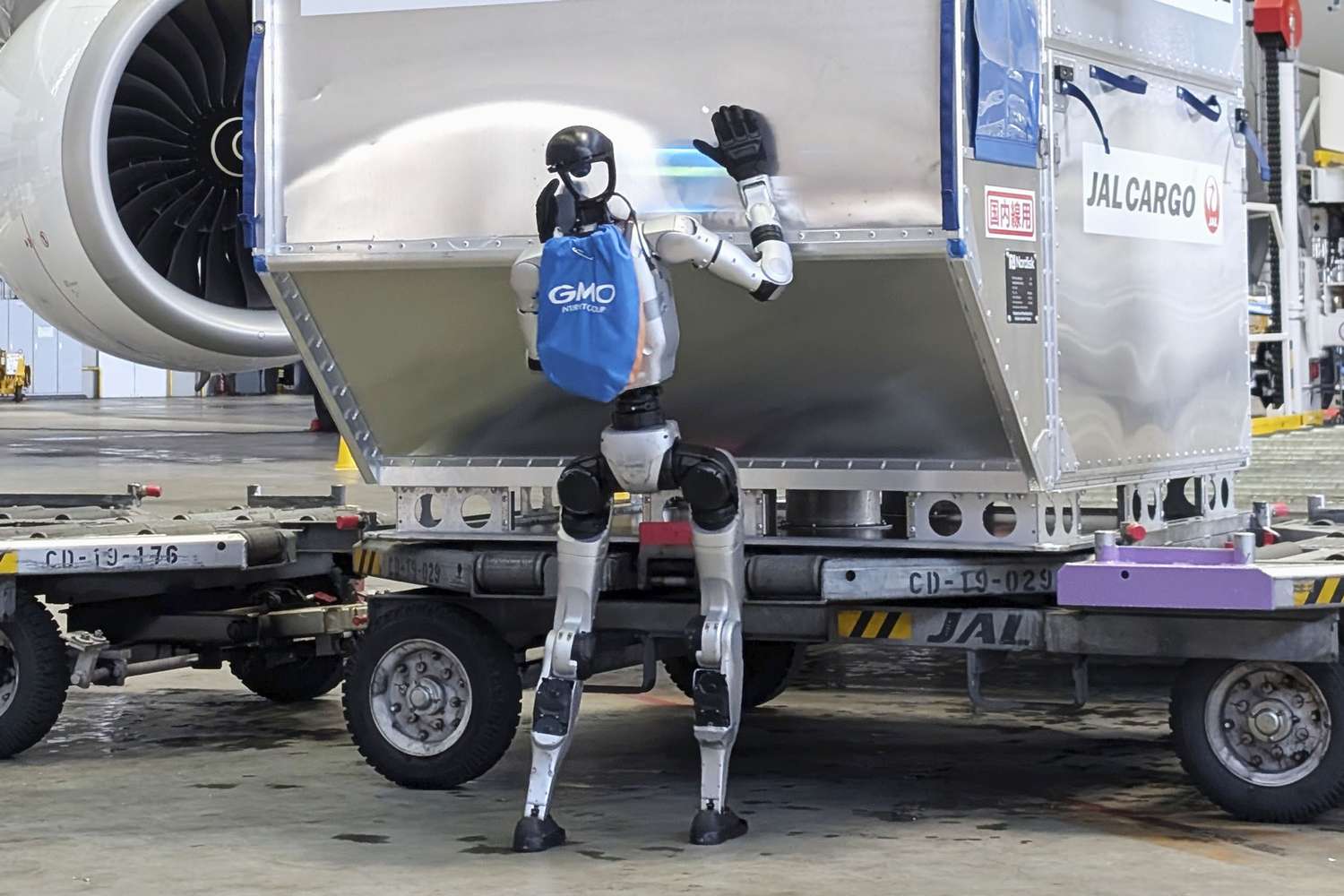
Japan is taking a significant step toward the future of aviation by introducing humanoid robots into airport ground operations. At the center of this transition is Tokyo’s Haneda Airport, where Japan Airlines is preparing to deploy next-generation robotics to address mounting workforce challenges.
The initiative reflects a broader shift across Japan’s economy, where demographic decline and labor shortages are accelerating the adoption of automation technologies in critical industries.
A New Era of Airport Operations Begins
Japan Airlines has partnered with GMO AI & Robotics to begin testing humanoid robots in real-world airport environments starting in May. The trial, expected to run for approximately two years, will focus on operational tasks such as baggage handling, cargo movement, and cabin cleaning.
Initial demonstrations show humanoid robots performing coordinated physical actions, including transferring luggage across conveyor systems and interacting with human workers. These machines are designed to replicate repetitive and physically demanding tasks that are increasingly difficult to staff.
If successful, the program could expand across Haneda Airport, one of Asia’s busiest aviation hubs, handling tens of millions of passengers annually.
Labor Shortages Drive Urgency
The push toward robotics is not experimental curiosity. It is a direct response to structural labor constraints.
Japan’s population is aging rapidly, with one of the highest median ages globally. At the same time, the country’s birth rate continues to decline, shrinking the available workforce year after year.
According to economic projections, Japan’s working-age population could fall by more than 30 percent between 2023 and 2060. This creates a long-term supply-demand imbalance in labor-intensive sectors such as aviation, logistics, and hospitality.
The situation is further complicated by tourism recovery. International arrivals have been steadily rising, with recent data showing year-on-year growth, placing additional strain on airport staffing and operations.
For airlines and airport operators, maintaining service quality under these conditions is becoming increasingly difficult without technological intervention.
Humanoid Robots Step Into Critical Roles
Humanoid robots are emerging as a potential solution because of their versatility. Unlike traditional industrial robots, which are typically fixed and task-specific, humanoids are designed to operate in environments built for humans.
This makes them particularly suited for airports, where workflows involve dynamic movement, varied tasks, and close interaction with people.
Beyond baggage handling and cleaning, future applications could include assisting passengers, supporting maintenance operations, and managing logistics coordination.
Globally, the robotics industry is gaining momentum. Physical AI, which combines artificial intelligence with machines capable of real-world actions, is expected to grow dramatically in the coming decade. Market estimates suggest the sector could expand from just a few billion dollars today to over one trillion dollars by 2035.
This growth is being fueled by advances in machine learning, sensor technology, and mechanical engineering, enabling robots to perform tasks that were previously considered too complex.
China’s Robotics Firms Accelerate Competition
Much of the recent progress in humanoid robotics has been driven by companies in China, where firms are rapidly developing cost-effective and scalable solutions.
Manufacturers are pushing the boundaries of mobility, balance, and coordination, showcasing robots capable of performing intricate physical routines and industrial tasks. Some companies are also preparing for public listings to fund expansion and meet rising global demand.
This competitive landscape is contributing to faster innovation cycles, making humanoid robots more accessible for commercial deployment in markets like Japan.
Challenges Limit Immediate Impact
Despite the promise, experts caution that humanoid robots are not yet ready to fully replace human workers.
Current limitations remain significant. While robots have improved in movement and coordination, they still struggle with fine motor skills, complex decision-making, and adapting to unpredictable scenarios.
Tasks that require precision, judgment, or rapid problem-solving continue to depend heavily on human involvement.
Additionally, deploying humanoid robots at scale involves high costs, extensive testing, and rigorous safety validation. Airports, in particular, demand extremely high reliability standards due to the safety-critical nature of their operations.
Even in this trial phase, human oversight will remain essential. Engineers and operators will monitor performance, manage exceptions, and ensure safe integration into existing workflows.
Government Support and Policy Direction
Japan’s government is actively encouraging the adoption of robotics and AI to address its demographic challenges. Policy frameworks and guidelines are being developed to support innovation while maintaining safety and regulatory standards.
With limited reliance on immigration as a solution, automation is increasingly seen as a strategic necessity rather than an optional upgrade.
This policy backing is likely to accelerate pilot programs like the one at Haneda Airport and expand their scope over time.
A Gradual Shift Toward Automation
While widespread deployment of humanoid robots may still be several years away, industry estimates suggest meaningful adoption could begin within the next five years.
The transition will likely be gradual, with robots initially supporting human workers rather than replacing them entirely. Over time, as technology improves and costs decline, their role is expected to expand.
For now, the Haneda Airport trial represents an important step forward. It offers a real-world testing ground for understanding how humans and machines can collaborate in complex operational environments.
The Bottom Line
Japan’s experiment with humanoid robots at Haneda Airport underscores a broader global trend. As labor shortages intensify and operational demands grow, automation is becoming a necessity across industries.
However, the technology is not yet a complete solution. While humanoid robots can enhance efficiency and fill critical gaps, they still rely on human intelligence and oversight to function effectively.
The future of aviation operations will not be fully automated overnight. Instead, it will be shaped by a hybrid model where humans and machines work side by side to meet the demands of a changing world.
.webp)
Popular articles



Subscribe to unlock premium content
How Finland Uses Ice Swimming Festivals to Boost Winter Tourism and Local Economies

The Boom of Luxury Personal Libraries Renting Rare Books to the Ultra-Wealthy

Why Bhutan’s Hand-Woven Textiles Are Gaining Global Collector Value

How Finland Uses Ice Swimming Festivals to Boost Winter Tourism and Local Economies
The Boom of Luxury Personal Libraries Renting Rare Books to the Ultra-Wealthy
How Finland Uses Ice Swimming Festivals to Boost Winter Tourism and Local Economies


