Thailand Rejects Ceasefire Claims and Presses On With Military Action Against Cambodia

Thailand Rejects Ceasefire Claims and Presses On With Military Action Against Cambodia
By
Leah Rosenfeld
Last updated:
December 15, 2025
First Published:
December 15, 2025

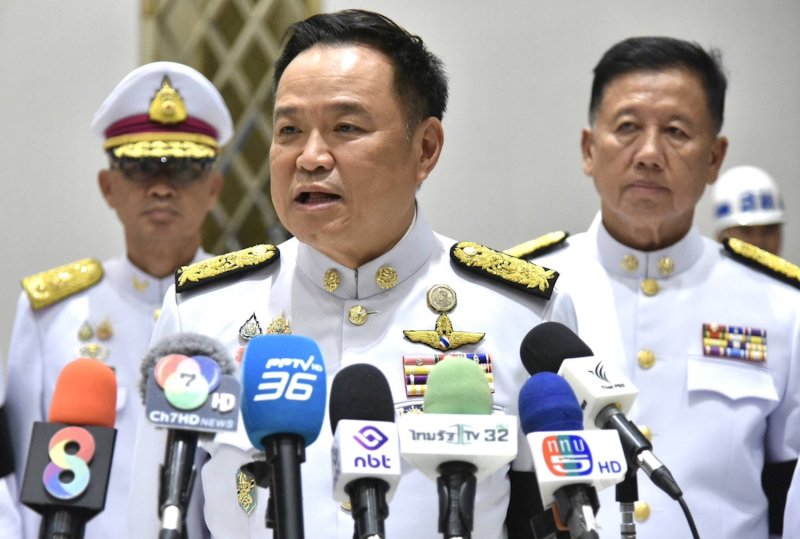
Photo: Bangkok Post
Fighting Continues Despite Ceasefire Talk
Thailand’s caretaker leadership has pledged to continue military operations along its disputed border with Cambodia, directly contradicting claims by U.S. President Donald Trump that a new ceasefire had been secured. The renewed escalation came just hours after Trump publicly stated that both sides had agreed to halt hostilities.
Caretaker Prime Minister Anutin Charnvirakul said Thailand would persist with military action until it no longer perceives threats to its territory or citizens. His remarks followed reports of Thai fighter jets striking targets along the border early Saturday.
Conflicting Messages After U.S. Mediation
Trump said he had spoken separately with Anutin and Cambodian Prime Minister Hun Manet on Friday and claimed both leaders agreed to “cease all shooting,” marking what he described as a revival of an earlier truce he helped broker in October.
However, neither Bangkok nor Phnom Penh confirmed any such agreement in official statements. Anutin was explicit in rejecting the claim, stating publicly that no ceasefire was in place.
“I want to make it clear. Our actions this morning already spoke,” Anutin wrote on social media, signaling that Thailand does not consider itself bound by any new truce.
The White House later said the U.S. president expects all parties to honor commitments made and warned that accountability measures could follow if violence continues.
ASEAN Steps In as Mediator
As tensions mounted, Malaysia stepped forward to revive diplomatic efforts. Cambodian Prime Minister Hun Manet said he welcomed a proposal from Malaysian Prime Minister Anwar Ibrahim to halt hostilities starting Saturday evening.
Anwar, who currently chairs the Association of Southeast Asian Nations, urged both sides to refrain from further military action and proposed the deployment of an ASEAN observer mission to monitor the border. According to Anwar, the observer team would be led by Malaysia’s chief of defence forces, with the United States offering satellite monitoring support.
Thailand’s response remained cautious. Anutin said there had been no agreement to halt fighting, while Thailand’s foreign minister confirmed cooperation with the observer team but stressed that any ceasefire must follow direct talks.
“We can’t just announce a ceasefire while the fighting is going on,” the foreign minister said.
Escalation Along a Long-Disputed Border
The latest clashes are among the most severe seen in years along the 817-kilometer border separating Thailand and Cambodia. Heavy weapons exchanges have been reported across multiple locations since Monday, recalling a five-day confrontation in July that was temporarily halted through U.S. mediation.
Thailand suspended that earlier ceasefire last month after a Thai soldier was seriously injured by a landmine. Bangkok alleges that new mines were recently laid by Cambodian forces, an accusation Phnom Penh has firmly denied.
Thailand’s Defense Ministry said clashes have now spread across seven border provinces. Officials claim Cambodian forces fired heavy weapons, prompting Thai retaliation. The Thai army reported that two civilians were seriously wounded when a rocket struck Sisaket province.
Cambodia’s Information Ministry countered that Thai forces carried out artillery strikes, hit bridges and buildings, and even fired from a naval vessel positioned near the border.
Humanitarian Impact Mounts
The renewed fighting has displaced hundreds of thousands of civilians on both sides of the border, straining local authorities and humanitarian resources. Temporary camps have sprung up as families flee shelling and airstrikes.
From a dimly lit displacement camp in Cambodia, 62-year-old Mar Kly described fleeing yet another conflict in a lifetime shaped by war. She recalled escaping past violence, including during the Khmer Rouge era, and said ordinary people are once again paying the price for political disputes.
“This conflict is between governments, not the people,” she said, emphasizing the shared suffering on both sides of the border.
Uncertain Path Forward
With ceasefire claims disputed, fighting ongoing, and mediation efforts struggling to gain traction, prospects for a rapid de-escalation remain uncertain. While ASEAN’s involvement adds diplomatic weight, the absence of a mutually acknowledged ceasefire highlights the fragility of current peace efforts.
The situation now poses broader risks for regional stability in Southeast Asia, with prolonged conflict threatening trade routes, investor confidence, and cross-border economic activity in an already volatile global environment.

Popular articles


Subscribe to unlock premium content
The New Wave of Superyacht Ownership

Micro-Experience Convenience Stores Are Reinventing Quick Stops

Custom Vans for Digital Nomads Redefine Mobility

The New Wave of Superyacht Ownership
Micro-Experience Convenience Stores Are Reinventing Quick Stops
The New Wave of Superyacht Ownership